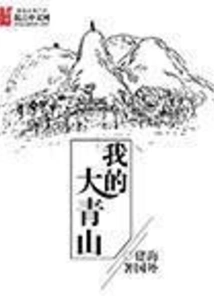
My Daqingshan
About This Novel
Classmates who lived from the late 1970s to the early 1990s, today we have said goodbye to our innocent childhoods and friends from those years. Perhaps the pressure of life makes us have no time to look back, but occasionally in our dreams, we will return to our carefree childhood. Although some of our childhood fun stories have disappeared, and some have become classics; but at a certain moment you can still smell something! Those things that grew up with us, such as earthen toys, digging wild vegetables, picking mushrooms, and catching fish in the river. At that time, the hail and rain were transparent, and the dew was sweet. Even if you live in the city you can still smell the green grass coming from the fields... Overseas, I am also a post-80s generation, coming from a small mountain village in the Northeast, where there are vast forests as far as the eye can see, crystal-clear rivers, and wild vegetables and mushrooms all over the mountains after the rain. This is where our story begins, allowing us in the 80s and 90s to recall those days of youth together.
Official Sources
What Readers Think
Rating
Community(0)
Official(5)Scraped 1mo ago
Regarding the questions raised by book friends, let's chat with you overseas
A book friend raised a question about overseas Chinese. I would like to briefly talk about it: Overseas Chinese also likes Ruda's Little Landlord. Most of the content written in the book is exactly the same as overseas' life in his hometown. His book is very immersive for people born in the 1980s like me because the content is similar to that of most rural children in the Northeast in the 80s and 90s. It was about catching fish and catching shrimps, setting up traps, chasing down jays and chasing rabbits, picking mushrooms and digging wild vegetables. It was like most of my childhood life. Maybe because I liked Ru Da's novels so much, when I wrote this novel two years ago, I quoted Ru Da's ideas in many places. Here I would like to pay tribute to Ru Da! When I was in school, my teacher said that if you take good things written by others, integrate them with your own opinions and ideas, and create a different article, it will be successful. So you can't just take a look at it. Only if you read it will you know what the story overseas is like. Instead of starting to criticize after reading two chapters, is this story purely fictional? Any similarities are purely coincidental! Have you not read these two sentences? "Ping Yao Zhuan", "Bao Gong An", "Wan Hua Lou", "Water Margin", "Three Kingdoms", "Three Words and Two Pats", "The Wizard of Oz" and other novels have countless similar plots and contents. For example, Dong Chao and Xue Ba, the two famous supporting characters in Water Margin, Wild Boar Forest tried to harm Lin Chong but failed, but later they still persisted in their old habits and harmed Lu Junyi. The readers of Water Margin have a deep impression on them. But the activity level of these two policemen far exceeds readers' imagination. Luo Guanzhong borrowed Dong Chao and Xue Ba in "Ping Yao Zhuan", and in several other works about Bao Gong's case, Bao Gong's most capable general is also Dong Chao and Xue Ba, especially the frequency of Xue Ba's appearance is higher than that of Zhang Long and Zhao Hu. Chapter 9 of "Jiang Liu'er" and "Journey to the West": Chen Guangrui's appointment and encountering disaster, Jiang Liu's monk's revenge, are almost the same. Can we say that Mr. Wu Cheng'en plagiarized it? If Wu Cheng'en really didn't use Jiang Liu'er's story, then his Journey to the West is not authentic! Of course, Tang Monk in history did not have Jiang Liu's experience. Jiang Liu'er's story originated from legends such as "Cui Weizi" and "Chen Yilang" in the Tang Dynasty. The closest source to Jiang Liu'er's Journey to the West is probably the drama "Xiangguo Temple Gongsunhe Undershirt" in the early Yuan Dynasty. Can we say that these three are also plagiarism? If we insist on saying so, we can also say that they plagiarized each other. This is really nothing new in writing. There are many examples of the same story and many versions, so writing cannot be said to be plagiarism unless it is exactly the same throughout, so please don't use these as an excuse. Thank you to those overseas who like this book. If you don't like it, you can turn around and leave. Please don't read a few chapters and judge the whole book!
A very good book, I feel the same way
In 1981, the land has been contracted for several years, hahaha!亠
Time will be the best proof.
Check in
Check in and check in! ! ! ! ! !
Rating
Community(0)
Official(5)Scraped 1mo ago
Regarding the questions raised by book friends, let's chat with you overseas
A book friend raised a question about overseas Chinese. I would like to briefly talk about it: Overseas Chinese also likes Ruda's Little Landlord. Most of the content written in the book is exactly the same as overseas' life in his hometown. His book is very immersive for people born in the 1980s like me because the content is similar to that of most rural children in the Northeast in the 80s and 90s. It was about catching fish and catching shrimps, setting up traps, chasing down jays and chasing rabbits, picking mushrooms and digging wild vegetables. It was like most of my childhood life. Maybe because I liked Ru Da's novels so much, when I wrote this novel two years ago, I quoted Ru Da's ideas in many places. Here I would like to pay tribute to Ru Da! When I was in school, my teacher said that if you take good things written by others, integrate them with your own opinions and ideas, and create a different article, it will be successful. So you can't just take a look at it. Only if you read it will you know what the story overseas is like. Instead of starting to criticize after reading two chapters, is this story purely fictional? Any similarities are purely coincidental! Have you not read these two sentences? "Ping Yao Zhuan", "Bao Gong An", "Wan Hua Lou", "Water Margin", "Three Kingdoms", "Three Words and Two Pats", "The Wizard of Oz" and other novels have countless similar plots and contents. For example, Dong Chao and Xue Ba, the two famous supporting characters in Water Margin, Wild Boar Forest tried to harm Lin Chong but failed, but later they still persisted in their old habits and harmed Lu Junyi. The readers of Water Margin have a deep impression on them. But the activity level of these two policemen far exceeds readers' imagination. Luo Guanzhong borrowed Dong Chao and Xue Ba in "Ping Yao Zhuan", and in several other works about Bao Gong's case, Bao Gong's most capable general is also Dong Chao and Xue Ba, especially the frequency of Xue Ba's appearance is higher than that of Zhang Long and Zhao Hu. Chapter 9 of "Jiang Liu'er" and "Journey to the West": Chen Guangrui's appointment and encountering disaster, Jiang Liu's monk's revenge, are almost the same. Can we say that Mr. Wu Cheng'en plagiarized it? If Wu Cheng'en really didn't use Jiang Liu'er's story, then his Journey to the West is not authentic! Of course, Tang Monk in history did not have Jiang Liu's experience. Jiang Liu'er's story originated from legends such as "Cui Weizi" and "Chen Yilang" in the Tang Dynasty. The closest source to Jiang Liu'er's Journey to the West is probably the drama "Xiangguo Temple Gongsunhe Undershirt" in the early Yuan Dynasty. Can we say that these three are also plagiarism? If we insist on saying so, we can also say that they plagiarized each other. This is really nothing new in writing. There are many examples of the same story and many versions, so writing cannot be said to be plagiarism unless it is exactly the same throughout, so please don't use these as an excuse. Thank you to those overseas who like this book. If you don't like it, you can turn around and leave. Please don't read a few chapters and judge the whole book!
A very good book, I feel the same way
In 1981, the land has been contracted for several years, hahaha!亠
Time will be the best proof.
Check in
Check in and check in! ! ! ! ! !
Featured in 1 Booklist

You Might Also Like
My 1979
Arguing About Two Things
Reborn Female General
Qianshan Tea Guest

Great Country and Heavy Tank
Hero Of East China
Secret War Silent
Changfeng

1991start from the Core
Three Points Confused
Veteran New Police Officer
Zhuo Muxian
Great Power Mechanical Repair
Qu Ling

Wandering in the Broad Daylight
Eyebrow Master Niang
Return to 2000: Captain of a Great Power
Plum Xu
Super Big Scam
Chang Shuxin