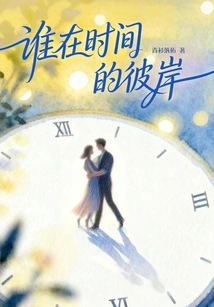
Who is on the Other Side of Time (original Work of "the City of Dance" Starring Zhong Hanliang and Qin Lan)
About This Novel
A classic masterpiece by Qingshan Luotuo, founder of intellectual romance and best-selling author! Only by overcoming suffering and becoming stronger can we realize that love is the most healing fairy tale. Mature, stable, rich and handsome VS tough and beautiful female doctor, our love is enough to span the long river of time. Gao Xiang never thought that even after so many years, as soon as Zuo Sian appeared, his so-called normal life would immediately turn upside down. He couldn't control his gaze at all, and his heart rushed to her. Sixteen years ago, a sudden crime completely disrupted Zuo Sian's life. It was in the process of atonement for his relatives that Gao Xiang got to know this fragile and tenacious girl step by step. He traveled thousands of miles to reunite her with her father. He accompanied her through the suffering of a broken family and witnessed her rebellious youth and vigorous growth. He loved her deeply, and then reluctantly gave up on her... But all for this day, when he reunited after a long separation, he had enough confidence and courage to say I love you again, and say I love you firmly.
Official Sources
What Readers Think
Rating
Community(0)
Official(14)Scraped 2mo ago
The crime of a spoiled uncle disrupted the lives of two families from then on...
Gao Xiang has an uncle who is half a year younger than him. Because his grandmother passed away just after he was born, his uncle grew up drinking the milk of Gao Xiang's mother. The uncle and nephew played together and went to school together, but they grew into different people. Gao Xiang followed a step-by-step process and was admitted to key schools and universities. After graduation, he naturally assisted his grandfather in running the business. But my uncle didn't like studying, and with his sister's motherly doting, he had money in his pocket, and he led a group of teenagers like him to fool around in the market. He even dragged a 14-year-old girl who was waiting at the school gate into the car... And this girl's mother had been busy with work and research for a long time and neglected to take care of her. The father who took care of her most often couldn't know the girl's physical development and other specific conditions, which led to her fainting at school and she was discovered to be pregnant! Originally, the matter was clear, and the uncle's guilt could not be evaded. However, Gao's mother, relying on her constant love for her brother, insisted on fighting with the local police, saying that the girl's father was the one who beat her. If she did not agree to her request, she made a fuss, got her brother released on medical parole, and even bought him a car. When his uncle drove away, he fell off a cliff and died. Gao's mother had a whimsical idea of leaving a root for her younger brother, and wanted to give birth to the child in the girl's belly... This made the girl and Gao Xiang, two people who had no chance of intersecting, get entangled together! Is this a bad fate? This article is very heavy to read. Without the sense of immersion in the character played by Chung Han-liang, it would be difficult for readers to read it...
In the cracks of time, looking for the eternal coordinates of emotion - in-depth review of "Who is on the Other Side of Time"
As a work commemorating the fifth anniversary of Qing Shan Luo Tuo's debut, "Who's on the Other Side of Time" is by no means a relaxing romance novel, but a "gift of reincarnation to yourself and time." This 512-page novel uses a simple but penetrating writing style to explore how time washes away emotions, how trauma reshapes life, and what choices human nature will make when ethics and love collide fiercely. It is like a pebble soaked with the weight of time, lying quietly in the long river of literature, waiting for readers who are willing to lean over and stare. The novel begins with a heartbreaking encounter: Gao Xiang, an 18-year-old college student, develops an inseparable connection with Zuo Sian, a 14-year-old junior high school student due to a sudden tragedy. Driven by guilt and responsibility, Gao Xiang walked into the injured girl's life, trying to make up for the family's sins with warmth. However, the growth of emotions often defies logic - in the warmth conveyed by holding hands and the embrace in loneliness and despair, a love that transcends common sense quietly sprouts. This relationship was burdened with original sin from the beginning. Gao Xiang's mother is paranoid and deformed, and her desire to control her son is almost pathological; Zuo Sian's family fell into a deadlock of self-blame and mutual blame after their happiness was shattered. When Gao Xiang couldn't let go of his family responsibilities and even attacked Zuo Sian to protect his deformed native family, the two finally separated. For the next thirteen years, they each drifted in the torrent of time. One tried to forget, the other tried to let go, but found that the sentence "No emotion can withstand the passage of time" exactly proves that some emotions are so deep-rooted that even time can't do anything about them. In Qing Shan Luo Tuo's works, there are rarely perfect idol drama characters. Gao Xiang is a "steady, upright and responsible" man, but this sense of responsibility has become a double-edged sword for his character. He cannot completely get rid of the shackles of his original family, and his tolerance for his mother makes some readers "emotionally intolerable", but it also makes this character extremely real - in Chinese family ethics, the bondage of blood is often heavier than love. His struggle is not about not loving, but about how to find legitimacy for love in the moral cracks. This "orthodox" to the point of cowardice makes the character deeply representative of reality. Zuo Sian is a typical "fragile and stubborn" heroine, and Aoyama Luotuo seems to be well versed in shaping such characters. She was not a victim of Stockholm Syndrome, but rather isolated herself after the trauma. Her alienation from her parents and resistance to warmth are all self-protection after stress. The author does not beautify her pain, but makes her "gradually alienate" from normal love. The accuracy of this psychological description is shocking. Reunited thirteen years later, she is no longer a girl in need of protection, but a mature woman who has forged armor in the workplace, but the cracks in her heart are still clearly visible. The authenticity of this kind of growth makes reunion no longer a fairy tale, but an arduous journey for two adults to learn to trust again. Qingshan Luotuo's writing skills have reached a masterful level in this work. The use of flashbacks and interludes is "very good", and the narrative method is "very smooth and mature". The story repeatedly switches between reality and memories, just like the ferry of time, bringing readers into the deepest memory folds of the characters. Those edges and corners of youth that have been washed away by the "roaring river", and those efforts to forget like "erasing the shadows of the past" have all found poetic expression in the non-linear narrative. What is particularly commendable is that the author never "blindly pleases readers." When the world of romance novels is full of sweet pets and cool stories, she insists that the stories follow the logic of reality. The sexual assault incident is not a bloody plot to promote love, but a truly devastating trauma, and its shadow runs throughout the book. The psychological burden Zuo Sian suffered, as well as the secondary harm caused to the victims by public opinion in the 1990s, are all portrayed with a sense of authenticity of the times. This "simple, realistic and professional" quality allows Qingshan Luotuo to maintain a rare seriousness in genre literature. The most controversial and profound proposition of the novel is that it challenges the moral boundaries of romance novels. The relationship between the male and female protagonists is based on the identity opposition between the perpetrator's family and the victim. This setting makes the criticism of "mean men and bitches" endless. But it is this extreme situation that strips away the romantic filter of love and forces us to face it head-on: Can the generation of emotions exist without social ethics? Is the love between Gao Xiang and Zuo Sian a sincere emotion or a traumatic dependence? The author's genius lies in not giving simple answers. She made both Gao Xiang and Zuo Sian pay a price: the former lost thirteen years in compromise, and the latter closed his heart in self-healing. Time is both a healer and a judge. It "heals the pain that has severely damaged the body and mind" and "slowly wears away seemingly eternal emotions." The final reunion is not a fairy tale reconciliation, but the courage of two scarred adults who still choose each other after recognizing the truth of life. This kind of "broken mirror and reunion" is not a restoration of the original perfection, but the maturity of accepting the crack as the mark of life. "Who is on the Other Side of Time" is a novel with "weight". Its weight comes from its honest depiction of trauma, its courageous exploration of ethical dilemmas, and its profound questioning of the nature of time. While most romantic works are content to weave dreams, Qingshan Luotuo chooses to use his pen to reveal the truth of life - those "staggered steps" may never be synchronized, but two souls who are willing to wait for each other "in the wilderness of time" can eventually find their own tranquility on the other side.
It looks good, but there are too many typos. I hope it can be improved.
The subject matter is good
Please be more careful, the author. The overwhelming typos are disrespectful to your own work and disrespectful to paying readers.
Gao Xiang is simply amazing! He ran to talk to other women in front of his girlfriend. Are you treating Zhu Xiaoyan as a fool? Don't you think Zhu Xiaoyan can see it? Or are you not afraid of being seen out?
Things in life always have a "but". Calm down, the sky is shining up and down, walking slowly and savoring carefully will always lead to the other side of time.
Chung Hanliang is so handsome, so handsome, so handsome
A very special story, fascinating.
It's heartbreaking to see
After seeing the heroine's experience and the shamelessness of the male protagonist's elders, I really can't stand it.
Usually when something is on your mind, you can't even look at things. Zhu Xiaoyan must be thinking about the relationship between Gao Xiang and that woman, so she can't read the book!
Rating
Community(0)
Official(14)Scraped 2mo ago
The crime of a spoiled uncle disrupted the lives of two families from then on...
Gao Xiang has an uncle who is half a year younger than him. Because his grandmother passed away just after he was born, his uncle grew up drinking the milk of Gao Xiang's mother. The uncle and nephew played together and went to school together, but they grew into different people. Gao Xiang followed a step-by-step process and was admitted to key schools and universities. After graduation, he naturally assisted his grandfather in running the business. But my uncle didn't like studying, and with his sister's motherly doting, he had money in his pocket, and he led a group of teenagers like him to fool around in the market. He even dragged a 14-year-old girl who was waiting at the school gate into the car... And this girl's mother had been busy with work and research for a long time and neglected to take care of her. The father who took care of her most often couldn't know the girl's physical development and other specific conditions, which led to her fainting at school and she was discovered to be pregnant! Originally, the matter was clear, and the uncle's guilt could not be evaded. However, Gao's mother, relying on her constant love for her brother, insisted on fighting with the local police, saying that the girl's father was the one who beat her. If she did not agree to her request, she made a fuss, got her brother released on medical parole, and even bought him a car. When his uncle drove away, he fell off a cliff and died. Gao's mother had a whimsical idea of leaving a root for her younger brother, and wanted to give birth to the child in the girl's belly... This made the girl and Gao Xiang, two people who had no chance of intersecting, get entangled together! Is this a bad fate? This article is very heavy to read. Without the sense of immersion in the character played by Chung Han-liang, it would be difficult for readers to read it...
In the cracks of time, looking for the eternal coordinates of emotion - in-depth review of "Who is on the Other Side of Time"
As a work commemorating the fifth anniversary of Qing Shan Luo Tuo's debut, "Who's on the Other Side of Time" is by no means a relaxing romance novel, but a "gift of reincarnation to yourself and time." This 512-page novel uses a simple but penetrating writing style to explore how time washes away emotions, how trauma reshapes life, and what choices human nature will make when ethics and love collide fiercely. It is like a pebble soaked with the weight of time, lying quietly in the long river of literature, waiting for readers who are willing to lean over and stare. The novel begins with a heartbreaking encounter: Gao Xiang, an 18-year-old college student, develops an inseparable connection with Zuo Sian, a 14-year-old junior high school student due to a sudden tragedy. Driven by guilt and responsibility, Gao Xiang walked into the injured girl's life, trying to make up for the family's sins with warmth. However, the growth of emotions often defies logic - in the warmth conveyed by holding hands and the embrace in loneliness and despair, a love that transcends common sense quietly sprouts. This relationship was burdened with original sin from the beginning. Gao Xiang's mother is paranoid and deformed, and her desire to control her son is almost pathological; Zuo Sian's family fell into a deadlock of self-blame and mutual blame after their happiness was shattered. When Gao Xiang couldn't let go of his family responsibilities and even attacked Zuo Sian to protect his deformed native family, the two finally separated. For the next thirteen years, they each drifted in the torrent of time. One tried to forget, the other tried to let go, but found that the sentence "No emotion can withstand the passage of time" exactly proves that some emotions are so deep-rooted that even time can't do anything about them. In Qing Shan Luo Tuo's works, there are rarely perfect idol drama characters. Gao Xiang is a "steady, upright and responsible" man, but this sense of responsibility has become a double-edged sword for his character. He cannot completely get rid of the shackles of his original family, and his tolerance for his mother makes some readers "emotionally intolerable", but it also makes this character extremely real - in Chinese family ethics, the bondage of blood is often heavier than love. His struggle is not about not loving, but about how to find legitimacy for love in the moral cracks. This "orthodox" to the point of cowardice makes the character deeply representative of reality. Zuo Sian is a typical "fragile and stubborn" heroine, and Aoyama Luotuo seems to be well versed in shaping such characters. She was not a victim of Stockholm Syndrome, but rather isolated herself after the trauma. Her alienation from her parents and resistance to warmth are all self-protection after stress. The author does not beautify her pain, but makes her "gradually alienate" from normal love. The accuracy of this psychological description is shocking. Reunited thirteen years later, she is no longer a girl in need of protection, but a mature woman who has forged armor in the workplace, but the cracks in her heart are still clearly visible. The authenticity of this kind of growth makes reunion no longer a fairy tale, but an arduous journey for two adults to learn to trust again. Qingshan Luotuo's writing skills have reached a masterful level in this work. The use of flashbacks and interludes is "very good", and the narrative method is "very smooth and mature". The story repeatedly switches between reality and memories, just like the ferry of time, bringing readers into the deepest memory folds of the characters. Those edges and corners of youth that have been washed away by the "roaring river", and those efforts to forget like "erasing the shadows of the past" have all found poetic expression in the non-linear narrative. What is particularly commendable is that the author never "blindly pleases readers." When the world of romance novels is full of sweet pets and cool stories, she insists that the stories follow the logic of reality. The sexual assault incident is not a bloody plot to promote love, but a truly devastating trauma, and its shadow runs throughout the book. The psychological burden Zuo Sian suffered, as well as the secondary harm caused to the victims by public opinion in the 1990s, are all portrayed with a sense of authenticity of the times. This "simple, realistic and professional" quality allows Qingshan Luotuo to maintain a rare seriousness in genre literature. The most controversial and profound proposition of the novel is that it challenges the moral boundaries of romance novels. The relationship between the male and female protagonists is based on the identity opposition between the perpetrator's family and the victim. This setting makes the criticism of "mean men and bitches" endless. But it is this extreme situation that strips away the romantic filter of love and forces us to face it head-on: Can the generation of emotions exist without social ethics? Is the love between Gao Xiang and Zuo Sian a sincere emotion or a traumatic dependence? The author's genius lies in not giving simple answers. She made both Gao Xiang and Zuo Sian pay a price: the former lost thirteen years in compromise, and the latter closed his heart in self-healing. Time is both a healer and a judge. It "heals the pain that has severely damaged the body and mind" and "slowly wears away seemingly eternal emotions." The final reunion is not a fairy tale reconciliation, but the courage of two scarred adults who still choose each other after recognizing the truth of life. This kind of "broken mirror and reunion" is not a restoration of the original perfection, but the maturity of accepting the crack as the mark of life. "Who is on the Other Side of Time" is a novel with "weight". Its weight comes from its honest depiction of trauma, its courageous exploration of ethical dilemmas, and its profound questioning of the nature of time. While most romantic works are content to weave dreams, Qingshan Luotuo chooses to use his pen to reveal the truth of life - those "staggered steps" may never be synchronized, but two souls who are willing to wait for each other "in the wilderness of time" can eventually find their own tranquility on the other side.
It looks good, but there are too many typos. I hope it can be improved.
The subject matter is good
Please be more careful, the author. The overwhelming typos are disrespectful to your own work and disrespectful to paying readers.
Gao Xiang is simply amazing! He ran to talk to other women in front of his girlfriend. Are you treating Zhu Xiaoyan as a fool? Don't you think Zhu Xiaoyan can see it? Or are you not afraid of being seen out?
Things in life always have a "but". Calm down, the sky is shining up and down, walking slowly and savoring carefully will always lead to the other side of time.
Chung Hanliang is so handsome, so handsome, so handsome
A very special story, fascinating.
It's heartbreaking to see
After seeing the heroine's experience and the shamelessness of the male protagonist's elders, I really can't stand it.
Usually when something is on your mind, you can't even look at things. Zhu Xiaoyan must be thinking about the relationship between Gao Xiang and that woman, so she can't read the book!
