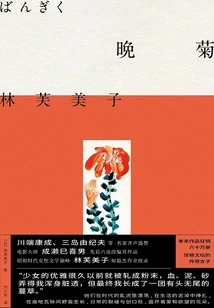
Late Chrysanthemum
by L
About This Novel
The legendary Japanese female writer Hayashi Fumiko was a model of female literature in the Showa era. She was highly praised by famous writers such as Kawabata Yasunari and Mishima Yukio. Film master Naruse Mikio was even more in love with her and adapted her works for the screen six times. After going through the difficult years of survival and the ups and downs of love, Hayashi Fumiko has always loved passionately, lived brilliantly, and written passionately. She has strived forward in the face of adversity and thrived under the nourishment of love and desire. She injects this wildness and vitality into her works and characters, and with her unique "bohemian" style, she leaves a bright figure in the field of private novels. "Late Chrysanthemum" is a complete collection of Hayashi Fumiko's short masterpieces, including the classic work "Late Chrysanthemum" adapted into a movie of the same name by Naruse Mikio, as well as other representative works such as "The Accordion and the Fishing Town", "The Story of Poverty", and "The Oyster". Also included are the essays "Literary Autobiography" and "The Tip of Love", which are Fumiko Hayashi's sincere confessions about her literary life and emotional experience. The whole book covers every stage of Hayashi Fumiko's creation and completely presents the trajectory of her literary life. Translated by professional translator Liu Xiaojun, it is a reprinted work that has been carefully revised by the translator and comes with a new preface. Writers, travel traders, dancers, geishas... The female characters are vivid, three-dimensional, strong and independent. Their stories demonstrate women's will to survive in the turbulence of the times, and record the lingering love in trivial daily life. The delicate portrayal of female psychology, the precise capture of people's mental state before and after the war, and the detailed outline of complex human nature, through Fumiko Hayashi's simple and clear words, directly hit people's hearts and aroused resonance.
Official Sources
What Readers Think
Rating
Community(0)
Rating
Community(0)
