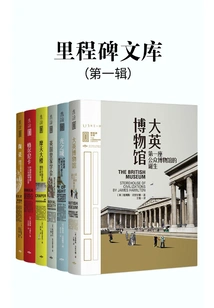
Milestone Library (volume 1)
by (british) James Hamilton Et Al.
About This Novel
The British Museum is the oldest and grandest comprehensive museum in the world. Over the course of hundreds of years, the British Museum has grown from a small warehouse with randomly stacked collections into a world-renowned public museum with more than 8 million pieces of various collections spanning the entire development of human civilization. As a museum open to the public, how does it attract those "those who are eager to learn and seek knowledge"? The author of this book, James Hamilton, begins with the collector Sir Hans Sloane, and leads readers to review the social and cultural background of this troubled museum at the beginning, its subsequent gradual expansion, as well as those who played an important role in the history of the museum's development, and the museum itself's profound impact on Britain and the world. "Guernica" is one of Picasso's most famous works. This painting was born in a specific era and had its own special mission - to cheer for the Spanish Republic overseas. In this book, James Attlee provides us with an in-depth analysis of the origins of this masterpiece, the social and cultural significance behind it, and how it has influenced countless modern artists and has been endowed with eternal value in the ever-changing social landscape. "City of Light" In 1853, French King Louis Napoleon assigned Georges-Eugène Haussmann, governor of the Seine River, to start a large and ambitious public project for municipal reconstruction. This renovation project - even though it was punctuated by war, revolution, corruption and bankruptcy - not only transformed Paris, but also set a model for urban planning in the 19th and early 20th centuries, and created the enduring urban layout of modern Paris. What are the little-known stories behind this fifteen-year urban renewal project? What lessons can today's city builders learn from this to make cities more livable and more humane? The author of this book, Rupert Christian, will take us back to Paris more than 150 years ago to see how it transformed from a dilapidated medieval city filled with sewage, slums, and disease to a world-famous "City of Lights." "Skyscrapers" As an essential architectural element in modern cities, skyscrapers have greatly changed the face of the city. In this book, Cruickshank takes us back to Chicago of that era, telling how the Reliance Building laid the foundation for urban architecture and the mainstream of architectural engineering in the 20th century, as well as the stories of outstanding figures of the time, such as Louis Sullivan, John Wilborn Root, and Daniel H. Burnham, taking us into some amazing or weird stories. "Ceramics" After people mastered the skill of making fire, they accidentally discovered that burning fire on high-quality clay would make the clay hard. This is the origin of ceramics. In China, the production of ceramics has a history of three thousand years. It has experienced the development process from pottery to porcelain, and then to ceramics. During this period, unique types such as celadon, white porcelain, secret color porcelain, three-color porcelain, multi-color porcelain, and blue and white porcelain were born. Through land and sea trade routes, Chinese porcelain absorbed the characteristics of the Western Regions, and Westerners were impressed by the beauty of Chinese ceramics. Since then, ceramics have become a symbol of Chinese culture. Chinese ceramics with Jingdezhen as the center is a milestone that connects the world as a whole. "The Royal Society" The Royal Society is one of the oldest scientific institutions in the world and has made great contributions to the dissemination of natural science knowledge. Scientific giants such as Newton, Darwin, Leeuwenhoek, Boyle, and Hawking were all its members. In this book, Adrian Tenniswood takes us back to the difficulties and prejudices faced by the Royal Society at its birth, its unremitting efforts to gain social recognition, and the bumpy road it took to promote experimental science. As time goes by, while the rapid development of science and technology has brought about disruptive changes, many problems have arisen. How to carry out scientific research also needs to be rethought. Therefore, the motto of the society - "Do not follow what others say" - still has great practical significance, warning us not to blindly believe in what others say.
Official Sources
What Readers Think
Rating
Community(0)
Rating
Community(0)