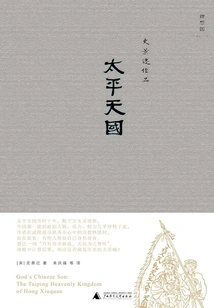
Taiping Heavenly Kingdom
by I
About This Novel
Shi Jingqian, a genius in studying Chinese history in Europe and the United States, uses his profound historical knowledge to write wonderful literary works that are easy to understand. His works are sharp, profound, unique and "good-looking", making him not only an internationally renowned sinologist, but also a master of writing academic bestsellers. The Taiping Rebellion lasted for ten years, tens of millions of lives were lost, and China's top political figures, military and financial resources were almost exhausted. When trying to trace the religious enthusiasm in Hong Xiuquan's heart, the author is also thinking: Some people firmly believe that they have a mission to make everything "a wonderful and beautiful new creation, and the heaven and the people will be amazed by it." They rarely calculate the consequences. Is this the great pain of history? People are no strangers to the Taiping Heavenly Kingdom and Hong Xiuquan, and academic circles have also done a lot of research and elaboration. Shi Jingqian did not intend to write a complete history of the Taiping Rebellion, but wanted to understand Hong Xiuquan's inner world and pursue the logic of his behavior by providing an orderly historical context.
Official Sources
What Readers Think
Rating
Community(0)
Official(13)Scraped 1mo ago
I don't know how current middle school history textbooks evaluate the Taiping Rebellion. In the textbooks of the 1980s, the Taiping Rebellion was completely a positive example of the peasant uprising. It is really hard for the Ministry of Education to be able to exaggerate such a group of unlearned and unskilled people! But fortunately, at least I can see books like this on QQ now.
This book provides another perspective on studying the Taiping Rebellion, a Western perspective.
This book provides another perspective on studying the Taiping Rebellion, that is, a Western perspective. This book uses literary style to describe the rise and fall of the Taiping Heavenly Kingdom, and the writing style is relatively smooth. This is the advantage of this book, but it is nothing more than that. This book actually made me feel a little disappointed. I thought that the author, as a Western Sinologist, must have high opinions, but I didn't expect that it was not an academic monograph, but a historical novel. The author spends a lot of time describing Hong Xiuquan from a Western perspective, especially Hong Xiuquan's religious thoughts. In fact, this does not mean much to Chinese readers, because there were many instances of using religion to launch peasant uprisings in ancient China, and China is not a Christian country. Religion in China has always been a means rather than an end, and Chinese readers know this well. For Western readers, it is easy to be led astray by the author, who may suggest that the Taiping Rebellion was attributed to Hong Xiuquan's personal random thoughts about religion, leading to the view that the Taiping Rebellion was just a farce that caused no progress at all except causing great destruction and damage. The author does not talk about class struggle, nor does he mention that the damage done to China by Western aggression at that time led to China's demand for national independence. He actually denies the rationality of the Taiping Rebellion, and also denies the rationality of China's right to resist foreign aggression at that time. In fact, he is asking China why do you want to resist? Why can't we just be obedient people? Why can't we bask in the so-called gospel of God? What an insidious and domineering thought this is! We should recognize and criticize this kind of thinking.
If you like being a slave, please do it, but we don't. , But we don't like it. Because we are Han Chinese.
There is this person in my family tree
A heroic figure who dared to bring down the emperor even if he was killed.
We loved this book and learning about this history.
Ofan: on behalf of VE 1,
There is a history of flesh and blood, and cruel wars have caused innocent people to suffer. I wish there would be no war in the world.
Describes the Taiping Rebellion from another perspective, rich in details and thought-provoking. The ending is good, a sigh.
Correction
It's an official official cloth, not an official official decoration.
Rating
Community(0)
Official(13)Scraped 1mo ago
I don't know how current middle school history textbooks evaluate the Taiping Rebellion. In the textbooks of the 1980s, the Taiping Rebellion was completely a positive example of the peasant uprising. It is really hard for the Ministry of Education to be able to exaggerate such a group of unlearned and unskilled people! But fortunately, at least I can see books like this on QQ now.
This book provides another perspective on studying the Taiping Rebellion, a Western perspective.
This book provides another perspective on studying the Taiping Rebellion, that is, a Western perspective. This book uses literary style to describe the rise and fall of the Taiping Heavenly Kingdom, and the writing style is relatively smooth. This is the advantage of this book, but it is nothing more than that. This book actually made me feel a little disappointed. I thought that the author, as a Western Sinologist, must have high opinions, but I didn't expect that it was not an academic monograph, but a historical novel. The author spends a lot of time describing Hong Xiuquan from a Western perspective, especially Hong Xiuquan's religious thoughts. In fact, this does not mean much to Chinese readers, because there were many instances of using religion to launch peasant uprisings in ancient China, and China is not a Christian country. Religion in China has always been a means rather than an end, and Chinese readers know this well. For Western readers, it is easy to be led astray by the author, who may suggest that the Taiping Rebellion was attributed to Hong Xiuquan's personal random thoughts about religion, leading to the view that the Taiping Rebellion was just a farce that caused no progress at all except causing great destruction and damage. The author does not talk about class struggle, nor does he mention that the damage done to China by Western aggression at that time led to China's demand for national independence. He actually denies the rationality of the Taiping Rebellion, and also denies the rationality of China's right to resist foreign aggression at that time. In fact, he is asking China why do you want to resist? Why can't we just be obedient people? Why can't we bask in the so-called gospel of God? What an insidious and domineering thought this is! We should recognize and criticize this kind of thinking.
If you like being a slave, please do it, but we don't. , But we don't like it. Because we are Han Chinese.
There is this person in my family tree
A heroic figure who dared to bring down the emperor even if he was killed.
We loved this book and learning about this history.
Ofan: on behalf of VE 1,
There is a history of flesh and blood, and cruel wars have caused innocent people to suffer. I wish there would be no war in the world.
Describes the Taiping Rebellion from another perspective, rich in details and thought-provoking. The ending is good, a sigh.
Correction
It's an official official cloth, not an official official decoration.
