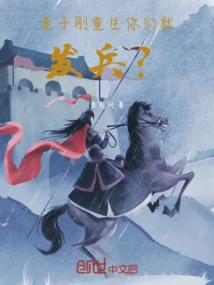
I've Just Been Reborn, and You're Going to Send Troops?
About This Novel
The envoys from the five countries threw the declaration of war at Chen Du's feet and asked him to kneel down to receive it. Chen Du tore up the message and threw it back in the envoy's face: "Destroy a country in one day and call it a day in five. I have to rest on weekends." Five Kingdoms laughed. Five days later, the emperors of the five countries knelt in a row. Later, the barbarian Chanyu went south with 200,000 cavalry, saying that he wanted Chen Du to know who was the lord of the southern territory. Chen Du rode out of the pass alone, splitting the wasteland with his sword, and his military spirit soared to the sky. The barbarians knelt down and asked to surrender. Chen Du said, "I only brought one person with me. Myself." Later, a 300,000-strong army from overseas gods crossed the sea to invade. Chen Du looked back at the 500,000-strong tiger and wolf troops behind him who were tied with red cloth: "Just in time, next one."
Official Sources
What Readers Think
Rating
Community(0)
Official(4)
There is a detail in the book that impressed me deeply: after the founding of the Great Xia Dynasty, the Minister of Honglu Temple proposed at the court meeting to rewrite the official histories of various countries and rewrite the history of the Six Kingdoms according to the "Daxia Orthodox" style of writing. Chen Du refused. He said: "The histories of the Six Kingdoms are written separately, and there is no need to combine them. What I destroyed was their court, not their ancestors." This is a rare sobriety for an invincible protagonist. Destroying a country does not mean destroying history, and conquering does not mean erasing it. You can chop open the city gate with one knife, but you can't chop other people's memories with one knife. From the discovery of the scales filled with tin and the iron buckets embedded with patches when checking six old instruments, to the Xie family's hidden field case under the order of the Qing Dynasty, the protagonist's enemies have changed from enemy generals to the millennium inertia of the old aristocracy. It took five days to destroy the six kingdoms and three years to unify the weights and measures. On the battlefield, a quick sword is enough, but in the court, a quick sword will only hurt one's own people. When Shuangwen writes this, he is no longer writing about "who is stronger", but about "how the strong should deal with a world that has been defeated by themselves." This is more rare than destroying a country in one day.
You know, my own, hahaha
We have seen too many battles for hegemony. Rebirth, system, invincibility, crushing - these labels can be combined to create countless books that look similar. But there is something in this book that I have never seen another company dare to write like this: the red banner of surrender. In other books, when a country is conquered, the surrendered troops are either disbanded and go home, or incorporated into the logistics as cannon fodder, or simply forgotten by the author in the background. But "Sending Troops" is different - the soldiers who surrendered from Beiliang were tied with red cloth strips, collected on the spot, and rushed to the front for the next battle. When fighting against the Eastern Zhao, the troops at the forefront are those from the Northern Liang; when fighting against the Western Qin, the troops at the forefront are from the Northern Liang and the troops from the Eastern Zhao; when fighting against the barbarians, the troops at the forefront are already covered with red cloth from all countries. The more you fight, the stronger you get. It's not the protagonist who gets stronger as he fights alone, but his army that gets bigger and bigger like a snowball. The enemy's troops are getting smaller as they fight, and our troops are getting bigger as they fight. This is not a propaganda slogan, but the structural logic of this story from beginning to end.
In the first five chapters, it was cool to destroy a country in one day. But what really made me remember this book was a detail after the unification: The Minister of Honglu Temple wanted to rewrite the history of the Six Kingdoms, all according to the Daxia orthodoxy. Chen Du said no, "It is the imperial court that will be destroyed, not the ancestors." He can split open city gates with one sword, but he can also hold back from splitting other people's history books. On the battlefield, a quick sword is enough, but in the court, a quick sword will only hurt one's own people. It took five days to destroy the six kingdoms and three years to rule the world - checking the scales and checking the hidden fields is more difficult than charging. If Shuangwen can write this, he has already won.
Rating
Community(0)
Official(4)
There is a detail in the book that impressed me deeply: after the founding of the Great Xia Dynasty, the Minister of Honglu Temple proposed at the court meeting to rewrite the official histories of various countries and rewrite the history of the Six Kingdoms according to the "Daxia Orthodox" style of writing. Chen Du refused. He said: "The histories of the Six Kingdoms are written separately, and there is no need to combine them. What I destroyed was their court, not their ancestors." This is a rare sobriety for an invincible protagonist. Destroying a country does not mean destroying history, and conquering does not mean erasing it. You can chop open the city gate with one knife, but you can't chop other people's memories with one knife. From the discovery of the scales filled with tin and the iron buckets embedded with patches when checking six old instruments, to the Xie family's hidden field case under the order of the Qing Dynasty, the protagonist's enemies have changed from enemy generals to the millennium inertia of the old aristocracy. It took five days to destroy the six kingdoms and three years to unify the weights and measures. On the battlefield, a quick sword is enough, but in the court, a quick sword will only hurt one's own people. When Shuangwen writes this, he is no longer writing about "who is stronger", but about "how the strong should deal with a world that has been defeated by themselves." This is more rare than destroying a country in one day.
You know, my own, hahaha
We have seen too many battles for hegemony. Rebirth, system, invincibility, crushing - these labels can be combined to create countless books that look similar. But there is something in this book that I have never seen another company dare to write like this: the red banner of surrender. In other books, when a country is conquered, the surrendered troops are either disbanded and go home, or incorporated into the logistics as cannon fodder, or simply forgotten by the author in the background. But "Sending Troops" is different - the soldiers who surrendered from Beiliang were tied with red cloth strips, collected on the spot, and rushed to the front for the next battle. When fighting against the Eastern Zhao, the troops at the forefront are those from the Northern Liang; when fighting against the Western Qin, the troops at the forefront are from the Northern Liang and the troops from the Eastern Zhao; when fighting against the barbarians, the troops at the forefront are already covered with red cloth from all countries. The more you fight, the stronger you get. It's not the protagonist who gets stronger as he fights alone, but his army that gets bigger and bigger like a snowball. The enemy's troops are getting smaller as they fight, and our troops are getting bigger as they fight. This is not a propaganda slogan, but the structural logic of this story from beginning to end.
In the first five chapters, it was cool to destroy a country in one day. But what really made me remember this book was a detail after the unification: The Minister of Honglu Temple wanted to rewrite the history of the Six Kingdoms, all according to the Daxia orthodoxy. Chen Du said no, "It is the imperial court that will be destroyed, not the ancestors." He can split open city gates with one sword, but he can also hold back from splitting other people's history books. On the battlefield, a quick sword is enough, but in the court, a quick sword will only hurt one's own people. It took five days to destroy the six kingdoms and three years to rule the world - checking the scales and checking the hidden fields is more difficult than charging. If Shuangwen can write this, he has already won.
You Might Also Like
Emperor of Han Dynasty
The King Is No More Than A Hegemon
Driving the Rv Back to Datang
Drunk In The Flower Room. Cs

Reborn Female General
Qianshan Tea Guest
The Emperor of the Tang Dynasty Will Never Show Off His Cards
Anti-travel Cat
I
Wang Zijun
The First Minister of the Ming Dynasty
History Turns To Ashes

Li Zhi, Don't Be a Coward
Thieving Eyebrows And Rat Eyes

Being a Salted Fish in Hongwu
Fiery Red Chicken Fir
The Good Saint Grandson of the First Emperor
It's March
Top Grade Humble Scholar
The Three Idiots Of Thieves