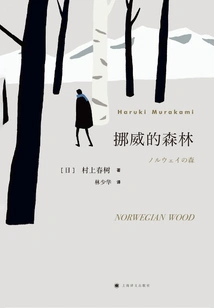
Norwegian Forest
About This Novel
"Death is not the opposite of life, but a part of life that will last forever." "Norwegian Wood" is Haruki Murakami's best-selling love novel that has been a best-seller for 30 years. It is also a youth masterpiece that has influenced several generations. This book tells the story of Watanabe, the seemingly inarticulate but extremely charismatic protagonist, who falls in love with the quiet and gloomy Naoko, and is also attracted by the passionate and straightforward girl Midori. In the process of saving this self-lost Naoko, Watanabe gradually loses his own direction; and the appearance of the enthusiastic and straightforward girl Midori is like an oasis full of hope, attracting the depressed and confused Watanabe. In this love entanglement, he is constantly undergoing self-salvation and growth...
Official Sources
What Readers Think
Rating
Community(0)
Official(112)Scraped 1mo ago
There is a forest in everyone's heart
I should be suitable to read this book at this moment. You won't be excited and blushing when you see descriptive words like a girl who is full of obscure sexual curiosity in adolescence. After reading the whole article, this is the deepest impression. I will not be like me who was pursuing dual spiritual and physical mysophobia at a certain stage. I couldn't accept the protagonist's heart containing two women, and one woman with a body facing more different faces, and I was disgusted. Maybe many years later, after experiencing the grief of separation between life and death, and the profound love between men and women, you will have a deeper feeling when you read it again. If I were in my thirties and asked to recall my youth between the ages of 17, 18 and 20, the content I would write would be extremely boring. There would be no such complex emotions, no such profound life and death, and no such mature experience in the world. Memories always diminish with the passage of time, leaving only the personal feelings hazy, which may be the struggle in books and scores, the time filled with happiness, the clear goals, the fulfilling life, and the lack of sorrow.



Good titles are more attractive
Everyone has his own forest. No matter where he is, he will walk in and walk out. After all, we will end up with something in vain. When I have walked out of half my life, I am still the same person. In what I see, encounter, feel and think, the only person who will accompany me until the end is me. Only by embracing loneliness can we meet the future. How are you in the past, you now, and you in the future? I just want to hear one, one word answer.

Wow
The author's writing style is very good (poor words, I can't think of any good adjectives). The scenery and characters in the author's works are all described in detail. For example: The scenery kicked my head repeatedly, but it didn't hurt at all... (Anthropomorphic) There are many other similar descriptions, so read slowly and appreciate them carefully!
No one likes to be alone, they are just afraid of being disappointed
I once had a girl or should i say she once had me. --Beatles I still remember the afternoon when I finished reading Norwegian Wood - it was an untimely cloudy day, just like the gloom in my heart when I finished reading this book. Norwegian Wood was the first Japanese literature I read, and it was also an opportunity for me to later come into contact with Akutagawa, Osamu Dazai, and Yukio Mishima. The growth, confusion or disillusionment told throughout "Norwegian Forest" brought me more or less sadness and confusion at the time; and after reading it again, I can see the author's helplessness and loneliness - as the article says, those who are lost will eventually be lost, and those who meet will eventually meet again.
norwegian forest
Toru Watanabe, the hero of the story. After graduating from Kobe High School, he went to a private university in Tokyo and majored in drama in the Faculty of Literature. He likes to drink whiskey, brandy, read books, and hang out with women. He doesn't like to have in-depth contact with people, except Naoko. Midori Kobayashi and Toru Watanabe are both first-year female students in Theater History II. My family runs Kobayashi Bookstore in Otsuka, Tokyo. She is an optimistic and cheerful girl who is very emotional and likes to be angry with others and act coquettishly. My mother died of a brain tumor, and my father also died of the disease. He can cook Kansai-style dishes and has the habit of smoking. Naoko, a female friend who has known Kizuki since childhood, later became Kizuki's lover. After graduating from high school, he went to university in Tokyo and met Toru Watanabe on the train. Half a year after meeting Toru Watanabe, he entered a sanatorium in Kyoto called "Ameryo", which is a facility for collective treatment of mentally ill patients. Committed suicide in the summer of 1970. Ishida Reiko is Naoko's female roommate in Ameriao. She has many wrinkles on her body. Be an observer when Toru Watanabe visits Naoko. She had been determined to be a professional pianist since she was a child, but was forced to give up due to mental illness. Later, she married a boy who studied piano with her. However, a 13-year-old female prostitute who studied piano with her caused her to be misunderstood as a prostitute, causing criticism from her neighbors, and she finally divorced her husband. Likes to smoke and play guitar. Watanabe's first love, Naoko, was originally the girlfriend of his good high school classmate Kizuki, but later Kizuki committed suicide and Naoko lived alone. A year later, Watanabe and Naoko met by chance and started dating. At this time, Naoko had become quiet and shy, with a hint of gloom in her eyes from time to time. The two had sex on the night of Naoko's 20th birthday. Unexpectedly, Naoko disappeared the next day. A few months later, Naoko wrote to say that she was admitted to a mental sanatorium far away in the mountains. When Watanabe went to visit, he found that Naoko began to have the plumpness and beauty of a mature woman. He also met Reiko, who was in the same dormitory as Naoko. Before leaving, Watanabe said that he would always wait for Naoko. Watanabe met Midori in a small restaurant because Midori asked him to borrow the class notes of Theater History II, and they gradually became familiar with him. When Midori's father passed away, Watanabe began dating Midori, a junior. Midori is the complete opposite of the introverted Naoko, appearing very pure and lively. During this period, Watanabe felt very depressed and hesitant. On the one hand, I can't forget Naoko's lingering illness and tenderness, on the other hand, I can't resist Midoriko's bold confession and charming vitality. Soon the bad news came that Naoko had committed suicide, and Watanabe walked around in despair. Finally, with the encouragement of Naoko's roommate Reiko, she began to explore her future life. When we are young, we pursue passion, but when we mature, we are obsessed with mediocrity. After we are searched, hurt, and betrayed, we can still believe in love as always. This is a kind of courage. Everyone has their own forest. Those who are lost are lost, and those who meet will meet again.
(●මᴗමσ)σ

If you don't understand the meaning of the book when you first read it, you will become a reader of the book the next time you read it.
The outlook on life, death and life extended by love
This is a typical youth pain literature, with delicate and moving emotions, and beautiful descriptions of artistic conception that make people feel as if they are actually there. Growing up in the sunshine and spring breeze, I cannot fully understand the sadness of loneliness and desolation in the book. At least I have never experienced such strong sadness in my youth. Watanabe cannot be said to be completely debauched, he also yearns for pure emotions. When Watanabe fell in love with Naoko and Midoriko at the same time, I immediately thought of the choice between white roses and red roses. One is the ideal of the world, the other is the fireworks of the world. Watanabe felt deeply powerless towards Naoko, even though he loved her, he couldn't help her. Naoko regards Watanabe as his only hope and hope, but while making a promise to Naoko, he still comes into contact with Midori, who is very fond of him, and falls in love with Midori. The two girls stayed out of the matter and were not jealous. They were at peace with each other, but Watanabe was struggling internally. Watanabe was not with Midoriko in the end, and the protagonist appeared alone at the beginning of the article. Just like what the original article said, Naoko died and Midoriko remained. Another point, I couldn't understand the relationship between Watanabe and Reiko in the end... It really confused me...
Naoko fell in love with Watanabe after Kizuki died. But because of Kuzuki's past existence, she didn't know how to deal with this relationship. Just like after Watanabe fell in love with Midoriko, he didn't know how to tell Naoko. However, Watanabe had someone like Reiko to guide him, and the end result was different from Naoko.
Don't understand
To be honest, it's really (。・ω・。) hard for me to understand, because the youth I experienced was really not like this. If there are book friends who understand, can you explain it? I couldn't understand the connotation of the book, nor the protagonist's struggles ≥≤.
Rating
Community(0)
Official(112)Scraped 1mo ago
There is a forest in everyone's heart
I should be suitable to read this book at this moment. You won't be excited and blushing when you see descriptive words like a girl who is full of obscure sexual curiosity in adolescence. After reading the whole article, this is the deepest impression. I will not be like me who was pursuing dual spiritual and physical mysophobia at a certain stage. I couldn't accept the protagonist's heart containing two women, and one woman with a body facing more different faces, and I was disgusted. Maybe many years later, after experiencing the grief of separation between life and death, and the profound love between men and women, you will have a deeper feeling when you read it again. If I were in my thirties and asked to recall my youth between the ages of 17, 18 and 20, the content I would write would be extremely boring. There would be no such complex emotions, no such profound life and death, and no such mature experience in the world. Memories always diminish with the passage of time, leaving only the personal feelings hazy, which may be the struggle in books and scores, the time filled with happiness, the clear goals, the fulfilling life, and the lack of sorrow.
Good titles are more attractive
Everyone has his own forest. No matter where he is, he will walk in and walk out. After all, we will end up with something in vain. When I have walked out of half my life, I am still the same person. In what I see, encounter, feel and think, the only person who will accompany me until the end is me. Only by embracing loneliness can we meet the future. How are you in the past, you now, and you in the future? I just want to hear one, one word answer.
Wow
The author's writing style is very good (poor words, I can't think of any good adjectives). The scenery and characters in the author's works are all described in detail. For example: The scenery kicked my head repeatedly, but it didn't hurt at all... (Anthropomorphic) There are many other similar descriptions, so read slowly and appreciate them carefully!
No one likes to be alone, they are just afraid of being disappointed
I once had a girl or should i say she once had me. --Beatles I still remember the afternoon when I finished reading Norwegian Wood - it was an untimely cloudy day, just like the gloom in my heart when I finished reading this book. Norwegian Wood was the first Japanese literature I read, and it was also an opportunity for me to later come into contact with Akutagawa, Osamu Dazai, and Yukio Mishima. The growth, confusion or disillusionment told throughout "Norwegian Forest" brought me more or less sadness and confusion at the time; and after reading it again, I can see the author's helplessness and loneliness - as the article says, those who are lost will eventually be lost, and those who meet will eventually meet again.
norwegian forest
Toru Watanabe, the hero of the story. After graduating from Kobe High School, he went to a private university in Tokyo and majored in drama in the Faculty of Literature. He likes to drink whiskey, brandy, read books, and hang out with women. He doesn't like to have in-depth contact with people, except Naoko. Midori Kobayashi and Toru Watanabe are both first-year female students in Theater History II. My family runs Kobayashi Bookstore in Otsuka, Tokyo. She is an optimistic and cheerful girl who is very emotional and likes to be angry with others and act coquettishly. My mother died of a brain tumor, and my father also died of the disease. He can cook Kansai-style dishes and has the habit of smoking. Naoko, a female friend who has known Kizuki since childhood, later became Kizuki's lover. After graduating from high school, he went to university in Tokyo and met Toru Watanabe on the train. Half a year after meeting Toru Watanabe, he entered a sanatorium in Kyoto called "Ameryo", which is a facility for collective treatment of mentally ill patients. Committed suicide in the summer of 1970. Ishida Reiko is Naoko's female roommate in Ameriao. She has many wrinkles on her body. Be an observer when Toru Watanabe visits Naoko. She had been determined to be a professional pianist since she was a child, but was forced to give up due to mental illness. Later, she married a boy who studied piano with her. However, a 13-year-old female prostitute who studied piano with her caused her to be misunderstood as a prostitute, causing criticism from her neighbors, and she finally divorced her husband. Likes to smoke and play guitar. Watanabe's first love, Naoko, was originally the girlfriend of his good high school classmate Kizuki, but later Kizuki committed suicide and Naoko lived alone. A year later, Watanabe and Naoko met by chance and started dating. At this time, Naoko had become quiet and shy, with a hint of gloom in her eyes from time to time. The two had sex on the night of Naoko's 20th birthday. Unexpectedly, Naoko disappeared the next day. A few months later, Naoko wrote to say that she was admitted to a mental sanatorium far away in the mountains. When Watanabe went to visit, he found that Naoko began to have the plumpness and beauty of a mature woman. He also met Reiko, who was in the same dormitory as Naoko. Before leaving, Watanabe said that he would always wait for Naoko. Watanabe met Midori in a small restaurant because Midori asked him to borrow the class notes of Theater History II, and they gradually became familiar with him. When Midori's father passed away, Watanabe began dating Midori, a junior. Midori is the complete opposite of the introverted Naoko, appearing very pure and lively. During this period, Watanabe felt very depressed and hesitant. On the one hand, I can't forget Naoko's lingering illness and tenderness, on the other hand, I can't resist Midoriko's bold confession and charming vitality. Soon the bad news came that Naoko had committed suicide, and Watanabe walked around in despair. Finally, with the encouragement of Naoko's roommate Reiko, she began to explore her future life. When we are young, we pursue passion, but when we mature, we are obsessed with mediocrity. After we are searched, hurt, and betrayed, we can still believe in love as always. This is a kind of courage. Everyone has their own forest. Those who are lost are lost, and those who meet will meet again.
(●මᴗමσ)σ
If you don't understand the meaning of the book when you first read it, you will become a reader of the book the next time you read it.
The outlook on life, death and life extended by love
This is a typical youth pain literature, with delicate and moving emotions, and beautiful descriptions of artistic conception that make people feel as if they are actually there. Growing up in the sunshine and spring breeze, I cannot fully understand the sadness of loneliness and desolation in the book. At least I have never experienced such strong sadness in my youth. Watanabe cannot be said to be completely debauched, he also yearns for pure emotions. When Watanabe fell in love with Naoko and Midoriko at the same time, I immediately thought of the choice between white roses and red roses. One is the ideal of the world, the other is the fireworks of the world. Watanabe felt deeply powerless towards Naoko, even though he loved her, he couldn't help her. Naoko regards Watanabe as his only hope and hope, but while making a promise to Naoko, he still comes into contact with Midori, who is very fond of him, and falls in love with Midori. The two girls stayed out of the matter and were not jealous. They were at peace with each other, but Watanabe was struggling internally. Watanabe was not with Midoriko in the end, and the protagonist appeared alone at the beginning of the article. Just like what the original article said, Naoko died and Midoriko remained. Another point, I couldn't understand the relationship between Watanabe and Reiko in the end... It really confused me...
Naoko fell in love with Watanabe after Kizuki died. But because of Kuzuki's past existence, she didn't know how to deal with this relationship. Just like after Watanabe fell in love with Midoriko, he didn't know how to tell Naoko. However, Watanabe had someone like Reiko to guide him, and the end result was different from Naoko.
Don't understand
To be honest, it's really (。・ω・。) hard for me to understand, because the youth I experienced was really not like this. If there are book friends who understand, can you explain it? I couldn't understand the connotation of the book, nor the protagonist's struggles ≥≤.