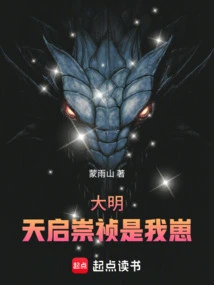
Daming: Tianqi Chongzhen is My Son
by Mengyushan
About This Novel
At the age of thirty-nine, he sold his original shares in the company. I traveled around in an RV to adjust, and my last stop was to visit the Forbidden City. I planned to start a business again after that. Who would have thought. When he woke up, he found that he had traveled to the Ming Dynasty and became Zhu Changluo, the famous "January Emperor" in thousands of years of history. Inside, there is the little mother Zheng Guifei who is watching with unwillingness, while outside there is the Donglin Party who only cares about their own interests and deceives her. And the original person is also ridiculous and unreliable, and even after being flattered, he indulged in prostitution during the period of filial piety. Not to mention. The rise of the Hou Jin Dynasty in the Northeast is like a vicious wolf, barbarian bandits are rampant in the Southeast, droughts and natural disasters are constant in the Northwest, the remnants of the suppressed Yang family rebellion in the Southwest are gathering momentum, the lords and gentry in the hinterland of the Central Plains are annexing their lands, and the plains with abundant grain are starving. Fortunately, Zhu Changle, who was planning to start his own business again, came through time with his 'Golden Finger'. [Name: Zhu Changluo] [Occupation: Emperor] [Lifespan: 17 days] Popularity: 0 [Skill: None] [Talent: Level 1 Possession (needs same-sex direct descendant), 1 person\u002Fday] Note: 100 points of popular support can increase life span by one day
Official Sources
What Readers Think
Rating
Community(0)
Official(11)Scraped 2mo ago
Do silver coins need to be protected against counterfeiting? Generally, I remember that both sides of the coin would have portraits of people (such as Zhu Yuanzhang and other founding leaders) and other things printed on them. If silver is changed to silver coins, what if the transaction amount is large? It is a pity that paper money was destroyed by Zhu Yuanzhang, otherwise both silver coins and paper money could be used.
Will the protagonist learn the art of war through the system in the future? At that time, those courtiers questioned that the protagonist could also be said to be the ghost of his ancestors, possessed by Zhu Yuanzhang and Zhu Di. However, if the protagonist leads the expedition in person, rules must be established to prevent Ming war gods like Zhu Qizhen from appearing again in future generations. But this book should be considered a semi-systematic text, right? I have been reading a lot of system articles. I don't know where the system in the system article comes from, and how it can possess the protagonist (could it be because the protagonist is a time traveler?) But I don't care too much, just think of it as a golden finger. After all, if there is no Golden Finger to directly travel back to ancient times, it will usually be arranged in detail about the protagonist's previous study of history, so as to be convincing.
I would like to ask the author personally, I have read this book so far, I don't seem to have seen Xu Guangqi appear? Of course it's possible that I missed it. I remember that Xu Guangqi was too ignorant of the history of Taichang, the original source of this book, and wanted to purchase foreign firearms and introduce red cannons.
After reading this book, I think it is very necessary for the protagonist to study medical books systematically. Ancient times are no better than modern times. In modern times, there are still many difficult and complicated diseases that have not been overcome. For example, smallpox, which brought Kang Mazi to the throne, is almost extinct in modern China, but in ancient times, people who contracted it would die. I don't know if there was an outbreak of smallpox in the Ming Dynasty, but prevention is still necessary (in addition to smallpox, there must have been other difficult and complicated diseases in ancient times)
There is also the problem of too many vassal kings in the late Ming Dynasty. In addition to the fact that the protagonist's descendants can learn from the Qing Dynasty or overseas kings. It depends on the author how to deal with the previously granted vassal kings (for example, following the Manchu and Qing Dynasties, except for the Iron Hat King, others seem to be unfixed)
In fact, I think the most powerful reform of Zhang Juzheng is the examination method. I remember that during Yongzheng's reign, he also improved the examination method.
The author, in fact, not only Chen Zhenlong introduced sweet potatoes to China, but also two people also introduced sweet potatoes during the Wanli period, one was Chen Yi, and the other was named Lin Huailan. It seems that Chen Yi was the first to introduce sweet potatoes. It was introduced from Guangdong, brought by Lin Huailan and Chen Yi, and obtained from Jiaozhi; it was introduced from Fujian, brought by Chen Zhenlong, and obtained from Luzon. Three routes came in one after another and were unrelated to each other. Among them, Lin Huailan brought back sweet potatoes, while Chen Yi and Chen Zhenlong brought back sweet potato vines.
The latest chapter also talks about a whipping method, which reminded me of the practices implemented during the Yongzheng period of the Qing Dynasty, such as dividing the land into acres, returning fire to the public, and the officials and gentry working as errands to pay the grain. However, it seems that the foundation for the issue of "sharing children into acres" was laid during the reign of Kangxi. During the reign of Yongzheng, it was because of the foundation of Kangxi that it was possible to divide children into acres. I wonder if the protagonist of this book will learn from Yongzheng's approach?
Also, I once saw on a video website that the reason why Wanli did not go to court was not only because of the dispute over the crown prince's kingdom, but also because there seemed to be something wrong with his legs. And it was mentioned in that video that when Wanli's tomb was later archaeologically discovered, many of his teeth were decayed. I heard that Wanli suffered from toothache and gradually took opium to relieve pain. As a result, he became addicted to drugs. I don't know whether it is true or false. If it were true, the protagonist in this book would have reason to crack down on opium.
Zhu Changluo, are you going to get angry right away? Playing with women will kill you
Rating
Community(0)
Official(11)Scraped 2mo ago
Do silver coins need to be protected against counterfeiting? Generally, I remember that both sides of the coin would have portraits of people (such as Zhu Yuanzhang and other founding leaders) and other things printed on them. If silver is changed to silver coins, what if the transaction amount is large? It is a pity that paper money was destroyed by Zhu Yuanzhang, otherwise both silver coins and paper money could be used.
Will the protagonist learn the art of war through the system in the future? At that time, those courtiers questioned that the protagonist could also be said to be the ghost of his ancestors, possessed by Zhu Yuanzhang and Zhu Di. However, if the protagonist leads the expedition in person, rules must be established to prevent Ming war gods like Zhu Qizhen from appearing again in future generations. But this book should be considered a semi-systematic text, right? I have been reading a lot of system articles. I don't know where the system in the system article comes from, and how it can possess the protagonist (could it be because the protagonist is a time traveler?) But I don't care too much, just think of it as a golden finger. After all, if there is no Golden Finger to directly travel back to ancient times, it will usually be arranged in detail about the protagonist's previous study of history, so as to be convincing.
I would like to ask the author personally, I have read this book so far, I don't seem to have seen Xu Guangqi appear? Of course it's possible that I missed it. I remember that Xu Guangqi was too ignorant of the history of Taichang, the original source of this book, and wanted to purchase foreign firearms and introduce red cannons.
After reading this book, I think it is very necessary for the protagonist to study medical books systematically. Ancient times are no better than modern times. In modern times, there are still many difficult and complicated diseases that have not been overcome. For example, smallpox, which brought Kang Mazi to the throne, is almost extinct in modern China, but in ancient times, people who contracted it would die. I don't know if there was an outbreak of smallpox in the Ming Dynasty, but prevention is still necessary (in addition to smallpox, there must have been other difficult and complicated diseases in ancient times)
There is also the problem of too many vassal kings in the late Ming Dynasty. In addition to the fact that the protagonist's descendants can learn from the Qing Dynasty or overseas kings. It depends on the author how to deal with the previously granted vassal kings (for example, following the Manchu and Qing Dynasties, except for the Iron Hat King, others seem to be unfixed)
In fact, I think the most powerful reform of Zhang Juzheng is the examination method. I remember that during Yongzheng's reign, he also improved the examination method.
The author, in fact, not only Chen Zhenlong introduced sweet potatoes to China, but also two people also introduced sweet potatoes during the Wanli period, one was Chen Yi, and the other was named Lin Huailan. It seems that Chen Yi was the first to introduce sweet potatoes. It was introduced from Guangdong, brought by Lin Huailan and Chen Yi, and obtained from Jiaozhi; it was introduced from Fujian, brought by Chen Zhenlong, and obtained from Luzon. Three routes came in one after another and were unrelated to each other. Among them, Lin Huailan brought back sweet potatoes, while Chen Yi and Chen Zhenlong brought back sweet potato vines.
The latest chapter also talks about a whipping method, which reminded me of the practices implemented during the Yongzheng period of the Qing Dynasty, such as dividing the land into acres, returning fire to the public, and the officials and gentry working as errands to pay the grain. However, it seems that the foundation for the issue of "sharing children into acres" was laid during the reign of Kangxi. During the reign of Yongzheng, it was because of the foundation of Kangxi that it was possible to divide children into acres. I wonder if the protagonist of this book will learn from Yongzheng's approach?
Also, I once saw on a video website that the reason why Wanli did not go to court was not only because of the dispute over the crown prince's kingdom, but also because there seemed to be something wrong with his legs. And it was mentioned in that video that when Wanli's tomb was later archaeologically discovered, many of his teeth were decayed. I heard that Wanli suffered from toothache and gradually took opium to relieve pain. As a result, he became addicted to drugs. I don't know whether it is true or false. If it were true, the protagonist in this book would have reason to crack down on opium.
Zhu Changluo, are you going to get angry right away? Playing with women will kill you
You Might Also Like

Reborn Female General
Qianshan Tea Guest
Chongzhen and I Became Partners
Call The Sky
Brother Zhu Youxiao
North City Two Thousand
I, the Ming Dynasty, Can Still Save Me
River Crab Taoist
I Really Didn't Want to Be the Emperor at the End of the Ming Dynasty
Tx Cheng Zhi
Ming Dynasty Chenghua: I Am a Foolish King
Five And Six
Jingtai of the Ming Dynasty: I Am the Benevolent King of the Ages
Xiao Lanyi
Anti-qing: Starting from the Reincarnation of the Ming Dynasty
Listen To The Wind And Cook The Rainy Night
Taichang Daming
Magic Turtle Revo
Chongzhen, It's Okay If the Ming Dynasty Doesn't Save You!
The Warm Sun In Winter