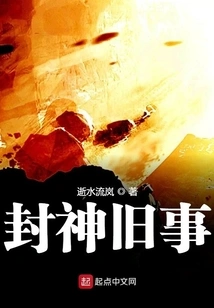
The Past Events of Fengshen
About This Novel
In the 21st century, Zhuang Yu, a young man, encountered a divine thunder and was reincarnated as Yin Jiao, the crown prince of Zhou Dynasty. He later studied under Guang Chengzi and learned Dafa. Later, he accidentally obtained several spiritual treasures and joined forces with Nuwa and Tongtian to fight against Yuanshi... Readers who like this book can join my group Fengshen Old Stories 1: 36119283 Fengshen Old Stories 2: 55390068
Official Sources
What Readers Think
Rating
Community(0)
Official(35)Scraped 1mo ago
Gods, monsters and monsters can destroy me and my business will not die. Only the immortals of Jiejiao can help me become a king.
There are too many people, the big ones bully the small ones, and the many people win against the small ones, but they are destroyed by the merchants and think that the winner is the king and the loser is the bandit. God wants to destroy me and Chengtang has established a foundation. If the luck is gone, the only choice is to give way to the talented.
With the Donghuang Bell, why do you mean there is no defensive magic weapon?
Author, don't you read the ancient books? As a treasure as famous as the Three Treasures of Kaitian, the Donghuang Bell is a treasure that all saints want to obtain. You are really out of your mind!
broken book
I can't read anything that doesn't follow the above.
Rubbish, eunuch.
I'm really speechless. How can you make a saint so weak?
I want to say that you, the author, have a great imagination
This is to deceive the master and destroy the ancestor. Guangchengzi is the great disciple of Yuanshi.
So much nonsense
No matter what, the author wants to popularize the science, just as if we don't know about the canonization of gods.
The writing is not very good
Rubbish, a few random scribblings, imagination
Rating
Community(0)
Official(35)Scraped 1mo ago
Gods, monsters and monsters can destroy me and my business will not die. Only the immortals of Jiejiao can help me become a king.
There are too many people, the big ones bully the small ones, and the many people win against the small ones, but they are destroyed by the merchants and think that the winner is the king and the loser is the bandit. God wants to destroy me and Chengtang has established a foundation. If the luck is gone, the only choice is to give way to the talented.
With the Donghuang Bell, why do you mean there is no defensive magic weapon?
Author, don't you read the ancient books? As a treasure as famous as the Three Treasures of Kaitian, the Donghuang Bell is a treasure that all saints want to obtain. You are really out of your mind!
broken book
I can't read anything that doesn't follow the above.
Rubbish, eunuch.
I'm really speechless. How can you make a saint so weak?
I want to say that you, the author, have a great imagination
This is to deceive the master and destroy the ancestor. Guangchengzi is the great disciple of Yuanshi.
So much nonsense
No matter what, the author wants to popularize the science, just as if we don't know about the canonization of gods.
The writing is not very good
Rubbish, a few random scribblings, imagination
Featured in 3 Booklists
Official(3)
In the 21st century, Zhuang Yu, a young man, encountered a divine thunder and was reincarnated as Yin Jiao, the prince of Zhou Dynasty. Later, he learned Dafa from Guangchengzi* and accidentally obtained several spiritual treasures. He joined forces with Nuwa and Tongtian to fight against Yuanshi... The plot of this book is compact and fascinating. 2. Eight people who expounded the religion and conferred the title of god: 1. Huang Tianhua, the pioneer, was named Lord Bingling of Sanshan. His father is Huang Feihu, and his master is Qingxu Daodezhenjun. 2. Yang Ren, the 'eye of the sky' – was named Jiazi Taisui. He was worshiped as a senior official in the Yin Dynasty and Shang Dynasty. He had his eyes gouged out because he spoke out against the construction of Lutai. The master is the pure and virtuous king. 3. The grain-pressing official Tu Xingsun - was named Tufu Star. The master kept his grandson out of fear. 4. Yin Jiao, Prince of Yin - was named the god of Tai Sui. His father was King Zhou and his master was Guangchengzi. 5. His Second Highness Yin Hong - was named Wugu Star. His father is King Zhou and his master is Chi Jing. 6. Han Dulong - named the god of good fortune for Jiazi Taisui's subordinates The master is the Taoist deity. 7. Xue Ehu-named the God of Destruction for Taisui's subordinates in Jiazi The master is the Taoist deity. 8. Dragon Beard and Tiger - named as the Nine Chou Star. The teacher is Jiang Ziya. Shed light on disputes Chanjiao was founded by Yuanshi Tianzun, one of the three friends of Hongjun Taoist ancestors (the first friend is Taishang Laojun, the second friend is Yuanshi Tianzun, and the third friend is Tongtian leader). The dispute between Chanjiao and Jiejiao is the main thread throughout the entire process of "Fengshen Yanyi", and the so-called two major sects, Chanjiao and Jiejiao, are just the fabrications of the author. During the Jiajing period of the Ming Dynasty, Emperor Shizong of the Ming Dynasty gave his most favored Taoist priest Shao Yuanjie of the Qing Palace on Longhu Mountain a jade seal engraved with "Explaining teachings and assisting the country". The impact of this incident was so great at the time that the author of "Fengshen Yanyi" continued to use the name "Chanjiao". "Chen" means to analyze, explain, and develop. "Yi·Xici Xia": "The "Yi" is clear about the past and the coming, and slightly reveals the quietness." Han Kangbo noted: "The interpreter is Mingye." Chanjiao and Jiejiao are roughly equivalent to the right and left we divided in a certain period. We know that the policy at that time was based on family background and not just family background. Just as Yuan Shi Tianzun, the leader of the Chan Sect, believes that only Gen Hongmiao can make a revolution, the Twelve Golden Immortals of the Chan Sect under his command are all carefully selected. As the saying goes, value essence rather than quantity, and it is better to be deficient than excessive. On the contrary, the leader of Jiejiao Tongtian adheres to the concept of harmony and unity between man and nature. Abandon the narrow idea of individualism and accept everyone who comes. The disciples he accepted were all so-called people with fur and horns, who were born from moisture and turned into eggs. In this way, a contradiction arises! We know that the doctrine of "Chanjiao" is to clarify, which is "establishing"; the doctrine of "Jiejiao" is to intercept, which is to "break". One is innate and the other is acquired. From the time when the two sects of Chan and Jie were first established, they were destined to be like fire and water, unable to coexist.
I really like the genre of Prehistoric Times. I personally think this book can be said to be one of the representatives of Prehistoric Times. What is evocative is the Spring and Autumn and Warring States periods in it, which is very novel. It's a pity that the number of words is a bit short and not satisfying.
It's a pretty good book, the first book I've ever read about being a god.
You Might Also Like
Reborn Female General
Qianshan Tea Guest
Xiangzu
Don't Ask The Common People, Ask Ghosts And Gods
The First Crow in the Wilderness
A Leaf Of Gold
Journey to the West: Lao Liu Tianpeng Qi Cries Tathagata
Just Like Eating Meat
I Can't Stand This Rotten Coward Any Longer
Durian Old Wine
The Ancestor of All Monsters in Shushan
Peng Guogong
Record of the Great Desolation and Lingxiao
Tears Of Stars On Rainy Night
The Confucian Sage of Prehistoric Times
Taoyuan Idler
Becoming a God: Starting from Devouring the Sky-mending Stone
Poor Slacker
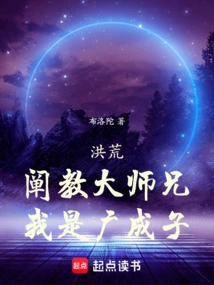
Honghuang: Senior Brother Chanjiao, I Am Guangchengzi
Buluotuo