Chu Determines the World
by Little Huai Wang In The Warring States Period
About This Novel
This year has been a year of great changes. This year, Zhang Yi was reused; In this year, Gongsun Yan traveled to Wei State; This year, Qin and Wei, who were competing for Hexi, suddenly joined forces to attack Chu; In this year, King Chu Wei of Chu State passed away. In this turbulent year, a person from the present time traveled to the son of King Wei of Chu, the famous King Huai of Chu Xiong Huai. There are strong Qin, strong Wei, and strong Qi outside, and there are lords, vassals, and weak soldiers inside. The so-called "horizontally, the Qin Emperor and vertically, the Chu King" seems difficult to realize. However, in this environment, Xiong Huai fought his way out, kicked Ying Zheng away, and took the supreme position in advance!
Official Sources
What Readers Think
Rating
Community(0)
Official(20)Scraped 1mo ago
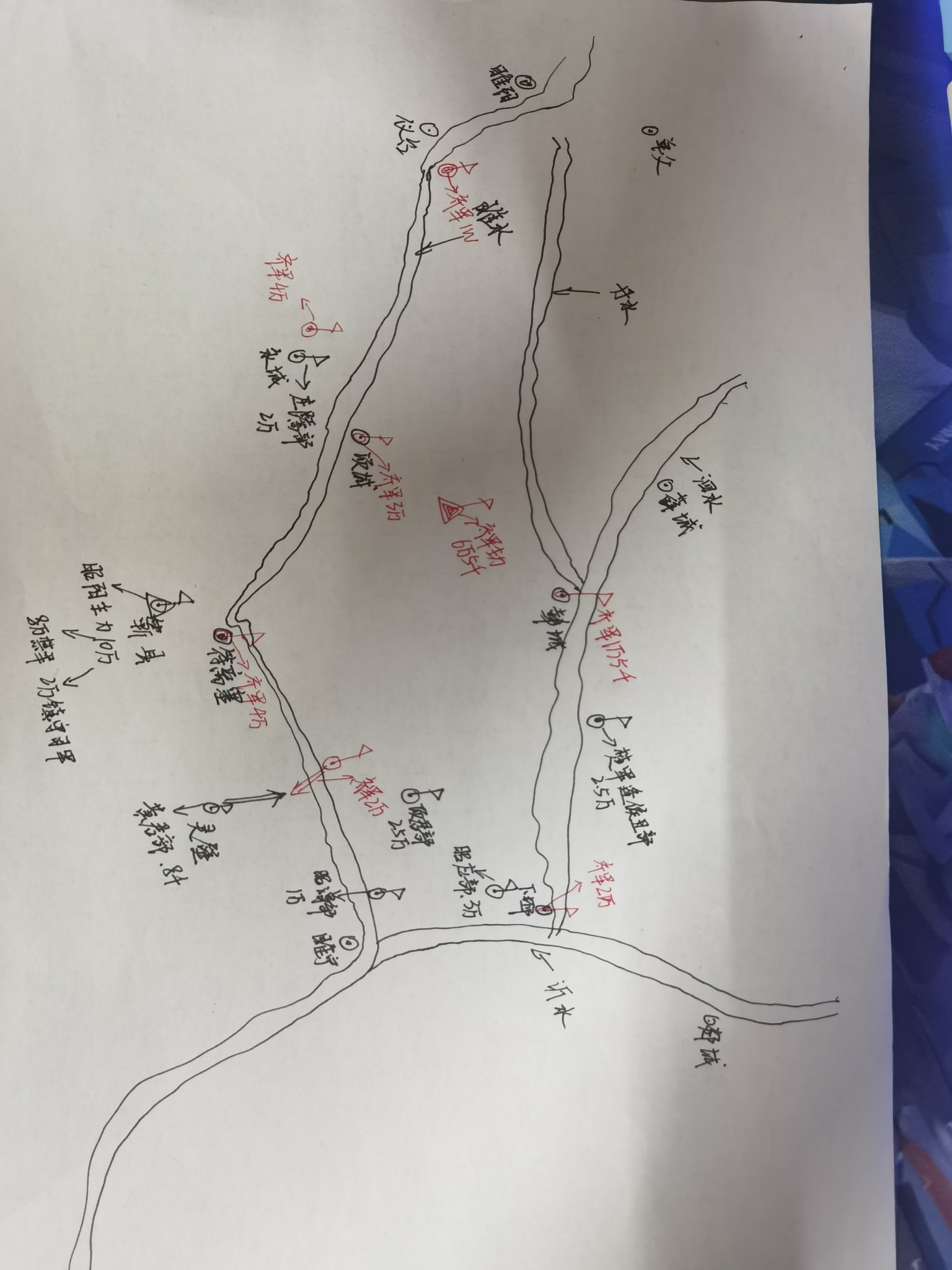
Huaisi battle situation map
Huaisi battle situation map, Red Qi army, black Chu army
Moreover, the great powers in the middle and late Warring States Period all established a universal conscription system in counties and counties. The state controlled the land and divided the people, and collected taxes and conscripted troops based on households. Their control over household registration was much stronger than that of later dynasties. In peacetime, various countries have standing armies composed of active-duty officers and soldiers to guard the capital and borders. In wartime, they recruit talents (reserves) from counties and counties to expand their military strength. This is called "raising troops." The Warring States army was not divided into soldiers and civilians like other dynasties. Minfu was just a common name for those who served as corvees, and all participants in the war, including servants and other support personnel, were called "pawns" according to the custom at the time. Therefore, there is nothing wrong with Zhao Guo's announcement that more than 400,000 "pawns" died. Under the background of universal conscription, any adult man from the Warring States Period who had not been killed or disabled in action had to have served in the military for at least two years and participated in several wars in his life. As long as these battlefield survivors have not reached the age of immunity, they are all candidates for "army recruitment". Even if they are drafted into the army as support personnel, they are armed. So don't underestimate the mobilization ability during the Warring States Period. At that time, war was almost always prepared, and the mobilization ability was higher than that of all dynasties in later generations.
I gave up, I feel like there is too much popular knowledge, and the latest chapter is all about popular knowledge.
It's very well written and the chapters are wonderful👍👍
It's rare to write it carefully and slowly! ! !
It's really rare to come across a movie that has no system and is well-written. It's very good. I need to add a little more to the political growth of the protagonist. At this stage, I feel that the protagonist is trying to find a balance between the killing flow and the Machiavellian flow.
These troops include civilians and support personnel. During the Warring States Period, these people were included in the combatants and were called the upper army, the middle army, and the lower army. The upper army is an elite force, and generally we rely on these people in battles, just like the three armies recorded in Shang Jun's book: strong men form one army, strong women form one army, and men, women, old and weak form one army. It was not until the period of Emperor Wu of the Han Dynasty that the army and logistics personnel were separated. That is to say, after the Western Han Dynasty, the number of combat personnel began to be more and more nonsense. During the Spring and Autumn Period and the Warring States Period, the army generally had as many troops as there were, but it was difficult to say how many combatants there were. Like the Battle of Yique fought by Bai Qi, Han and Wei were in ruins after defeating the 240,000 troops of Han and Wei, because these 240,000 were the last elite troops of Han and Wei.
It's so well written, I hope it can be updated soon😘
Are you so persistent?
Looking at several books written by the author, they are all about King Huai of Chu
At that time, the heir was called the prince if he was the prince or not the heir.
What? Haven't updated for so long? Entering the palace?
Rating
Community(0)
Official(20)Scraped 1mo ago
Huaisi battle situation map
Huaisi battle situation map, Red Qi army, black Chu army
Moreover, the great powers in the middle and late Warring States Period all established a universal conscription system in counties and counties. The state controlled the land and divided the people, and collected taxes and conscripted troops based on households. Their control over household registration was much stronger than that of later dynasties. In peacetime, various countries have standing armies composed of active-duty officers and soldiers to guard the capital and borders. In wartime, they recruit talents (reserves) from counties and counties to expand their military strength. This is called "raising troops." The Warring States army was not divided into soldiers and civilians like other dynasties. Minfu was just a common name for those who served as corvees, and all participants in the war, including servants and other support personnel, were called "pawns" according to the custom at the time. Therefore, there is nothing wrong with Zhao Guo's announcement that more than 400,000 "pawns" died. Under the background of universal conscription, any adult man from the Warring States Period who had not been killed or disabled in action had to have served in the military for at least two years and participated in several wars in his life. As long as these battlefield survivors have not reached the age of immunity, they are all candidates for "army recruitment". Even if they are drafted into the army as support personnel, they are armed. So don't underestimate the mobilization ability during the Warring States Period. At that time, war was almost always prepared, and the mobilization ability was higher than that of all dynasties in later generations.
I gave up, I feel like there is too much popular knowledge, and the latest chapter is all about popular knowledge.
It's very well written and the chapters are wonderful👍👍
It's rare to write it carefully and slowly! ! !
It's really rare to come across a movie that has no system and is well-written. It's very good. I need to add a little more to the political growth of the protagonist. At this stage, I feel that the protagonist is trying to find a balance between the killing flow and the Machiavellian flow.
These troops include civilians and support personnel. During the Warring States Period, these people were included in the combatants and were called the upper army, the middle army, and the lower army. The upper army is an elite force, and generally we rely on these people in battles, just like the three armies recorded in Shang Jun's book: strong men form one army, strong women form one army, and men, women, old and weak form one army. It was not until the period of Emperor Wu of the Han Dynasty that the army and logistics personnel were separated. That is to say, after the Western Han Dynasty, the number of combat personnel began to be more and more nonsense. During the Spring and Autumn Period and the Warring States Period, the army generally had as many troops as there were, but it was difficult to say how many combatants there were. Like the Battle of Yique fought by Bai Qi, Han and Wei were in ruins after defeating the 240,000 troops of Han and Wei, because these 240,000 were the last elite troops of Han and Wei.
It's so well written, I hope it can be updated soon😘
Are you so persistent?
Looking at several books written by the author, they are all about King Huai of Chu
At that time, the heir was called the prince if he was the prince or not the heir.
What? Haven't updated for so long? Entering the palace?
Featured in 4 Booklists
Official(4)
A very good time-travel novel, the characters in it all have online IQs, which is very exciting.


There was no golden finger or small warehouse. An ordinary liberal arts student traveled back to the Warring States Period, a time of constant strife. In that era of clouds and cries, the only advantage he had was his familiarity with history.
It is a novel that is relatively close to history, and all the characters are vividly written, and everyone has an online IQ. The war is not a one-sided push, but a battle of wits and courage between the two sides; the political battle is not a simple party battle, but a complex struggle with mixed interests. A very recommended novel
Tags: Chu State, Warring States Period, Time Travel, Road of Kings Introduction to the work: This book begins with the death of King Chu Wei and tells the story of how Xiong Huai gradually grew from a despised prince to a generation of overlord. Under his leadership, Chu State successively launched fierce competition with Qin, Wei, Qi and other countries, and experienced famous historical events such as the Battle of Xingshan, the Battle of Yanling, and the Battle of Changping, and finally achieved the grand goal of "Chu ruled the world." Highlights of the work: Complex situation: The protagonist Xiong Huai is an ordinary person who travels to King Huai of Chu. He not only has to face threats from foreign enemies, but also deals with internal disputes and conflicts. How he uses his knowledge and experience to survive and develop in this troubled world is the most attractive part of this book. Historical figures: Many famous figures in history appear in this book, such as Zhang Yi, Fan Ju, Bai Qi, Lian Po, Zhao Kuo, etc., And they have various complex and wonderful exchanges with the protagonist Xiong Huai. Recommended readers: This book is suitable for readers who like historical military novels.
You Might Also Like
Zhao Was King During the Warring States Period
Ximengfu
Great Sima of the Warring States Period
Chief Disciple Of The Jian Sect
Reborn Female General
Qianshan Tea Guest
The Story of Yuan Yao in the Three Kingdoms
Jack Love
The Three Kingdoms Began with Riding into Jingzhou Alone
Angry Eyebrows And Droopy Eyes
From King Wu's Defeat of Zhou, a Thousand-year-old Family Was Established
Flowers Are Not Flowers On A Moonlit Night

Yuan Shao, the Father of the Youthful Family of the Three Kingdoms
Glory Bunny
A Thousand-year-old Family That Started in the Yin and Shang Dynasties
Floating Dreams And Three Lowly Guests
Jingnan Strategy
North City Two Thousand
I, Liu Bian, Sanxing Han Dynasty
Dim Star L