Tang and Song Dynasties Leisurely and Lingering Afterglow of Tang Dynasty
About This Novel
"In these troubled times, it will be difficult for the people to be trusted no matter how hard they are to trust you." "You protect Chang'an in this world, and I will spend the rest of my life with you."
Official Sources
What Readers Think
Rating
Community(0)
Official(3)Scraped 1mo ago
Forty-eight vassal towns
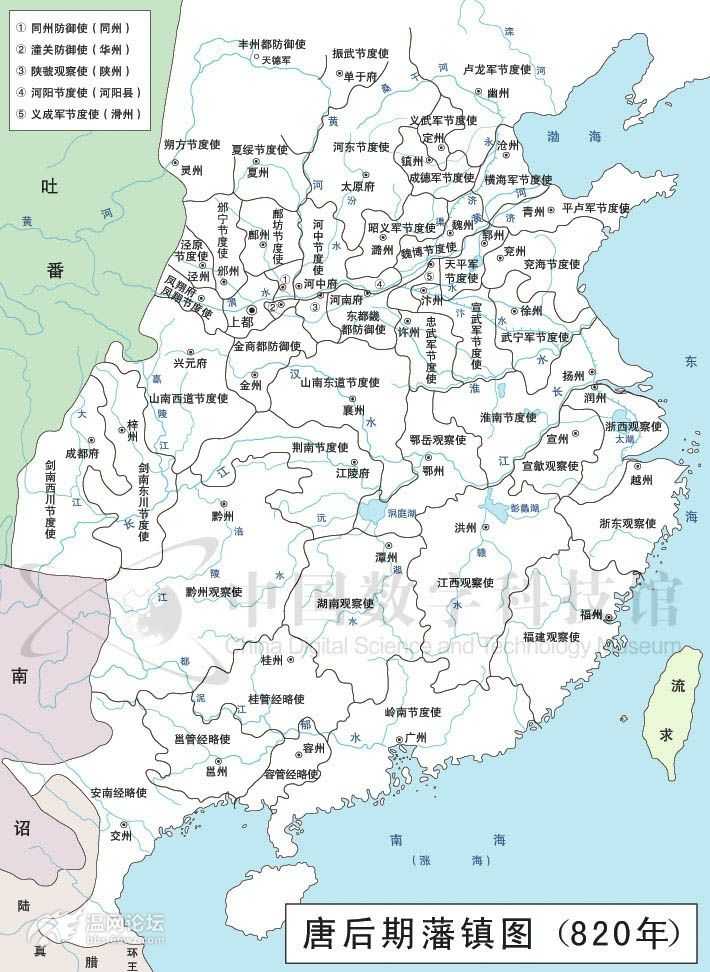
During the Yuanhe period, there were approximately forty-eight vassal towns: The distribution of vassal towns is based on the fifteen tracts that divided the world's prefectures and counties during the reign of Emperor Xuanzong of the Tang Dynasty. Guannai and Gyeonggi 2nd Road Jiedushi has 7: Weibei Jiedushi (Fangfang) (governing Fuxian, now Fuxian County, Shaanxi Province) Jiedushi of Pining (governing Pizhou, present-day Bin County, Shaanxi Province) Zhenwu Army Jiedu Envoy (administering Shanyu Duhufu, south of present-day Horinger County, Inner Mongolia) Fengxiang Jiedushi (governing Fengxiang Prefecture, present-day Fengxiang County, Shaanxi Province) Xia Sui Jiedushi (governing Xiazhou, present-day Baichengzi, Jingbian County, Shaanxi Province) Shuofang Jiedushi (governing Lingzhou, southwest of present-day Lingwu, Ningxia) Jingyuan Jiedushi (governing Jingzhou, now north of Jingchuan, Gansu Province). (Both) Defense Envoys have 3: Defense Envoy of Fengzhou Capital (administering Tiande Army in Fengzhou, northeast of present-day Uradqian Banner, Inner Mongolia) Tongzhou Defense Envoy (governing Tongzhou, present-day Dali, Shaanxi Province) Tongguan Defense Envoy (governing Huazhou, now Hua County, Shaanxi Province). Shannan East and West 2nd Road Jiedushi has 3: Jiedushi of Shannan East Road (governing Xiangzhou, present-day Xiangyang District, Xiangfan, Hubei Province) Jiedushi of Shannan West Road (governing Xingyuan Prefecture, present-day Hanzhong, Shaanxi Province) Jingnan Jiedushi (governing Jiangling Prefecture in present-day Jingzhou, Hubei Province). There are 2 defense envoys: The defense envoy of Jin and Shangdu (governing Jinzhou, present-day Ankang, Shaanxi Province). Defense envoy of the capital of Kuizhou (governing Kuizhou, present-day Fengjie, Chongqing) Jiannan Road Jiedushi has 2: Jiedushi of Dongchuan in Jiannan (governing Zizhou, present-day Santai County, Sichuan) Jiedushi of Xichuan in Jiannan (governing Chengdu Prefecture in present-day Chengdu, Sichuan). Jiangnan Three Roads (Qianzhong Road, Jiangnan East Road, Jiangnan West Road) Jiedushi has 0 There are 8 observers: Observer of Qianzhou (governing Qianzhou, present-day Pengshui County, Chongqing City) Hunan Observer (governing Tanzhou, now Changsha, Hunan) Fujian Observer (governing Fuzhou, now Fuzhou, Fujian) Jiangxi Observer (administering Hongzhou, now Nanchang, Jiangxi) Observer of Xuanshe (governing Xuanzhou, present-day Xuancheng, Anhui) Observer of Western Zhejiang (governing Runzhou, now Zhenjiang, Jiangsu) Observer of Eastern Zhejiang (governing Yuezhou, now Shaoxing, Zhejiang) Eyue Observer (governing Ezhou, present-day Wuchang District, Wuhan, Hubei Province). Huainan Road Jiedushi has 1: Huainan Jiedushi (governing Yangzhou, northeast of today's Yangzhou, Jiangsu Province). Lingnan Road Jiedushi has 1: Lingnan Jiedushi (governing Guangzhou, now Guangzhou, Guangdong). There are 4 economic envoys: Annan Economic Envoy (governing Jiaozhou, present-day Hanoi, Vietnam) Gui Guan Jing Lue En (governing Guizhou, now Guilin, Guangxi) Rongguanjinglueshi (governing Rongzhou, now Rongxian County, Guangxi) Yong Guan Jing Lue Envoy (governing Yongzhou, now Nanning, Guangxi). Henan and Duji Roads Jiedushi has 6: Jiedushi of the Xuanwu Army (governing Bianzhou, now Kaifeng, Henan) Jiedushi of Wuning Army (governing Xuzhou, present-day Xuzhou, Jiangsu Province) Jiedushi of the Zhongwu Army (governing Xuzhou, present-day Xuchang, Henan) Pinglu Jiedushi (governing Qingzhou, present-day Qingzhou, Shandong) Tianping Army Jiedu Envoy (governing Yunzhou, now northwest of Dongping, Shandong) Jiedushi of Yicheng Army (governing Huazhou, southeast of present-day Hua County, Henan Province) Du Defender 1: Defense Envoy of the Eastern Capital City (governing Henan Prefecture, present-day east of Luoyang, Henan Province) Observer 2: Yanhai Observer (governing Yanzhou, now Yanzhou, Shandong) Observer envoy of Shaanxi and Guo (governing Shaanzhou, southwest of present-day Sanmenxia, Henan). Hebei Road Jiedushi has 6: Heyang Jiedu Envoy (governing Heyang County, Huaizhou, now on the north bank of the Yellow River northeast of Luoyang, Henan) Wei Bo Jiedushi (governing Weizhou, now Daming County, Hebei Province) Chengde Jiedushi (governing Zhenzhou, present-day Zhengding County, Hebei Province) Heng Haijun Jiedushi (governing Cangzhou, southeast of today's Cangzhou, Hebei Province) Yiwu Jiedushi (governing Dingzhou, now Dingzhou, Hebei Province) Lulong Jiedushi (governing Youzhou, southwest of present-day Beijing) Ha Tung Road Jiedushi has 3: Hezhong Jiedushi (governing Hezhong Prefecture, present-day Puzhou Town, Yongji, Shanxi) Hedong Jiedushi (governing Taiyuan Prefecture, present-day Taiyuan, Shanxi). Zhaoyi Jiedushi (governing Luzhou, now Changzhi, Shanxi) Note: Longyou Dao fell into Tubo after the Anshi Rebellion, and the vassal towns it belonged to are not included in this list.
Zizhi Tongjian 878
Qianfu five years of Wuxu, 878 AD In spring, in the first month of the lunar month, on the first day of the lunar month, there was heavy snowfall. Knowing that Wen Fang was congratulated, the thieves had reached the city walls and fell into Luocheng. The generals and assistants jointly managed the city and guarded it. At dusk, Zhi Wen still did not come out. The general asked Zhi Wen to come out to care for the soldiers, and Zhi Wen marched with gauze, hat, and fur. At that time, there were five hundred Shatuo in Xiangyang. Fu and Fu went to Jingmen. When they encountered thieves, Shatuo rode hard and defeated them. When Xianzhi heard about it, he burned and plundered Jiangling and left. There were 300,000 households under Jiangling City, and there were even three or four dead. Renyin recruited the deputy envoy Zeng Yuanyu to defeat Wang Xianzhi in the east of Shenzhou. He killed ten thousand people and recruited and dispersed ten thousand people. The imperial edict was that Song Wei had been ill for a long time, so he stopped recruiting envoys and returned to Qingzhou. Zeng Yuanyu was appointed as the recruiting envoy, and Zhang Zimian, the governor of Yingzhou, was appointed as the deputy envoy. In Gengxu, Xichuan Jiedu envoy Gao Pian was appointed as Jingnan Jiedushi envoy and salt and iron transport envoy. Ke Yong, the son of Li Guochang, the Zhenwu Jiedushi envoy, served as the deputy military envoy of Shatuo and garrisoned Weizhou. At that time, thieves were swarming in Henan. Li Jinzhong, the military commander of Shatuo in Yunzhou, and Kang Junli, Xue Zhiqin, Cheng Huaixin, Li Cunzhang and others conspired: "Today there is great chaos, and the imperial orders are no longer carried out in all directions. This is the time when a hero achieves fame and wealth. Although our subordinates have many soldiers, Li Zhen is a high-ranking official and is famous all over the world. If his son is brave enough to do things, Daibei will not be able to defeat him." Everyone thinks so. Jun Li is a native of the Tang Dynasty; Cunzhang is a native of Yunzhou; Zhiqin is a native of Fengcheng. Duan Wenchu, the defense envoy of Hui Datong and also the land and water transportation envoy, recommended the famine to the north, but the water transportation could not be continued. Wen Chu reduced the clothes and rice of the sergeants quite a bit, and used a slightly harsher style, which made the sergeants resentful and angry. After being loyal, he sent the emperor to Weizhou and said Ke Yong raised troops to remove Wen Chu and replace him. Ke Yong said: "My father is in Zhenwu, and I will report it soon." Jun Li said: "Now the plot has been leaked, and if it is slow, things will change, so why bother to send orders from thousands of miles away!" So Zhongye Commandery's Ya soldiers attacked Ya City, and held Wen Chu and the judge Liu Hanzhang in prison. Knowing the affairs of the army and state, he summoned Ke Yong. Ke Yong commanded his troops to go to Yunzhou and withdraw their troops. On Gengwu in the second month, they arrived at the city. Tens of thousands of people gathered under the cockfighting platform. Ren Shen, as a loyal envoy, sent the talisman seal, please use it for defense. Guiyou, Jin Zhongzhi, Wen Chu and other five people sent the cockfighting platform to the audience. Ke Yong ordered the soldiers to eat it and ride on its body. In Jiaxu, Ke Yong went into the mansion to take charge of affairs and ordered the officers and soldiers to ask for orders; the court did not allow it. Li Guochang said: "I beg the court to expedite the defense envoy of Datong. If Ke is disobedient, I will ask my troops to fight against him. I will never love a son and bring down the country." The imperial court wanted to make Ke use the imperial edict of Guochang, but he would get it, so he sent the secretary of the Ministry of Agriculture to announce the comfort envoy to the Datong army. He also appointed his imperial servant Lu Jianfang as the defense envoy of Datong. Yang Zhiwen was demoted to Sima of Chenzhou. Zeng Yuanyu reported that Wang Xianzhi was defeated in Huangmei, killing more than 50,000 people. He chased Xianzhi and passed down his leader, and the rest of the party dispersed. Before Huang Chaofang attacked Bozhou, he sent the rest of Shuai Xianzhi to return. He promoted Chao as the king, named General Chongtian, changed his name to King Ba of the Yuan Dynasty, and appointed his official subordinates. Chao attacked Yizhou and Puzhou. Since he was repeatedly defeated by the officers and soldiers, he left a letter to Zhang Sen, the envoy of Tianping Jiedu, asking him to report it. The imperial edict made Chao the right guard general and ordered Yunzhou to disarm. The nest never came. In addition, Li Fu, the governor of Shannan East Road, and Ping Zhangshi were rewarded for their contribution to saving Jingnan. In March, a group of bandits fell into Langzhou and Yuezhou. When the envoy Zeng Yuanyu was stationed in Jing and Xiang, Huang Chao raided Song Dynasty and Bian from Puzhou, so he sent his deputy envoy Zhang Zimian to camp in the southeast to recruit the envoy. Huangchao attacked Weinan, then attacked Ye and Yangzhai. An imperial edict was sent to send thousands of soldiers from Heyang to the eastern capital, and together with 2,000 soldiers from Xuanwu and Zhaoyi, they guarded the palace. Liu Jingren, the general of Shenwu on the left, went to the east to help and contain the envoys, and sent troops to the three towns. He still asked the east capital to recruit 2,000 troops. Jingren, the grandson of Chang. He also ordered Zeng Yuanyu to return his troops to the eastern capital, and mobilized three thousand troops to guard Fuyuan, Yique, Heyin and Wulao. Wang Xianzhi's remnant party, Wang Chong, was trapped in Hongzhou, and Jiangxi observation envoy Gao Xiang rushed to Hukou. The thieves turned to plunder Hunan, but Cao Shixiong plundered Xuan and Run. Zeng Yuanyu and Yang Fuguang were ordered to lead troops to rescue Xuan and Run. Hunan's army was in turmoil, and Gao Jie was driven away to observe the envoy Cui Jin. Jin, the son of Yan. Huang Chao led his troops across the river and captured Qian, Ji, Rao, Xin and other prefectures. The imperial court appointed Li Keyong to occupy Yunzhong. In April of Xia, Lu Jianfang, the former defensive envoy of the Datong Army, was appointed as Zhenwu Jiedushi, and Li Guochang, the Zhenwu Jiedushi envoy, was appointed as Datong Jiedushi. It was thought that Ke Yong would not be able to refuse. According to the imperial edict, the military reserves of the Eastern Capital were insufficient, so they lent money and grain from rich merchants and travelers to pay for several months. They still granted the ministers in the Kongming Palace five passes to the imperial censor, and ten passes to the supervising censor. Those who could become a monk and help the country with a little more money were given to them. There have been continuous droughts, locusts, bandits and robbers, half-cultivation and mulberry cultivation, insufficient rents and taxes, exhausted internal resources, and no help. Yang Yan, the minister of the Ministry of War and the magistrate, said that he was short of talents and could not help him. He begged for relief from the envoy's duties and expressed his sorrow. The edict does not allow it. Cao Shixiong invaded Huzhou, and Zhenhai Jiedushi Pei Chu sent troops to defeat it. After Wang Chongyin died, he took Xu Tang Ju to Hongzhou. Raozhou generals Peng Youzhang and Yiying camp conquered Raozhou. Nanzhao sent its chieftain to Zhao Zongzheng to come and invite him to marry him. There was no sign of marriage, but he ordered the governor Shuang to write a letter in the ultimatum, asking him to be his younger brother but not to become a minister. The imperial edict was discussed by hundreds of officials. Cui Dan, the Minister of Rites, and others thought: "Nanzhao is arrogant and disrespectful, and Gao Pian is not up to the standard. Instead, he was induced to use it because of a monk's grumbling and humble words. If he accepts his invitation, he may laugh at his descendants." After hearing this, Gao Pian argued with Dan and issued an edict to explain it. Dan, the son of Yu. In the fifth month, Bing Shenshuo, Zheng Tian and Lu Xie discussed the barbaric affairs. They wanted to make peace with them, but Tian Gu argued that it was impossible. With anger, he picked up his clothes, dropped his inkstone to the ground, and broke it. After hearing this, he said: "The ministers criticized each other, why should they punish the world with rituals!" Ding You, Tie and Zhi were all dismissed as masters, guests, and divisions. In order to carry out the imperial edict, Douluo, the Minister of the Ministry of Hubu, was appointed as the Minister of the Ministry of War, and Cui Hang, the Minister of the Ministry of Personnel, was appointed as the Minister of the Ministry of Hubu, together with Tongping Zhangshi. At that time, when the prime minister had a beggar who was fond of alms, he would often send someone to store money in a cloth bag to accompany him. Whenever he went out to give alms to beggars, the road would be filled with tatters. A scholar wrote a rule saying: "Nowadays, the people are exhausted and full of bandits and thieves. It is advisable for the prime minister to appoint talents and appoint capable people, to keep track of common people's affairs, to donate unnecessary expenses, to close the door to private visits, so that everything can find its place. If the family is well-fed and has no poverty, why do you need to do such small favors?" The prime minister was furious. Du Hong, the general of Yongzhou, sent Duan Yingbao to Nanzhao and returned after a year. In Jiachen, Xin Tan sent back the inspector Jia Hong, generals Zuo Yu and Cao Lang to Nanzhao. Li Guochang wanted his father and son to occupy the two towns together, and Datong was able to make a book, destroy it, kill the supervisory army, and not accept his replacement. He joined forces with Li Keyong to capture the Zhelu army, and attacked the Ningwu and Kelan armies. Lu Jianfang went to Zhenwu and died in Lanzhou. In Ding Si, Dou Huan, the governor of Hedong Jiedu, sent people to attack Jinyang. Before long, Du Yakang Chuangui was appointed as the governor of Daizhou, and a thousand native troops were sent to garrison Daizhou. When the local group arrived in the north of the city, the seductress team did not send out their troops, hoping for a good reward. At that time, the treasury of the government was exhausted, so Huan sent his horse and horse to Yu to wait for Deng Qian to come and comfort him. Tuan Tuan C061 Qian took his body from his bed and brought it into the government. Huan and the supervisor sent out a consolation edict of their own accord. They gave three hundred dollars and one end of cloth, and the crowd settled down. Duke E of Yatian gave money and cloth to the rebellious army, so he robbed him and made him a general. He went to Daizhou and borrowed 50,000 yuan from merchants to help the army. The imperial court considered Huan to be incompetent. In June, Cao Xiang, the former military envoy of Zhaoyi, was appointed as the military envoy to Hedong. Wang Xianzhi's remaining party plundered western Zhejiang, and the imperial court appointed Gao Pian, the military envoy of Jingnan Province, to be famous in Tianping. There were many Yun people in Xianzhi's party, so they moved Pian to become the military envoy of Zhenhai. Shatuo burned Tanglin and Guoxian, and entered Xinzhou. In autumn, July, Cao Xiang arrived in Jinyang. In Jihai, arrest the thirteen people who killed Deng Qian and kill them. When the Yiwu soldiers arrived in Jinyang, they did not disarm and cheered for superior rewards. They killed one of the ten generals and it was decided. Fa Yicheng, Zhongwu, Zhaoyi, and Heyang soldiers gathered in Jinyang to control Shatuo. In August, Wuyin, Cao Xiang led troops to rescue Xinzhou. Shatuo attacked Kelan's army and fell into Qiluocheng. He defeated the army in Honggu and guarded Jinyang behind closed doors. Huangchao invaded Xuanzhou, but Xuanshe's observation envoy Wang Ning refused and was defeated by Nanling. Chao failed to attack Xuanzhou, so he led troops into eastern Zhejiang, opened a mountain road for 700 miles, and attacked the Fujian states. In September, Pinglu Army played a rhythm to make Song Wei die. Xin Chou used various camps to recruit the envoy Zeng Yuanyu and led the Pinglu Jiedu envoy. In Renyin, Cao Xiang passed away suddenly. On Bingwu, Zhaoyi's troops plundered Jinyang. The citizens of Fang attacked them together, killing more than a thousand people, and then collapsed. Li Wei, the minister of Zhongshu and the minister of Tongping, stayed behind in the eastern capital. Zheng Congyun, the Minister of the Ministry of Personnel, was appointed as the Minister of Zhongshu and Tongping Zhangshi. Cong Chan is the grandson of Yu Qing. Li Du, the Minister of Hubu, the Minister of Hubu, Tongping Zhangshi, and the envoy of Hezhong Jiedushi. In winter, October, Li Jun, the military envoy of Zhaoyi, Li Keju, the military envoy of Youzhou, and the chiefs of Tuguhun, Helianduo and Bai Yicheng, the chiefs of Shatuo, Anqing, and the chiefs of Sage, Mi Haiwan, joined forces to attack Li Guochang and his son in Yuzhou. In November, during the Sino-Japanese War, Kelan's army crossed the city to meet Shatuo. In Ding Wei, Hedong Xuanwei envoy Cui Jikang was appointed as Hedong Jiedu and recruited envoys on behalf of the northern camp. Shatuo attacked Shizhou, Gengxu, Cui Jikang rescued him. In December, during the Jiaxu period, Huang Chao fell into Fuzhou, and Wei Xiu, the observation envoy, abandoned the city and fled. When Nanzhao's envoy Zhao Zongzheng returned to his country, Zhongshu did not reply to Du Shuang's ultimatum, but Cui Anqian, the governor of Xichuan, sent the letter to Anqian to answer it. Cui Jikang and Zhaoyi Jiedu envoy Li Jun and Li Keyong fought in Honggu. The two towns were defeated and Jun died in the battle. Zhaoyi's troops returned to Daizhou. The soldiers looted and killed all the people in Daizhou. The remaining people returned to Shangdang from Yaming Valley. During Wang Ying's Rebellion, Dong Chang, a native of Lin'an, used his native troops to fight against the thieves and made great contributions to the general's defense with Shijing. That year, Cao Shixiong attacked two Zhejiang provinces. Hangzhou recruited thousands of soldiers from various counties and villages to fight against them. Chang and Qiantang Liu Meng'an, Ruan Jie, Fuyang Wenrenyu, Yanguan Xuji, Xincheng Du Leng, Yuhang Lingwenju, and Linping Cao Xin each became their capital generals. They were named the Eight Capitals of Hangzhou, and Chang was their leader. Later, Yu died and was replaced by Qiantang people. Qian Liu, a native of Lin'an, prospered with his bravery, and became a military commander in Shijingdu with his merits.
Huangchao Uprising
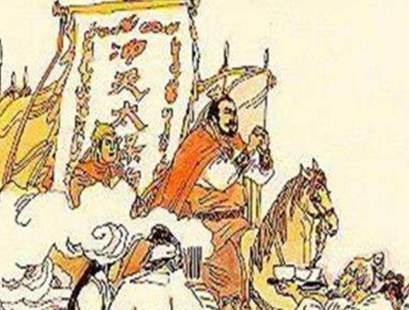
Time: 878 to 884. The popular uprising led by Huang Chao was the follow-up to Wang Xianzhi's uprising. It was also the longest-lasting, most widespread, and most far-reaching peasant uprising among the civil uprisings in the late Tang Dynasty. The Huangchao Rebellion spread to nearly half of the Tang Dynasty, leading to a great decline in national power at the end of the Tang Dynasty. Huang Chao's uprising adopted mobile warfare, avoiding the real and attacking the weak, and traveled throughout the vast areas of today's Shandong, Henan, Anhui, Zhejiang, Jiangxi, Fujian, Guangdong, Guangxi, Hunan, Hubei, Shaanxi and other provinces, shaking the rule of the Tang Dynasty. However, due to long-term mobile operations, no stable rear, lack of economic guarantee and mass base, it was difficult to last for a long time, which led to the final failure of the rebel army.
Rating
Community(0)
Official(3)Scraped 1mo ago
Forty-eight vassal towns
During the Yuanhe period, there were approximately forty-eight vassal towns: The distribution of vassal towns is based on the fifteen tracts that divided the world's prefectures and counties during the reign of Emperor Xuanzong of the Tang Dynasty. Guannai and Gyeonggi 2nd Road Jiedushi has 7: Weibei Jiedushi (Fangfang) (governing Fuxian, now Fuxian County, Shaanxi Province) Jiedushi of Pining (governing Pizhou, present-day Bin County, Shaanxi Province) Zhenwu Army Jiedu Envoy (administering Shanyu Duhufu, south of present-day Horinger County, Inner Mongolia) Fengxiang Jiedushi (governing Fengxiang Prefecture, present-day Fengxiang County, Shaanxi Province) Xia Sui Jiedushi (governing Xiazhou, present-day Baichengzi, Jingbian County, Shaanxi Province) Shuofang Jiedushi (governing Lingzhou, southwest of present-day Lingwu, Ningxia) Jingyuan Jiedushi (governing Jingzhou, now north of Jingchuan, Gansu Province). (Both) Defense Envoys have 3: Defense Envoy of Fengzhou Capital (administering Tiande Army in Fengzhou, northeast of present-day Uradqian Banner, Inner Mongolia) Tongzhou Defense Envoy (governing Tongzhou, present-day Dali, Shaanxi Province) Tongguan Defense Envoy (governing Huazhou, now Hua County, Shaanxi Province). Shannan East and West 2nd Road Jiedushi has 3: Jiedushi of Shannan East Road (governing Xiangzhou, present-day Xiangyang District, Xiangfan, Hubei Province) Jiedushi of Shannan West Road (governing Xingyuan Prefecture, present-day Hanzhong, Shaanxi Province) Jingnan Jiedushi (governing Jiangling Prefecture in present-day Jingzhou, Hubei Province). There are 2 defense envoys: The defense envoy of Jin and Shangdu (governing Jinzhou, present-day Ankang, Shaanxi Province). Defense envoy of the capital of Kuizhou (governing Kuizhou, present-day Fengjie, Chongqing) Jiannan Road Jiedushi has 2: Jiedushi of Dongchuan in Jiannan (governing Zizhou, present-day Santai County, Sichuan) Jiedushi of Xichuan in Jiannan (governing Chengdu Prefecture in present-day Chengdu, Sichuan). Jiangnan Three Roads (Qianzhong Road, Jiangnan East Road, Jiangnan West Road) Jiedushi has 0 There are 8 observers: Observer of Qianzhou (governing Qianzhou, present-day Pengshui County, Chongqing City) Hunan Observer (governing Tanzhou, now Changsha, Hunan) Fujian Observer (governing Fuzhou, now Fuzhou, Fujian) Jiangxi Observer (administering Hongzhou, now Nanchang, Jiangxi) Observer of Xuanshe (governing Xuanzhou, present-day Xuancheng, Anhui) Observer of Western Zhejiang (governing Runzhou, now Zhenjiang, Jiangsu) Observer of Eastern Zhejiang (governing Yuezhou, now Shaoxing, Zhejiang) Eyue Observer (governing Ezhou, present-day Wuchang District, Wuhan, Hubei Province). Huainan Road Jiedushi has 1: Huainan Jiedushi (governing Yangzhou, northeast of today's Yangzhou, Jiangsu Province). Lingnan Road Jiedushi has 1: Lingnan Jiedushi (governing Guangzhou, now Guangzhou, Guangdong). There are 4 economic envoys: Annan Economic Envoy (governing Jiaozhou, present-day Hanoi, Vietnam) Gui Guan Jing Lue En (governing Guizhou, now Guilin, Guangxi) Rongguanjinglueshi (governing Rongzhou, now Rongxian County, Guangxi) Yong Guan Jing Lue Envoy (governing Yongzhou, now Nanning, Guangxi). Henan and Duji Roads Jiedushi has 6: Jiedushi of the Xuanwu Army (governing Bianzhou, now Kaifeng, Henan) Jiedushi of Wuning Army (governing Xuzhou, present-day Xuzhou, Jiangsu Province) Jiedushi of the Zhongwu Army (governing Xuzhou, present-day Xuchang, Henan) Pinglu Jiedushi (governing Qingzhou, present-day Qingzhou, Shandong) Tianping Army Jiedu Envoy (governing Yunzhou, now northwest of Dongping, Shandong) Jiedushi of Yicheng Army (governing Huazhou, southeast of present-day Hua County, Henan Province) Du Defender 1: Defense Envoy of the Eastern Capital City (governing Henan Prefecture, present-day east of Luoyang, Henan Province) Observer 2: Yanhai Observer (governing Yanzhou, now Yanzhou, Shandong) Observer envoy of Shaanxi and Guo (governing Shaanzhou, southwest of present-day Sanmenxia, Henan). Hebei Road Jiedushi has 6: Heyang Jiedu Envoy (governing Heyang County, Huaizhou, now on the north bank of the Yellow River northeast of Luoyang, Henan) Wei Bo Jiedushi (governing Weizhou, now Daming County, Hebei Province) Chengde Jiedushi (governing Zhenzhou, present-day Zhengding County, Hebei Province) Heng Haijun Jiedushi (governing Cangzhou, southeast of today's Cangzhou, Hebei Province) Yiwu Jiedushi (governing Dingzhou, now Dingzhou, Hebei Province) Lulong Jiedushi (governing Youzhou, southwest of present-day Beijing) Ha Tung Road Jiedushi has 3: Hezhong Jiedushi (governing Hezhong Prefecture, present-day Puzhou Town, Yongji, Shanxi) Hedong Jiedushi (governing Taiyuan Prefecture, present-day Taiyuan, Shanxi). Zhaoyi Jiedushi (governing Luzhou, now Changzhi, Shanxi) Note: Longyou Dao fell into Tubo after the Anshi Rebellion, and the vassal towns it belonged to are not included in this list.
Zizhi Tongjian 878
Qianfu five years of Wuxu, 878 AD In spring, in the first month of the lunar month, on the first day of the lunar month, there was heavy snowfall. Knowing that Wen Fang was congratulated, the thieves had reached the city walls and fell into Luocheng. The generals and assistants jointly managed the city and guarded it. At dusk, Zhi Wen still did not come out. The general asked Zhi Wen to come out to care for the soldiers, and Zhi Wen marched with gauze, hat, and fur. At that time, there were five hundred Shatuo in Xiangyang. Fu and Fu went to Jingmen. When they encountered thieves, Shatuo rode hard and defeated them. When Xianzhi heard about it, he burned and plundered Jiangling and left. There were 300,000 households under Jiangling City, and there were even three or four dead. Renyin recruited the deputy envoy Zeng Yuanyu to defeat Wang Xianzhi in the east of Shenzhou. He killed ten thousand people and recruited and dispersed ten thousand people. The imperial edict was that Song Wei had been ill for a long time, so he stopped recruiting envoys and returned to Qingzhou. Zeng Yuanyu was appointed as the recruiting envoy, and Zhang Zimian, the governor of Yingzhou, was appointed as the deputy envoy. In Gengxu, Xichuan Jiedu envoy Gao Pian was appointed as Jingnan Jiedushi envoy and salt and iron transport envoy. Ke Yong, the son of Li Guochang, the Zhenwu Jiedushi envoy, served as the deputy military envoy of Shatuo and garrisoned Weizhou. At that time, thieves were swarming in Henan. Li Jinzhong, the military commander of Shatuo in Yunzhou, and Kang Junli, Xue Zhiqin, Cheng Huaixin, Li Cunzhang and others conspired: "Today there is great chaos, and the imperial orders are no longer carried out in all directions. This is the time when a hero achieves fame and wealth. Although our subordinates have many soldiers, Li Zhen is a high-ranking official and is famous all over the world. If his son is brave enough to do things, Daibei will not be able to defeat him." Everyone thinks so. Jun Li is a native of the Tang Dynasty; Cunzhang is a native of Yunzhou; Zhiqin is a native of Fengcheng. Duan Wenchu, the defense envoy of Hui Datong and also the land and water transportation envoy, recommended the famine to the north, but the water transportation could not be continued. Wen Chu reduced the clothes and rice of the sergeants quite a bit, and used a slightly harsher style, which made the sergeants resentful and angry. After being loyal, he sent the emperor to Weizhou and said Ke Yong raised troops to remove Wen Chu and replace him. Ke Yong said: "My father is in Zhenwu, and I will report it soon." Jun Li said: "Now the plot has been leaked, and if it is slow, things will change, so why bother to send orders from thousands of miles away!" So Zhongye Commandery's Ya soldiers attacked Ya City, and held Wen Chu and the judge Liu Hanzhang in prison. Knowing the affairs of the army and state, he summoned Ke Yong. Ke Yong commanded his troops to go to Yunzhou and withdraw their troops. On Gengwu in the second month, they arrived at the city. Tens of thousands of people gathered under the cockfighting platform. Ren Shen, as a loyal envoy, sent the talisman seal, please use it for defense. Guiyou, Jin Zhongzhi, Wen Chu and other five people sent the cockfighting platform to the audience. Ke Yong ordered the soldiers to eat it and ride on its body. In Jiaxu, Ke Yong went into the mansion to take charge of affairs and ordered the officers and soldiers to ask for orders; the court did not allow it. Li Guochang said: "I beg the court to expedite the defense envoy of Datong. If Ke is disobedient, I will ask my troops to fight against him. I will never love a son and bring down the country." The imperial court wanted to make Ke use the imperial edict of Guochang, but he would get it, so he sent the secretary of the Ministry of Agriculture to announce the comfort envoy to the Datong army. He also appointed his imperial servant Lu Jianfang as the defense envoy of Datong. Yang Zhiwen was demoted to Sima of Chenzhou. Zeng Yuanyu reported that Wang Xianzhi was defeated in Huangmei, killing more than 50,000 people. He chased Xianzhi and passed down his leader, and the rest of the party dispersed. Before Huang Chaofang attacked Bozhou, he sent the rest of Shuai Xianzhi to return. He promoted Chao as the king, named General Chongtian, changed his name to King Ba of the Yuan Dynasty, and appointed his official subordinates. Chao attacked Yizhou and Puzhou. Since he was repeatedly defeated by the officers and soldiers, he left a letter to Zhang Sen, the envoy of Tianping Jiedu, asking him to report it. The imperial edict made Chao the right guard general and ordered Yunzhou to disarm. The nest never came. In addition, Li Fu, the governor of Shannan East Road, and Ping Zhangshi were rewarded for their contribution to saving Jingnan. In March, a group of bandits fell into Langzhou and Yuezhou. When the envoy Zeng Yuanyu was stationed in Jing and Xiang, Huang Chao raided Song Dynasty and Bian from Puzhou, so he sent his deputy envoy Zhang Zimian to camp in the southeast to recruit the envoy. Huangchao attacked Weinan, then attacked Ye and Yangzhai. An imperial edict was sent to send thousands of soldiers from Heyang to the eastern capital, and together with 2,000 soldiers from Xuanwu and Zhaoyi, they guarded the palace. Liu Jingren, the general of Shenwu on the left, went to the east to help and contain the envoys, and sent troops to the three towns. He still asked the east capital to recruit 2,000 troops. Jingren, the grandson of Chang. He also ordered Zeng Yuanyu to return his troops to the eastern capital, and mobilized three thousand troops to guard Fuyuan, Yique, Heyin and Wulao. Wang Xianzhi's remnant party, Wang Chong, was trapped in Hongzhou, and Jiangxi observation envoy Gao Xiang rushed to Hukou. The thieves turned to plunder Hunan, but Cao Shixiong plundered Xuan and Run. Zeng Yuanyu and Yang Fuguang were ordered to lead troops to rescue Xuan and Run. Hunan's army was in turmoil, and Gao Jie was driven away to observe the envoy Cui Jin. Jin, the son of Yan. Huang Chao led his troops across the river and captured Qian, Ji, Rao, Xin and other prefectures. The imperial court appointed Li Keyong to occupy Yunzhong. In April of Xia, Lu Jianfang, the former defensive envoy of the Datong Army, was appointed as Zhenwu Jiedushi, and Li Guochang, the Zhenwu Jiedushi envoy, was appointed as Datong Jiedushi. It was thought that Ke Yong would not be able to refuse. According to the imperial edict, the military reserves of the Eastern Capital were insufficient, so they lent money and grain from rich merchants and travelers to pay for several months. They still granted the ministers in the Kongming Palace five passes to the imperial censor, and ten passes to the supervising censor. Those who could become a monk and help the country with a little more money were given to them. There have been continuous droughts, locusts, bandits and robbers, half-cultivation and mulberry cultivation, insufficient rents and taxes, exhausted internal resources, and no help. Yang Yan, the minister of the Ministry of War and the magistrate, said that he was short of talents and could not help him. He begged for relief from the envoy's duties and expressed his sorrow. The edict does not allow it. Cao Shixiong invaded Huzhou, and Zhenhai Jiedushi Pei Chu sent troops to defeat it. After Wang Chongyin died, he took Xu Tang Ju to Hongzhou. Raozhou generals Peng Youzhang and Yiying camp conquered Raozhou. Nanzhao sent its chieftain to Zhao Zongzheng to come and invite him to marry him. There was no sign of marriage, but he ordered the governor Shuang to write a letter in the ultimatum, asking him to be his younger brother but not to become a minister. The imperial edict was discussed by hundreds of officials. Cui Dan, the Minister of Rites, and others thought: "Nanzhao is arrogant and disrespectful, and Gao Pian is not up to the standard. Instead, he was induced to use it because of a monk's grumbling and humble words. If he accepts his invitation, he may laugh at his descendants." After hearing this, Gao Pian argued with Dan and issued an edict to explain it. Dan, the son of Yu. In the fifth month, Bing Shenshuo, Zheng Tian and Lu Xie discussed the barbaric affairs. They wanted to make peace with them, but Tian Gu argued that it was impossible. With anger, he picked up his clothes, dropped his inkstone to the ground, and broke it. After hearing this, he said: "The ministers criticized each other, why should they punish the world with rituals!" Ding You, Tie and Zhi were all dismissed as masters, guests, and divisions. In order to carry out the imperial edict, Douluo, the Minister of the Ministry of Hubu, was appointed as the Minister of the Ministry of War, and Cui Hang, the Minister of the Ministry of Personnel, was appointed as the Minister of the Ministry of Hubu, together with Tongping Zhangshi. At that time, when the prime minister had a beggar who was fond of alms, he would often send someone to store money in a cloth bag to accompany him. Whenever he went out to give alms to beggars, the road would be filled with tatters. A scholar wrote a rule saying: "Nowadays, the people are exhausted and full of bandits and thieves. It is advisable for the prime minister to appoint talents and appoint capable people, to keep track of common people's affairs, to donate unnecessary expenses, to close the door to private visits, so that everything can find its place. If the family is well-fed and has no poverty, why do you need to do such small favors?" The prime minister was furious. Du Hong, the general of Yongzhou, sent Duan Yingbao to Nanzhao and returned after a year. In Jiachen, Xin Tan sent back the inspector Jia Hong, generals Zuo Yu and Cao Lang to Nanzhao. Li Guochang wanted his father and son to occupy the two towns together, and Datong was able to make a book, destroy it, kill the supervisory army, and not accept his replacement. He joined forces with Li Keyong to capture the Zhelu army, and attacked the Ningwu and Kelan armies. Lu Jianfang went to Zhenwu and died in Lanzhou. In Ding Si, Dou Huan, the governor of Hedong Jiedu, sent people to attack Jinyang. Before long, Du Yakang Chuangui was appointed as the governor of Daizhou, and a thousand native troops were sent to garrison Daizhou. When the local group arrived in the north of the city, the seductress team did not send out their troops, hoping for a good reward. At that time, the treasury of the government was exhausted, so Huan sent his horse and horse to Yu to wait for Deng Qian to come and comfort him. Tuan Tuan C061 Qian took his body from his bed and brought it into the government. Huan and the supervisor sent out a consolation edict of their own accord. They gave three hundred dollars and one end of cloth, and the crowd settled down. Duke E of Yatian gave money and cloth to the rebellious army, so he robbed him and made him a general. He went to Daizhou and borrowed 50,000 yuan from merchants to help the army. The imperial court considered Huan to be incompetent. In June, Cao Xiang, the former military envoy of Zhaoyi, was appointed as the military envoy to Hedong. Wang Xianzhi's remaining party plundered western Zhejiang, and the imperial court appointed Gao Pian, the military envoy of Jingnan Province, to be famous in Tianping. There were many Yun people in Xianzhi's party, so they moved Pian to become the military envoy of Zhenhai. Shatuo burned Tanglin and Guoxian, and entered Xinzhou. In autumn, July, Cao Xiang arrived in Jinyang. In Jihai, arrest the thirteen people who killed Deng Qian and kill them. When the Yiwu soldiers arrived in Jinyang, they did not disarm and cheered for superior rewards. They killed one of the ten generals and it was decided. Fa Yicheng, Zhongwu, Zhaoyi, and Heyang soldiers gathered in Jinyang to control Shatuo. In August, Wuyin, Cao Xiang led troops to rescue Xinzhou. Shatuo attacked Kelan's army and fell into Qiluocheng. He defeated the army in Honggu and guarded Jinyang behind closed doors. Huangchao invaded Xuanzhou, but Xuanshe's observation envoy Wang Ning refused and was defeated by Nanling. Chao failed to attack Xuanzhou, so he led troops into eastern Zhejiang, opened a mountain road for 700 miles, and attacked the Fujian states. In September, Pinglu Army played a rhythm to make Song Wei die. Xin Chou used various camps to recruit the envoy Zeng Yuanyu and led the Pinglu Jiedu envoy. In Renyin, Cao Xiang passed away suddenly. On Bingwu, Zhaoyi's troops plundered Jinyang. The citizens of Fang attacked them together, killing more than a thousand people, and then collapsed. Li Wei, the minister of Zhongshu and the minister of Tongping, stayed behind in the eastern capital. Zheng Congyun, the Minister of the Ministry of Personnel, was appointed as the Minister of Zhongshu and Tongping Zhangshi. Cong Chan is the grandson of Yu Qing. Li Du, the Minister of Hubu, the Minister of Hubu, Tongping Zhangshi, and the envoy of Hezhong Jiedushi. In winter, October, Li Jun, the military envoy of Zhaoyi, Li Keju, the military envoy of Youzhou, and the chiefs of Tuguhun, Helianduo and Bai Yicheng, the chiefs of Shatuo, Anqing, and the chiefs of Sage, Mi Haiwan, joined forces to attack Li Guochang and his son in Yuzhou. In November, during the Sino-Japanese War, Kelan's army crossed the city to meet Shatuo. In Ding Wei, Hedong Xuanwei envoy Cui Jikang was appointed as Hedong Jiedu and recruited envoys on behalf of the northern camp. Shatuo attacked Shizhou, Gengxu, Cui Jikang rescued him. In December, during the Jiaxu period, Huang Chao fell into Fuzhou, and Wei Xiu, the observation envoy, abandoned the city and fled. When Nanzhao's envoy Zhao Zongzheng returned to his country, Zhongshu did not reply to Du Shuang's ultimatum, but Cui Anqian, the governor of Xichuan, sent the letter to Anqian to answer it. Cui Jikang and Zhaoyi Jiedu envoy Li Jun and Li Keyong fought in Honggu. The two towns were defeated and Jun died in the battle. Zhaoyi's troops returned to Daizhou. The soldiers looted and killed all the people in Daizhou. The remaining people returned to Shangdang from Yaming Valley. During Wang Ying's Rebellion, Dong Chang, a native of Lin'an, used his native troops to fight against the thieves and made great contributions to the general's defense with Shijing. That year, Cao Shixiong attacked two Zhejiang provinces. Hangzhou recruited thousands of soldiers from various counties and villages to fight against them. Chang and Qiantang Liu Meng'an, Ruan Jie, Fuyang Wenrenyu, Yanguan Xuji, Xincheng Du Leng, Yuhang Lingwenju, and Linping Cao Xin each became their capital generals. They were named the Eight Capitals of Hangzhou, and Chang was their leader. Later, Yu died and was replaced by Qiantang people. Qian Liu, a native of Lin'an, prospered with his bravery, and became a military commander in Shijingdu with his merits.
Huangchao Uprising
Time: 878 to 884. The popular uprising led by Huang Chao was the follow-up to Wang Xianzhi's uprising. It was also the longest-lasting, most widespread, and most far-reaching peasant uprising among the civil uprisings in the late Tang Dynasty. The Huangchao Rebellion spread to nearly half of the Tang Dynasty, leading to a great decline in national power at the end of the Tang Dynasty. Huang Chao's uprising adopted mobile warfare, avoiding the real and attacking the weak, and traveled throughout the vast areas of today's Shandong, Henan, Anhui, Zhejiang, Jiangxi, Fujian, Guangdong, Guangxi, Hunan, Hubei, Shaanxi and other provinces, shaking the rule of the Tang Dynasty. However, due to long-term mobile operations, no stable rear, lack of economic guarantee and mass base, it was difficult to last for a long time, which led to the final failure of the rebel army.
You Might Also Like
Sword Master of the Tang Dynasty
Believe It Or Not

Reborn Female General
Qianshan Tea Guest

Li Zhi, Don't Be a Coward
Thieving Eyebrows And Rat Eyes
Ming Dynasty: Starting from the End of Hongwu
Why Not Romance

My Brother is the Most Handsome Man in the Qin Dynasty
Premium Cigarettes
Three Kingdoms: the Rebellious Son of the Guan Family, Long Yu Jingxiang
Milk Sugar Sugar Sugar
Great Song Dynasty Rascal
Very Useless And Naive

The First Village of Tang Dynasty
Morrowind Paradise
Great Inventors of the Three Kingdoms
Night Of Blood Sacrifice
Three Whippings Broke up the Relationship between Father and Son. Please Call Your Majesty the Prince
Treat You To Big Noodles