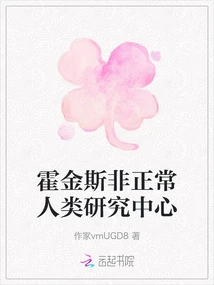
Hawkins Center for Abnormal Human Studies
About This Novel
My life in Hawkins focuses on a "non-standard solution". When I woke up and stepped into "Stranger Things," others might be thinking about saving the world, but what I was thinking was: "Would the math homework in 1981 be easier?" It turned out that my daily routine became like this: · Use topology to explain to Will what the "void" he painted might be connected to; · Use probability theory to help Dustin calculate the success rate of his new invention of frying the kitchen; · Use logic to try to understand why Steve keeps reciting nautical lines while I get ice cream; · Use sociology to observe the micro-power game when Mike, Lucas, and Jonathan all reached out to help me at the same time. And, of course, there was Henry, the pale, quiet boy who lived next door. Our conversations often go like this: Him: "Stars, the essence of life is chaos." Me: "Oh. Then you want to try using chaos theory to weed your lawn?" Here, fighting monsters is an intermittent task, but dealing with the youthful worries of my friends that overflow the screen, dealing with the sudden collective animalization, and always being on guard against a neighbor "formatting" the world are my main daily tasks. In short, this is a story about using abstract thinking to try to maintain a sense of routine in a strange world, and (maybe) save the world by the way. Welcome to my Hawkins, where everything, including love and fear, can be deconstructed into equations-although most of the time, the answers are more head-scratching.
Official Sources
What Readers Think
Rating
Community(0)
Rating
Community(0)
You Might Also Like

Report to the President! Your Little Ancestor is Here to Steal Your Heart Again
Jian Xiaomo

After the Flash Marriage, the Character Collapsed
Doubi In The World
From Then On, the Love Lasted Forever
Zixiamu
The Sweet Wife of a Top Student is Super Cute
Brilliant Brocade
Reborn Female General
Qianshan Tea Guest

The Chief Husband Seeks Status
Jiang Lijin

Long Shaoba Loves: Sweet and Hot Little Wife
Angel

The Boss Has Withdrawn from the Circle
Doubi In The World