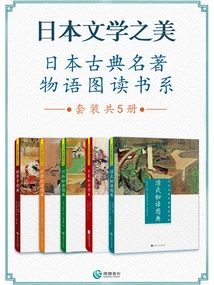
The Beauty of Japanese Literature: Illustrated Reading Series of Japanese Classical Classics (Set of 5 Volumes in Total)
by _
About This Novel
"The Tale of Genji" has had a huge impact on the development of Japanese literature and is known as the peak of Japanese classical literature. It narrates the life of a dreamy and handsome character "Genji", shows the various aspects of court life in the Heian period, and leaves a detailed and rich sketch of the aristocratic life in the prosperous Heian era. "The Tale of the Heike Illustrated Book" is a Japanese war-themed historical novel. It takes the historical chronology as the main axis and from the perspective of the Heike family, narrates in detail the entire process of the Genji and Heike families' struggle for power. This book excerpts and translates the wonderful chapters of "The Tale of the Heike" for readers to read and understand initially; it is also accompanied by a large number of exquisite illustrations, so that readers can have a deeper understanding of the plot of the story more intuitively while reading. "The Tale of Bamboo", in "picture scrolls" from different eras, jointly show various scenes such as "cutting bamboo", "transformation", "proposal", "ascension to heaven", and "scattering flowers" of this originator of "monogatari literature". It connects the heaven and the earth, and various characters are dancing, embodying a world where reality and fantasy are intertwined in the central picture of the story, a world of mysterious beauty and fantasy beauty. The "Ise Monogatari Illustrated Dictionary" faithfully brings to life the chic love story of the dynasty aristocrats in the Ise Monogatari, using elegant colors and threads to weave romantic dreams one after another, full of rich lyrical beauty. The Japanese songs in "Ci Shu" express the characters' love moods and the characters' emotional exchanges, and are rich in lingering emotions and aftertaste. "Paintings" are paired with "words and books" to create a symphony of Japanese classical beauty one after another. "Pillow Grass" is rich in content, covering the seasons and tastes of the four seasons, the etiquette in the palace, Buddhist affairs and personnel, the natural scenes of the capital's landscapes, flowers and birds, vegetation, sun, moon and stars, as well as the various figures of the palace masters. These are vividly depicted by the "Eakimaki" painter, which brings the refined beauty to the extreme, showing the beauty of palace life represented in "Pillow Grass" and the ideal beauty envisioned by the author.
Official Sources
What Readers Think
Rating
Community(0)
Rating
Community(0)
