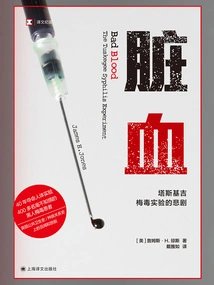
Dirty Blood
About This Novel
From 1932 to 1972, federal, state, and local public health authorities in the United States jointly conducted a human experiment in Tuskegee, Alabama, on more than 400 black male sharecroppers infected with syphilis. This was a non-therapeutic experiment to follow the spontaneous evolution of syphilis to see how it affected these sick black people. The black men were not told they had syphilis or what it might do to them, and, other than a small amount of medication for the first few months, they received no medical treatment except aspirin to relieve pain. Health officials at all levels, including black doctors and nurses, systematically deceived these people into believing they were sick and had "dirty blood" in their bodies. After a patient dies, every effort will be made to prevent the body from being released, for fear of exposing the truth of the experiment. By the end of the 40-year death observation period, more than 100 people had died of syphilis or related complications, and the survivors suffered from varying degrees of physical disability and mental illness. Public outcry grew, victims began to sue and seek compensation, and the black community was angry and distrustful, even hampering subsequent efforts by health officials to combat AIDS in the black community. Dirty Blood is not only the authoritative history of the Tuskegee syphilis experiments, but also a bioethics classic. It attempts to show that the Tuskegee Study was a logical outgrowth of American race relations and medical practice. This was also proven by a scandal that was later exposed: in the late 1940s, the U. S. Public Health Service conducted a study on syphilis infection among mentally ill patients and prisoners in Guatemala to determine the effectiveness of treatment. After its publication, "Dirty Blood" not only received a Pulitzer Prize nomination, but also spawned corresponding film and theater works.
Official Sources
What Readers Think
Rating
Community(0)
Rating
Community(0)