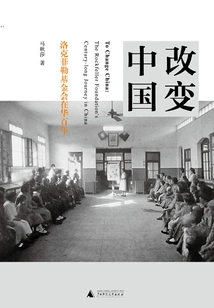
Changing China: the Rockefeller Foundation's Centenary in China
by Ma Qiusha
About This Novel
The Rockefeller Foundation's slogan is "promoting human welfare around the world." This enthusiasm for changing the world is admirable. However, in the process of "changing China", the Rockefeller Foundation has encountered unprecedented challenges. In 1915, after ten years of extensive and in-depth investigation and research, the Rockefeller Foundation established the world-class Peking Union Medical College. This "shining jewel in the crown of the Rockefeller Foundation" represents the most expensive and glorious page of the foundation's career in China, as well as its determination to change China with the scientific spirit. As the two sides continued to encounter conflicts and compromises in their cooperation, the Rockefeller Foundation gradually transformed from elite education to a county-based model that supported comprehensive rural development. Just as this model was beginning to bear fruit, China's political situation underwent tremendous changes, and Rockefeller had to withdraw from mainland China, interrupting half a century of efforts to "change China." After China's reform and opening up, the two sides resumed careful contacts and exchanges, and the Rockefeller Foundation became the first batch of foreign non-governmental organizations to enter China. The Rockefeller Foundation's experience in China is full of ups and downs, contradictions, failures and achievements. This is related to the Rockefeller Foundation's sense of cultural superiority and China's historical background, and is also inseparable from the strong idealism and humanistic spirit of both parties. When studying this period of history, the author puts Western medicine, the Rockefeller Foundation, American educators, missionaries, Chinese intellectuals, reformers, and the Chinese government under the spotlight one by one, exploring what factors are constrained by different civilizations in the process of exchanges, and how people in them use their own and each other's resources to find consensus with difficulty.
Official Sources
What Readers Think
Rating
Community(0)
Rating
Community(0)