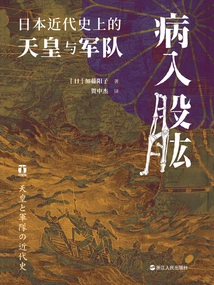
Illness Enters the Thigh: the Emperor and the Army in Modern Japanese History
by K
About This Novel
Japan's modern emperor system is supported by the concept of the emperor personally leading the army, emphasizing the emperor's absolute leadership of the army and the absolute loyalty of soldiers to the emperor. However, after World War I, the emperor's authority as the supreme commander was greatly shaken, and the military, which was regarded as a "gut-armed minister", also underwent a qualitative change. As Pandora's box of military interference in politics was opened, Japan stepped into the abyss of war. This book is the culmination of decades of "war" research by Yoko Kato, the "first person to study Japanese wars" and a professor at the University of Tokyo. It explores the development history of the relationship between the emperor and the military in modern times, traces the historical roots of Japan's founding of the army and constitution in the Meiji period, extends to the issues of disarmament and repatriation of the Japanese army, and covers the entire period of the existence of the "Japanese army". She analyzed the facts with clear logic and bright writing style, put forward a new perspective to capture history, analyzed the characteristics of modern Japanese political-military relations, and elaborated on the background of Japan's national decision-making. By exploring the relationship between the emperor and the military, we answer a long-standing question: "Why didn't the emperor stop the war?"
Official Sources
What Readers Think
Rating
Community(0)
Rating
Community(0)
