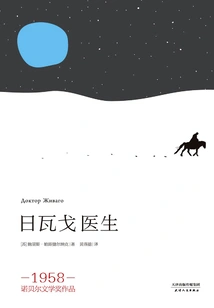
Doctor Zhivago
by R
About This Novel
"Doctor Zhivago" is a novel by the Russian poet Pasternak, which records the extraordinary experience of an ordinary Moscow doctor during the historical changes in Russia in the first half of the twentieth century. "Doctor Zhivago" truly restored the appearance of Soviet society and the true thoughts of the people - this made the Soviet authorities particularly frightened, and Pasternak's award touched their sensitive nerves even more. The government spared no effort to retaliate, but the author finally became unbearable and "voluntarily" gave up receiving the award. Pasternak also became the first writer to give up accepting the Nobel Prize for Literature since its establishment. Although he was oppressed by power, he was not afraid. Just like Doctor Zhivago in his novel, he stayed true to his sincerity and conscience until death. He said: "We owe a huge debt to our contemporaries. For many years, I only wrote lyric poems or engaged in translation. After that, I felt it was my responsibility to tell our times with novels."
Official Sources
What Readers Think
Rating
Community(0)
Official(95)Scraped 1mo ago
Yura was not unconscious for long. When he regained consciousness, he heard his uncle calling him. He responded and climbed out of the trench.
Nikolai Nikolayevich longed for new things.
It was fate that he would soon join the ranks of contemporary writers, professors, and revolutionary philosophers, a man with whom ideologically he shared certain concerns but who, except in terminology, was completely different from them. Those people, without exception, cling to a set of dogma (as long as they grasp the words and the superficial meaning, they are satisfied), but Father Nicholas has jumped out of Tolstoyism and revolutionary idealism and continues to explore forward. He passionately pursued a stimulating, tangible idea that would clearly point the way to change in motion, an idea that could be understood by a child or the ignorant like lightning or thunder.
Mother, son, and daughter are all undefended.
He picked her and her children up at the train station and drove them to the Montenegro Hotel on the other side of Moscow, where they stayed in a room he had booked for them. It was he who persuaded her to send her son Luo Jia to the military academy and her daughter Lara to the school he chose. He and Luo Jia laughed easily, while staring at Lala, making her face turn red with embarrassment.
A thunderous masterpiece
After this, I felt it was my duty to tell stories about our society in fiction.
The further things develop, the more complicated they become. Evidence must be found to prove that it was him and not Kornakov who Lara was going to shoot. Even if this is proven, the matter is still not over yet. She can only clear part of the charges, and she still has to be interrogated.
This book is good. I read Lan Yingnian's translation two years ago and was very moved by it.
It was published by October Literature and Art, and the poems at the back were translated by Gu Yu, which is also very good. After looking at the beginning, I see that this translation is not bad. It was imported from Taiwan and translated very well by Huang Yande.
Reading this kind of book is too tiring. Remembering people's names requires skill. There are too many inner narrations within the characters.
Give light an identity
After this reflection, he began to calm down. The night passed, and light probes penetrated into each room, like a thief or a pawn shop appraiser peering under the tables and chairs.
The tortuous political atmosphere and writing and publishing process
When World War II broke out, Pasternak was sent to the battlefield to work as a military reporter. Experiencing the battlefield firsthand shocked him greatly, and at the same time aroused the emotions and thoughts he had suppressed for many years. During the period of political relaxation after the war, he began writing "Doctor Zhivago." With years of pain, emotion, reflection on society, and memories of lost friends, this novel was written for nearly ten years and was finalized in 1955. At this time, Stalin had just passed away, and political high-pressure and ideological control were declining at this stage. He submitted the manuscript to major publishing houses in Moscow. However, the novel's theme, the emotions expressed, and some of the author's personal opinions were considered to be contrary to the ideological foundation of the Soviet Union, such as Marxism and revolutionary spirit, and it was not published after review. Afterwards, riots occurred in Hungary and Poland one after another, making it even more impossible for the work to be published in the country. Therefore, Pasternak submitted the manuscript to an Italian publisher.
Now they were the current magistrates of the town, and now they were unimportant members of the army and the health department, and they regarded this change of duties as an outdoor sport, a pastime, a game of blind men and elephants. However, they increasingly felt that it was time for them to retire and return home to civilian life.
Rating
Community(0)
Official(95)Scraped 1mo ago
Yura was not unconscious for long. When he regained consciousness, he heard his uncle calling him. He responded and climbed out of the trench.
Nikolai Nikolayevich longed for new things.
It was fate that he would soon join the ranks of contemporary writers, professors, and revolutionary philosophers, a man with whom ideologically he shared certain concerns but who, except in terminology, was completely different from them. Those people, without exception, cling to a set of dogma (as long as they grasp the words and the superficial meaning, they are satisfied), but Father Nicholas has jumped out of Tolstoyism and revolutionary idealism and continues to explore forward. He passionately pursued a stimulating, tangible idea that would clearly point the way to change in motion, an idea that could be understood by a child or the ignorant like lightning or thunder.
Mother, son, and daughter are all undefended.
He picked her and her children up at the train station and drove them to the Montenegro Hotel on the other side of Moscow, where they stayed in a room he had booked for them. It was he who persuaded her to send her son Luo Jia to the military academy and her daughter Lara to the school he chose. He and Luo Jia laughed easily, while staring at Lala, making her face turn red with embarrassment.
A thunderous masterpiece
After this, I felt it was my duty to tell stories about our society in fiction.
The further things develop, the more complicated they become. Evidence must be found to prove that it was him and not Kornakov who Lara was going to shoot. Even if this is proven, the matter is still not over yet. She can only clear part of the charges, and she still has to be interrogated.
This book is good. I read Lan Yingnian's translation two years ago and was very moved by it.
It was published by October Literature and Art, and the poems at the back were translated by Gu Yu, which is also very good. After looking at the beginning, I see that this translation is not bad. It was imported from Taiwan and translated very well by Huang Yande.
Reading this kind of book is too tiring. Remembering people's names requires skill. There are too many inner narrations within the characters.
Give light an identity
After this reflection, he began to calm down. The night passed, and light probes penetrated into each room, like a thief or a pawn shop appraiser peering under the tables and chairs.
The tortuous political atmosphere and writing and publishing process
When World War II broke out, Pasternak was sent to the battlefield to work as a military reporter. Experiencing the battlefield firsthand shocked him greatly, and at the same time aroused the emotions and thoughts he had suppressed for many years. During the period of political relaxation after the war, he began writing "Doctor Zhivago." With years of pain, emotion, reflection on society, and memories of lost friends, this novel was written for nearly ten years and was finalized in 1955. At this time, Stalin had just passed away, and political high-pressure and ideological control were declining at this stage. He submitted the manuscript to major publishing houses in Moscow. However, the novel's theme, the emotions expressed, and some of the author's personal opinions were considered to be contrary to the ideological foundation of the Soviet Union, such as Marxism and revolutionary spirit, and it was not published after review. Afterwards, riots occurred in Hungary and Poland one after another, making it even more impossible for the work to be published in the country. Therefore, Pasternak submitted the manuscript to an Italian publisher.
Now they were the current magistrates of the town, and now they were unimportant members of the army and the health department, and they regarded this change of duties as an outdoor sport, a pastime, a game of blind men and elephants. However, they increasingly felt that it was time for them to retire and return home to civilian life.