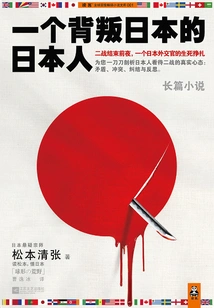
A Japanese Who Betrayed Japan
by J
About This Novel
On the eve of the end of World War II, a Japanese diplomat struggled for life and death. A thorough analysis of the Japanese's true mentality towards World War II: contradictions, conflicts, entanglements and reflections. In the spring of 1945, at the end of World War II, the defeated Japanese military government formulated a crazy "100 million Japanese decisive battle plan", preparing to sacrifice 100 million citizens to defend the emperor and drag the Allies into a lose-lose mess. As the whole of Japan fell into madness, first-class diplomat Nogami Kenichiro was quietly pushed to a turning point that determined the direction of history. Love country or love peace? Do you love the emperor or the people? Nogami Kenichiro answered this question with his own death and turned the tide of the war in one fell swoop.
Official Sources
What Readers Think
Rating
Community(0)
Official(8)Scraped 2mo ago
Diplomat's mission
Seicho Matsumoto is the originator of social mystery, and has inspired a new generation of social mystery novelists such as Keigo Higashino and Miyuki Miyabe. At the same time, he is one of the three masters of mystery novels in the world along with Conan Doyle and Agatha Christie. Unlike literal reasoning, which focuses on the murderer's modus operandi, social reasoning has a stronger tendency to reflect social phenomena, human nature, and human emotions through events. This book reviews Japan's postwar history from the perspective of a small person. It not only contains a diplomat's reflections on the war, but also a father's attachment to his family. The story takes place in Japan after the war. When Setsuko was visiting a temple, she accidentally saw the handwriting of her uncle Kenichiro Nogami on the name list. However, Nogami had died of overwork as the foreign minister of a neutral country long before Japan surrendered. Setsuko still told her aunt Takako about this coincidence. Takako naturally didn't take it too seriously. After all, she had accepted her husband's death. However, her daughter Kumiko's boyfriend Soda was particularly concerned about this matter. As a reporter, Soeda also specially interviewed Murao, a former subordinate of Nogami, and his friend Taki Ryosei. The result of the conversation was relatively official, and no useful information was obtained, but Soeda keenly felt that they seemed to be covering something up. What happened next also confirmed Soda's conjecture. Taki Ryosei recommended a famous painter to paint a portrait of Kumiko, but he suddenly committed suicide by taking sleeping pills. Taki Ryosei immediately quit his official job and changed his name to escape. The portrait was taken away by a mysterious person, but Kumiko needed to come to Kyoto to pick up the painting. When she arrived at her destination, she was still nowhere to be seen. She stayed at the M Hotel next door at night and was shot. The person who was shot was Murao. Soeda also quickly understood that the strange behavior of Taki Ryoshi and Murao was definitely not a coincidence. Perhaps Nogami was really not dead. I am afraid that some interests were involved and he was afraid to show his face, so he could only come to Japan incognito. After seeing this, I couldn't help but admire the author's conception, telling us this story step by step, from exploring whether Nogami is alive to what secrets Nogami hides. When we see the end, we can also find that Nogami's spread of news of death was actually a trick to erase his nationality. He repeatedly negotiated with the Allies to devise a strategy for Japan's defeat. On the one hand, there is the belief in serving the motherland that has been engraved in the bones since childhood, and on the other hand, the people whose wives and children were separated due to the war and the family that he cannot save. How does Nogami choose? At that time, the Japanese military government formulated the "100 Million Japanese Decisive Battle Plan" in an attempt to sacrifice 100 million citizens to harm both sides. What was involved behind this were the naval faction and the army faction. The former advocated peace, while the latter advocated war. During the war, the two forces had constant friction. It was only with the help of the navy that Nogami was able to reach the Allied Powers safely. Objectively speaking, the culprits of the war of aggression against China were also the Army faction, which acted in extremely extreme and paranoid ways, and even now they still want to make a comeback. There is also such a description in the book. When Ito Attaché learned that Nogami was still alive, his first reaction was to kill him. In their eyes, they felt that it was because of Nogami that the plan failed, and the people who pursued Taki Ryosei and Murao were also people under Ito Attaché. From Japan's perspective, Nogami is indeed a traitor and the culprit who brought Japan into defeat. But from the perspective of China or the Allied Powers, Nogami is a hero who dares to abandon his wife and children, his motherland and nationality, and cannot go against his own conscience and wishes to save the country at a critical moment when Japan is on the verge of destruction. Mr. Nogami's actions cannot be explained by traditional Japanese spirit, and we can only wait for the evaluation of future generations. But can Nogami's behavior really prevent him from returning to his hometown? This is also the tragedy of the little people. Churchill and Eden can publish their wartime memoirs, but the little people cannot. They will settle accounts at any time due to the problems of the times. Contradictory characters like Nogami also appeared in Jin Yong's Qiao Feng. During Yeluhong Ji's southern expedition, Qiao Feng used his own life to prevent the war. But after all, Qiao Feng was a Khitan. He could not have a clear position like Guo Jing and Zhang Wuji. After all, one was the country that gave birth to him, and the other was the country that raised him. Dealing between the Song and Liao countries, he was destined to be a tragic hero. Compared with Qiao Feng's liberating death, I admire Nogami even more. Death may only require a moment to wipe the neck with a knife, but it is not easy to persist in living. Just imagine how a person feels when he cannot return to his hometown and cannot accompany his relatives. I'm afraid there's nothing more desolate than this. When your loved ones feel like they're dead, what's the point of trying to live? I guess it comes from people's inner desires. The most tender side of Nogami is that he still can't worry about his family. Even if he looks at Kumiko from a distance, simply sitting on the beach and chatting with her, for Nogami, this is the happiest thing in life. He was almost assassinated because he rashly returned to his country to see his daughter. However, for him who had already died once, the worst outcome would be to die again. Death was also very indifferent to him. For him at this time, family was more important than anything else. Nogami may not be able to see Kumiko get married and have children, but it is enough to know that she is safe and sound. This comes from the deep concern of a middle-aged man. Although he has failed his country and family, he is still a good man who respects his country and loves his family the most. In Nogami's eyes, there is not much difference between Paris and the desert. Every corner of the earth was just a wilderness to him. Objectively speaking, the writing of this book is a bit cumbersome, which is probably a common problem among Japanese people. The plot either relies on coincidence or the help of Soeda's friends. Overall, it is a bit monotonous. Except for Kumiko, Nogami, and Soeda, the character creation is thin, but even so, this is a good book.
This book was recommended by my teacher and is very interesting.
good.
Because Seicho Matsumoto is Keigo Higashino's idol, I read Matsudai's works and thought they were great. Unfortunately, very few people read Matsudai's works now.
It is very good, has artistic conception, and is worthy of learning by Chinese literati.
Don't miss it if you pass by, come in and sign in.
A pretty good book....
spherical wilderness
I read the SP first, and the title of the book didn't connect it to the short drama I'd watched a lot before. Seicho Matsumoto's masterpiece is thought-provoking.
Enjoyable
Reading slowly will add fun to life!
Rating
Community(0)
Official(8)Scraped 2mo ago
Diplomat's mission
Seicho Matsumoto is the originator of social mystery, and has inspired a new generation of social mystery novelists such as Keigo Higashino and Miyuki Miyabe. At the same time, he is one of the three masters of mystery novels in the world along with Conan Doyle and Agatha Christie. Unlike literal reasoning, which focuses on the murderer's modus operandi, social reasoning has a stronger tendency to reflect social phenomena, human nature, and human emotions through events. This book reviews Japan's postwar history from the perspective of a small person. It not only contains a diplomat's reflections on the war, but also a father's attachment to his family. The story takes place in Japan after the war. When Setsuko was visiting a temple, she accidentally saw the handwriting of her uncle Kenichiro Nogami on the name list. However, Nogami had died of overwork as the foreign minister of a neutral country long before Japan surrendered. Setsuko still told her aunt Takako about this coincidence. Takako naturally didn't take it too seriously. After all, she had accepted her husband's death. However, her daughter Kumiko's boyfriend Soda was particularly concerned about this matter. As a reporter, Soeda also specially interviewed Murao, a former subordinate of Nogami, and his friend Taki Ryosei. The result of the conversation was relatively official, and no useful information was obtained, but Soeda keenly felt that they seemed to be covering something up. What happened next also confirmed Soda's conjecture. Taki Ryosei recommended a famous painter to paint a portrait of Kumiko, but he suddenly committed suicide by taking sleeping pills. Taki Ryosei immediately quit his official job and changed his name to escape. The portrait was taken away by a mysterious person, but Kumiko needed to come to Kyoto to pick up the painting. When she arrived at her destination, she was still nowhere to be seen. She stayed at the M Hotel next door at night and was shot. The person who was shot was Murao. Soeda also quickly understood that the strange behavior of Taki Ryoshi and Murao was definitely not a coincidence. Perhaps Nogami was really not dead. I am afraid that some interests were involved and he was afraid to show his face, so he could only come to Japan incognito. After seeing this, I couldn't help but admire the author's conception, telling us this story step by step, from exploring whether Nogami is alive to what secrets Nogami hides. When we see the end, we can also find that Nogami's spread of news of death was actually a trick to erase his nationality. He repeatedly negotiated with the Allies to devise a strategy for Japan's defeat. On the one hand, there is the belief in serving the motherland that has been engraved in the bones since childhood, and on the other hand, the people whose wives and children were separated due to the war and the family that he cannot save. How does Nogami choose? At that time, the Japanese military government formulated the "100 Million Japanese Decisive Battle Plan" in an attempt to sacrifice 100 million citizens to harm both sides. What was involved behind this were the naval faction and the army faction. The former advocated peace, while the latter advocated war. During the war, the two forces had constant friction. It was only with the help of the navy that Nogami was able to reach the Allied Powers safely. Objectively speaking, the culprits of the war of aggression against China were also the Army faction, which acted in extremely extreme and paranoid ways, and even now they still want to make a comeback. There is also such a description in the book. When Ito Attaché learned that Nogami was still alive, his first reaction was to kill him. In their eyes, they felt that it was because of Nogami that the plan failed, and the people who pursued Taki Ryosei and Murao were also people under Ito Attaché. From Japan's perspective, Nogami is indeed a traitor and the culprit who brought Japan into defeat. But from the perspective of China or the Allied Powers, Nogami is a hero who dares to abandon his wife and children, his motherland and nationality, and cannot go against his own conscience and wishes to save the country at a critical moment when Japan is on the verge of destruction. Mr. Nogami's actions cannot be explained by traditional Japanese spirit, and we can only wait for the evaluation of future generations. But can Nogami's behavior really prevent him from returning to his hometown? This is also the tragedy of the little people. Churchill and Eden can publish their wartime memoirs, but the little people cannot. They will settle accounts at any time due to the problems of the times. Contradictory characters like Nogami also appeared in Jin Yong's Qiao Feng. During Yeluhong Ji's southern expedition, Qiao Feng used his own life to prevent the war. But after all, Qiao Feng was a Khitan. He could not have a clear position like Guo Jing and Zhang Wuji. After all, one was the country that gave birth to him, and the other was the country that raised him. Dealing between the Song and Liao countries, he was destined to be a tragic hero. Compared with Qiao Feng's liberating death, I admire Nogami even more. Death may only require a moment to wipe the neck with a knife, but it is not easy to persist in living. Just imagine how a person feels when he cannot return to his hometown and cannot accompany his relatives. I'm afraid there's nothing more desolate than this. When your loved ones feel like they're dead, what's the point of trying to live? I guess it comes from people's inner desires. The most tender side of Nogami is that he still can't worry about his family. Even if he looks at Kumiko from a distance, simply sitting on the beach and chatting with her, for Nogami, this is the happiest thing in life. He was almost assassinated because he rashly returned to his country to see his daughter. However, for him who had already died once, the worst outcome would be to die again. Death was also very indifferent to him. For him at this time, family was more important than anything else. Nogami may not be able to see Kumiko get married and have children, but it is enough to know that she is safe and sound. This comes from the deep concern of a middle-aged man. Although he has failed his country and family, he is still a good man who respects his country and loves his family the most. In Nogami's eyes, there is not much difference between Paris and the desert. Every corner of the earth was just a wilderness to him. Objectively speaking, the writing of this book is a bit cumbersome, which is probably a common problem among Japanese people. The plot either relies on coincidence or the help of Soeda's friends. Overall, it is a bit monotonous. Except for Kumiko, Nogami, and Soeda, the character creation is thin, but even so, this is a good book.
This book was recommended by my teacher and is very interesting.
good.
Because Seicho Matsumoto is Keigo Higashino's idol, I read Matsudai's works and thought they were great. Unfortunately, very few people read Matsudai's works now.
It is very good, has artistic conception, and is worthy of learning by Chinese literati.
Don't miss it if you pass by, come in and sign in.
A pretty good book....
spherical wilderness
I read the SP first, and the title of the book didn't connect it to the short drama I'd watched a lot before. Seicho Matsumoto's masterpiece is thought-provoking.
Enjoyable
Reading slowly will add fun to life!
