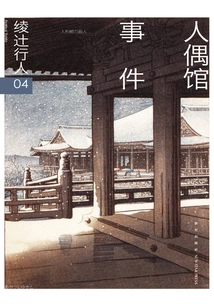
Ayatsuji Yukito 04: Doll House Incident
by H
About This Novel
The young painter Fei Long Xiangyi came to Tokyo and inherited the "Doll Hall" left by his father Gao Yang. In this building stand six mutilated dolls. These puppets were all made by Gao Yang, but no one knows why he did this - no one can know, because Gao Yang has hanged himself in the courtyard of the puppet house! Xiangben thought he would live a peaceful life, but the malice lurking in the dollhouse kept eating away at his nerves...
Official Sources
What Readers Think
Rating
Community(0)
Official(4)Scraped 1mo ago
Disappointing ending
I have always liked the teacher's museum series very much, and I have been planning to complete all the series. However, this work is a huge disappointment. Although I can understand the plot setting of "this museum is not that museum", the final reasoning makes people feel like "deliberately giving you a very shocking ending."
At that time, this kind of mental illness was not popular yet, but now it is on the streets, so it looked very ordinary, and I quickly guessed the murderer. I think this book is not as stretchy as the legend. My personal feeling is that the pacing is a bit problematic and it is very lengthy. I don't like the repetitive short sentences in mystery novels, which are like calling souls. The ending is a bit vague and should have different interpretations of the whole case. I read it in the order of the series. It is a bit ordinary after the previous one, but it is not bad. After all, the novel was written in 1989.
Wonder comes from comparison! ! !
If the first book in the "Pavilion Series" you read is "Puppet House", then putting aside the reasoning and trickery (this is hard to criticize, facepalm), from the depressing and sticky atmosphere to the unexpected twists and turns involving passers-by and supporting characters to the almost "foul" open-ended ending, everything is enough to whet your appetite and even "terrify you when you think about it"! But! Yes but! ! However, it is not the first work, and it happens to follow the "Maze Hall" that has performed wonderful twists again and again. In this way, it seems that there are only "the pseudo-male protagonist of the prince sick painter who is grumbling and worrying that the world will not know "I am not normal"" and "everyone". Every breath of his speech made it clear that "I am not a counterfeit of Shimada"... If it weren't for the open-ended ending that made me suddenly get goosebumps, the showdown between this "house" and the other "house" would really make people angry-- Nakamura Seiji: Snacks Morisai, I have something to say! Shimada Kiyoshi: I second my opinion! ! ! ! !
Much different from the maze hall
It can be seen from the beginning that there is a mental problem, and it is guessed that it is a narrative from the murderer's perspective. In the middle, he is unwilling to call the police, and even more guessed that he has a dual personality, one is negative, and the other is seeking death. Moreover, the final open ending does not explain why the frame is clearly capable but does not execute it. In the end, he hurriedly explains everything, which is a failure. It's just as disgusting as Jiangnan who can't be saved in the first Jukkaokan.
Rating
Community(0)
Official(4)Scraped 1mo ago
Disappointing ending
I have always liked the teacher's museum series very much, and I have been planning to complete all the series. However, this work is a huge disappointment. Although I can understand the plot setting of "this museum is not that museum", the final reasoning makes people feel like "deliberately giving you a very shocking ending."
At that time, this kind of mental illness was not popular yet, but now it is on the streets, so it looked very ordinary, and I quickly guessed the murderer. I think this book is not as stretchy as the legend. My personal feeling is that the pacing is a bit problematic and it is very lengthy. I don't like the repetitive short sentences in mystery novels, which are like calling souls. The ending is a bit vague and should have different interpretations of the whole case. I read it in the order of the series. It is a bit ordinary after the previous one, but it is not bad. After all, the novel was written in 1989.
Wonder comes from comparison! ! !
If the first book in the "Pavilion Series" you read is "Puppet House", then putting aside the reasoning and trickery (this is hard to criticize, facepalm), from the depressing and sticky atmosphere to the unexpected twists and turns involving passers-by and supporting characters to the almost "foul" open-ended ending, everything is enough to whet your appetite and even "terrify you when you think about it"! But! Yes but! ! However, it is not the first work, and it happens to follow the "Maze Hall" that has performed wonderful twists again and again. In this way, it seems that there are only "the pseudo-male protagonist of the prince sick painter who is grumbling and worrying that the world will not know "I am not normal"" and "everyone". Every breath of his speech made it clear that "I am not a counterfeit of Shimada"... If it weren't for the open-ended ending that made me suddenly get goosebumps, the showdown between this "house" and the other "house" would really make people angry-- Nakamura Seiji: Snacks Morisai, I have something to say! Shimada Kiyoshi: I second my opinion! ! ! ! !
Much different from the maze hall
It can be seen from the beginning that there is a mental problem, and it is guessed that it is a narrative from the murderer's perspective. In the middle, he is unwilling to call the police, and even more guessed that he has a dual personality, one is negative, and the other is seeking death. Moreover, the final open ending does not explain why the frame is clearly capable but does not execute it. In the end, he hurriedly explains everything, which is a failure. It's just as disgusting as Jiangnan who can't be saved in the first Jukkaokan.
