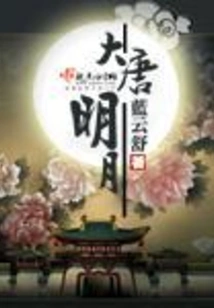
Datang Mingyue
by Lan Yunshu
About This Novel
The original work of the hit drama "The Wind Rises in Xizhou"! This is the most prosperous era: bright clothes, angry horses, orchids like flowers; This is the cruelest era: flesh and blood kill each other, and human lives are like mustard; Reborn in this era, Kudi Liuli's goal is: to live to old age and death without cavities... I waved my pen among the splendid bushes in the West Market, gathered at the Qushui Flower Fighting Party, slipped into Pingkang Square to listen to a tune, and sneaked into Ci'en Temple to watch a performance. She wants to be a passerby who can look at the mortal world in Chang'an and smile at the bright moon of the Tang Dynasty. However, in the spring of the fourth year of Yonghui, when the eternal drama of Wu Zhou's seizure of the Tang Dynasty finally quietly began, she discovered with tears in her eyes that she was not a spectator, but an actor. ------------------------- This article will show you the real Tang Dynasty as much as possible. Welcome to watch or fight. I have completed the work. The quality is excellent and the updates are stable. Please feel free to follow it. There is a QQ group 95872923, and the password is the name of any character in the book (the original group account is full, students who have joined are asked to move when they have time).
Official Sources
What Readers Think
Rating
Community(0)
Official(65)Scraped 2mo ago
The bright moon knows my heart
Sometimes there is no reason to like a book. I like Datang Mingyue. I can honestly say that this book is one of the best novels I have read in the past three years. If you want to say that it is a romance, I am afraid it does not count. I think it can be called "The Romance of the Tang Dynasty" as Yun Shuda said. A good book can withstand the passage of time. Datang Mingyue is not like those bloody romances that are mass-produced for the market. Under the guise of passion, the book has procrastination, love triangles, confusing relationships between characters, the title of the book is outrageous, the halo of the protagonist, and other gimmicks. Maybe it's because I haven't been exposed to enough books, so I used to like some romance novels with bloody plots, but now I can't stand it after opening a chapter. Just the name of the book's celebrity has turned my appetite away. Datang Mingyue is not the case. It is a novel that you have to read carefully, and it is a novel that you will benefit a lot from after reading it. The book focuses on the protagonists Liuli and Pei Xingjian. The couple has been supporting each other for forty years, with doubts, sorrows and joys. She is not an omnipotent heroine. Liuli is as simple as her name. She has no big ambitions in her life. She just wants to paint landscapes all over the world. She is tenacious and pure. He keeps his promise and is a Confucian general. His life deeds are exaggerated in a big pen. There is no exaggeration but it can penetrate the back of the paper. He once saw the sadness and a piece of it. The innocent heart was betrayed and reviled, and I also shed tears for keeping the promise; Liuli's love for keeping the promise, Chongyu and the promise-keeping friendship, Empress Wu and Li Zhi's suspicion and cruelty, the warmth and warmth of the wealthy clan, the Tang Dynasty The magnificent scenery of Chang'an, the battle of wits and courage of the people in the Western Regions... The time span is nearly half a century. You won't see the protagonists who have always been beautiful, but you will see them who have never changed their original intentions, which is a bright moon heart! Of course, I admire Lan Yunshuda very much here. She has extremely high cultural literacy and is also a doctorate from Tsinghua Academy of Fine Arts, so it is reasonable to write such a good book. I heard that Dafa wants to write a biography of Pingyang of the Tang Dynasty. I and millions of readers are just waiting here. Come on, Dafa! !
Real history is here!
In the novel, Liuli dragged her sick body to give birth to an heir for Pei Xingjian, and at the same time she had to be crushed by various female supporting characters. But in real history, Cudi can be described as a real winner in life, and has never had an aggrieved experience like in the novel. The historical prototype of the heroine Kudi Liuli is Kudi. Not only is her name unknown, but her surname is also controversial. "Shedi" is a Xianbei surname, originating from the ancient Western Qiang people. Later, some of the surnames were changed to "Kudi". By the Tang Dynasty, both "Shedi" and "Kudi" surnames existed. [Old Book of Tang·Biography of Pei Guangting] is called the Kudi family, [New Book of Tang·Biography of Pei Guangting] is called the Shedi family, and Pei Xingjian's epitaph is called the Kudi family. However, books may have typographical errors due to ancient printing, and epitaphs may be misprinted due to unclear handwriting. Therefore, the question of whether it is "Shedi" or "Kudi" is still doubtful. In addition, based on the origin of the surname Kudi or Shedi, it may be speculated that the Kudi family may have lived in northwest China in their early years. Pei Xingjian married his stepmother only after he took office in Xizhou. Therefore, the younger Kudi family should have married the older Pei Xingjian than in the novel. In the novel, Liuli and Pei Xingjian had four sons, but the two Tang books only record that Kudi was the mother of Pei Guangting. Pei Xingjian's epitaph has unclear records about his descendants, and there are several versions: "The eldest son/eldest grandson Shenxuan served as governor of Jingdeng and Dengzhou; the second son Yanxiu served as governor of Weiling; the second son Qingyuan was Xielulang; Ji Ziguangting served as a minister and minister of the Ministry of Civil Affairs." Not only is the identity of Pei Shenxuan's eldest son/eldest grandson unknown, but there are also two second sons, and twins will not be called this way. The youngest son, Pei Guangting, has the highest official position among Pei Xingjian's descendants. There is some disorder in seniority, which may be related to the identity of his biological mother. Pei Xingjian also had two daughters, one married to Su Weiwei and the other to Wang Xiu. From the age of these two, it can be seen that the two daughters were born earlier. Judging from the fact that Cudi was the imperial official and only promoted Pei Guangting, Pei Guangting should be the only birth record between Cudi and Pei Xingjian. Pei Xingjian's other children's biological mothers were either Lu's or concubines. Kudi's last words were to be buried near the tomb of Zen Master Xinxing in Zhongnan Mountain, and she did not want to be buried with her husband Pei Xingjian. (In the eighth month of the fifth year of Kaiyuan, the body was moved behind the spiritual pagoda of Zen Master Xinxing at Zhongnan Mountain. They were not buried together in ancient times, but their souls were all buried together, which was a legacy.) In Lu Xiangqian's [Analysis of Pei Xingjian's Marriage-- "A Trial Discussion on Hu Hua's Marriage Relationship in the Tang Dynasty", through the relationship between Pei Xingjian and his eldest son Pei Zhenyin, his eldest grandson/eldest son's unknown identity Pei Shenxuan, and Pei Xingjian's epitaph quoting the Book of Songs "He is beautiful and Meng Jiang, his virtues are not forgotten." This Meng Jiang refers to Wen Jiang, who had a disorderly conduct during the Spring and Autumn Period. It is speculated that Ku Di was first the wife of Pei Xingjian's eldest son, Pei Zhenyin, and later married Pei Xingjian. This is considered to be the reason why Ku Di did not want to be buried together. But Lu's words to the former family cannot be used to characterize this relationship. In the biography of Pei Xingjian in the Two Tang Dynasties, there is no record of Kudi's family. Therefore, it is speculated that the reason why Kudi and Pei Xingjian were not buried together may be because the relationship between the couple was relatively dull. Historically, Pei Xingjian's life was not like the novel in which he encountered repeated suppression, and was eventually so disappointed that he faked his death and hid in seclusion. Official history records that Pei Xingjian opposed Wu Zetian's establishment during the Yonghui period. This may be true, but the reason cannot be that "this is the beginning of national turmoil" written by feudal historians. After all, Wu Zetian was just Zhaoyi from a humble background and did not participate in politics. If Pei Xingjian can really foresee the future, then he himself is a time traveler. The reason why Pei Xingjian opposed Wu Zetian's establishment of a queen most likely represented the struggle between the gentry and the poor family. As a prominent family, the Pei family in Hedong would look down on Wu Zetian's poor background. After opposing Wu Zetian's establishment, Pei Xingjian was demoted to Xizhou by Emperor Gaozong of the Tang Dynasty. However, when he returned to the center of power again, he was quickly reused by Li Zhi, was given military power, and made great achievements. The only records of Kudi's family are all in the Wu Zhou period, which is not the timeline in the novel. Pei Xingjian's epitaph states: "The stepmother is Mrs. Kudi of Huayang, who has the virtue of being a concubine and the talent of Banzuo. The Holy Empress came to the court, summoned her to the palace, and worshiped her as the emperor." There are similar records in two books of the Tang Dynasty. It can be seen that after Wu Zetian came to the court, Kudi worshiped as the imperial official, drafted and produced books, and was deeply favored. Regarding the position of "royal official", it is more likely that it will still be a female official. But as the person responsible for drafting the edict, Cudi must have great political power. In addition, the good relationship between Kudis and Wu Zetian is not full of contradictions as in the novel. "When Ze Tianshi summoned her to the palace, she was treated very well by her relatives." (Old Book of Tang Dynasty, Pei Guangting's Biography) "Empress Wu was summoned into the palace, as a royal official, and she was very favored by her relatives." (New Book of Tang Dynasty, Pei Guangting's Biography) Pei Guangting's marriage to Wu Sansi's daughter also confirms that during the Wu and Zhou Dynasties, the Kudi family had good relations with Wu Zetian and the Wu clan. As for the reason for "being treated very personally", you can find it in Pei Xingjian's epitaph: "Mrs. She is profoundly spiritual and full of honors. She has realized the truth from afar. She is stubborn and tired, and transcends the world. Every time she reads the collected works of Zen Master Xingxing, she will always respect her." Wu Zetian believed in Buddhism and had a high level of Buddhist cultivation. He even composed the opening stanza himself: "The supremely profound and subtle Dharma has been encountered in hundreds of millions of tribulations. I have now accepted and upheld what I have seen and heard, and am willing to understand the true meaning of the Tathagata." Therefore, due to their common religious realm, these two women developed a sense of mutual sympathy and resonance, and then became close friends. Moreover, no matter whether there were more or less conflicts because of Pei Xingjian's previous demotion, they all understood each other and no longer cared about each other as in the past. On the other hand, regardless of whether the position of "royal official" is a female official or a foreign official, Kudis assisted Wu Zetian in drafting the edict, and she has become a deviant who challenged male hegemony as a woman just like Wu Zetian became emperor. Therefore, the two women join hands to fight against male hegemony, which has become another important reason why Cudi is so "kind to each other". Historically, after the death of her husband, Cudi became the emperor, drafted edicts, reached the pinnacle of life, and enjoyed the happy life of an independent woman! She should have great political power, write freely, and be arrogant among the crowd. She should not be like in this time-travel romance novel, being squeezed out by various female partners in turn, reduced to a reproductive machine, humbled to dust, and raised to the level of eyebrows! But in this novel, the only relationship between the heroine Kudi Liuli and women is fighting. Many female historical figures and fictional characters are just tools that exist to suppress and harm the heroine. The female protagonist can only rely on the protection of the male protagonist. It is her destiny that the male protagonist treats her well. After reading the plot of the novel, people feel extremely depressed and dull. If this novel is just a fictional romance, then no matter how willing the heroine is to be as contemptuous as a feudal woman, I have no intention of judging a single sentence. However, the author insists on writing with the names of real historical figures, portraying the historical figures beyond recognition, as if tearing and crushing beautiful things, but then covering them with inferior paint! Seeing the truth being buried and the facts being distorted, I was not only depressed and depressed, but also heartbroken beyond measure. I don't mean to criticize this novel. A few years ago, I had already heard a little bit about the historical figure Yu Zhengkudi. And in the autumn of 2019, ever since I heard that this time-travel romance novel whose heroine is based on Cudi was going to be made into a film and TV show, I finished reading the novel with infinite humiliation and tears. Faced with the author's cruel suppression and persecution of the heroine, I feel heartbroken and deeply regretful. I have learned from this painful experience and must tell the truth to the real Kurdish in history and get justice!
I have always admired authors who write about time travel with historical themes. This really requires real effort and a thorough understanding of history and characters👍
The Bright Moon of the Year - Comment on "The Bright Moon of the Tang Dynasty"
The female channel travels through the early days of Wu Zetian in the Tang Dynasty. She is inevitably involved in a battle between the inner house and the harem, and she lives in the cracks every day. The author probably focused on describing the customs and customs of the Tang Dynasty, and the details should be more rigorous. The background of this story is in the Tang Dynasty. If I understand correctly, the time setting should be before Wu Zetian came to power. At this time, Emperor Wu was still a concubine. Although he had begun to dazzle, there was still Queen Liu pressing down on him. In the society at that time, people had a strict hierarchy and were born with inferiority, which restricted certain daily things. At the same time, society's attitude towards the Hu people is also quite subtle. Some people regard the Hu people as strange, and some have natural discrimination, but these are not opinions that have come to the fore. Moreover, there is a rule that is closely related to the protagonist, that is, the girl Shi Qi must be betrothed through official channels before she gets married, which completely eliminates her idea of establishing a female household on her own, which is a bit miserable. At the same time, the protagonist's family is also in hell mode. After she came here, the current situation was that her biological mother had passed away, and her biological father's thoughts were not at home at all. The person in charge was a concubine who did not have enough status but was well-loved. Then this concubine and her daughter have been causing trouble for the protagonist. The protagonist has traveled through time but has not inherited his memories. It took him three years to learn how to speak and interact with others. His knowledge of his family relatives relies entirely on introductions from others, which is almost equivalent to a black eye. Fortunately, although her biological father was not very good, she still had a relatively reliable uncle's family, which gave her some breathing space and the foundation for a stable life. When the protagonist goes out, he turns over many times. First, he used his uncle's family to defeat his stepmother's conspiracy, and escaped from the fate of entering a jiafang. He also found a job as a pattern maker in a store, which was considered as resuming his previous career. Then, when she met her relatives who were not very kind-hearted, and got involved in a weird engagement conflict due to an accidental collision, she derogated herself, rejected both parties, and temporarily calmed down. However, this peace was temporary. When she made friends with powerful people, she was inexplicably involved in the harem dispute and almost got herself involved, but in the end she fell into one party's plan. But the ending can't be said to be bad. The people are good people, but the protagonist can't live the salty life he wants. I want to continue watching with some interest, and I am very curious about what kind of career the heroine during Wu Zetian's years will eventually have. At the same time, the fun of time travel novels is also to read those historical figures. Although I don't know any of the ministers and generals mentioned by the protagonist, Wang Bo and King Luo Bin have already appeared. They are actually from the same era, which is really informative.
There is neither the Tang Dynasty nor the bright moon (Part 2)
(I don't mean to judge this novel. A few years ago, I had already heard a little bit about the historical figure Yuzheng Kudi. And in the autumn of 2019, ever since I heard that the time-travel romance novel "Datang Mingyue", in which the heroine is based on Kudi, was going to be made into a film and television, I finished reading this novel with infinite humiliation and tears. Faced with the author's cruel suppression and persecution of Cudi, I feel heartbroken and deeply regretful that no one pays attention to the historical truth. I regret that many people have been led to a distorted historical understanding by this romance novel. Even such a romance novel full of loopholes can be mistaken for historical research by some historical novices! If "Datang Mingyue" is just a fictional romance, I have no intention of judging a single sentence. However, the author insists on using the names of real historical figures to write, as if tearing and crushing beautiful things, but then covering them with inferior paint. I have learned from this painful experience and must tell the truth to the real Kurdish in history and provide justice. ) (Part 2) Continued--(Part 2) At the end of the novel, Liuli decided to enter the court just to avenge Pei Xingjian, and use Wu Zetian's power to eliminate Pei Xingjian's former enemies. After the revenge was completed, she immediately gave up power, resigned from Wu Zetian and left. Historically, after her husband Pei Xingjian died, Kudi Yuzheng was recruited into the palace by Wu Zetian, worshiped as Yuzheng, and drafted books. This was the beginning of Kudi Yuzheng's career. Regarding the post of Yuzheng, "Emperor Ming appointed Yuzheng as Chief Silun." ([Book of Zhou·Shen Huizhuan]) Among them, "Silun" refers to the emperor's edict. [Tongdian] also has the following record: "Later Zhou Sui Dynasty, Zheng Wu Ming Tian Guan Si Hui, Zong Shi, Zuo Gong Bo, Yu Zheng..." From this we can see that from the Northern Zhou Dynasty to the Sui Dynasty, "Yu Zheng" was the foreign official who drafted edicts. But in the Five Dynasties period after the Tang Dynasty, "Yu Zheng" also referred to female officials. "At the time of Zhuangzong, the number of harems was particularly large, including Zhaorong, Zhaoyi, Zhaoyuan, Chushi, Yuzheng... The rest of the titles are incomparable." ([New History of the Five Dynasties·Biography of Emperor Zhuangzong of the Tang Dynasty, Empress Min Jing Liu's Biography]) Before the Northern Zhou and Sui Dynasties, the official system of the Tang Dynasty no longer had the position of "Yuzheng", and in the Five Dynasties after the Tang Dynasty, there was indeed the position of "Yuzheng" as a female official. Wu Zhou established many new official positions, and there is the possibility of setting up the post of "royal official" again. The epitaph of Sima Shenwei, the husband of another female official of the Wu Zhou Dynasty, Li Shi, reads: "Mrs. Li Shi of Longxi, in the early years of the book, the empress dowager came to court to ask for female history... In the 15th year of Chenji, Mo issued a poem and was written by many wives." It can be confirmed that the specific function of female officials in the Wu Zhou Dynasty was not palace affairs, but drafting edicts. Therefore, regardless of whether the "Yu Zheng" is a foreign official or a female official, the function of Kudi Yuzheng is the same as that of Yu Zheng as a foreign official. Pei Xingjian's epitaph records that "Zhongzong practiced Zuo, returned to his private family, and paid tribute every year." From "returning to his private family" and Zhongzong's humble attitude, we can infer that Ku Diyu was already quite public during the Wuzhou Dynasty and had a high political status. Furthermore, the epitaph of Pei Guangting records that "the rites of the wife of the Jin Dynasty of the mother's family were for the purpose of seizing power, and the Tao was in line with the state. She started from Weitang and entered the Wen Dynasty." As a feudal writing style, "rituals are for the seizure of power" indirectly pointed out how shocking such behavior was at that time. There is a bold speculation that regarding the theory of "entering the Wen Dynasty", there is indeed the possibility of becoming a foreign official. However, if Wu Zetian appoints women as foreign officials, it will inevitably touch the core interests of male society. Therefore, it is indeed more likely that the position of "royal official" is the position of a female official. However, even if "Yu Zheng" is the official title of a female official, the real Kudi Yuzheng in history was a woman who drafted and made books, and can be regarded as an ancient political heroine who challenged the authority of male rule. However, Liuli in the novel, as a modern time-traveling woman, attaches great importance to family life and has a limited taste for power. Her career has ended when she just started. She is even far less feminine than the original version of Kudi Yuzheng in ancient times. Not only is Kudi Liuli's concept of being a modern time traveler extremely unreasonable, there is also a time traveling woman in the novel, Cui Shisanniang, who also looks like a woman from the Ming and Qing Dynasties. Women in the Tang Dynasty had the right to reconcile with marriage. When Cui Shisanniang was forced to marry a loser in history, she had every chance to reconcile with Pei Yan. What's more, Pei Yan is a political opportunist, and his personal charm is probably far less than that of the male protagonist Pei Xingjian. But Cui Shisanniang's concept is like that of women in the Ming and Qing Dynasties, who "married a chicken, followed the chicken, married a dog, followed the dog". She only focused on planning a future for her husband, and even tried to change history. Many passionate and unrestrained women of the Tang Dynasty in the novel are also portrayed as short-sighted housewives, such as Princess Linhai, Princess Changle, and Mrs. Rongguo. The eldest princesses of the Tang Dynasty had a residence of 600 households and an independent princess palace. However, the eldest princesses became vicious female partners vying for petty profits in the house fight novel. Historically, Mrs. Rong Guo believed in Christianity and had a pure heart. But in the novel, Mrs. Rongguo began to have a formal friendship with Liuli because Liuli sold her a large property, and Mrs. Rongguo only wanted to cover up her grandson's crimes, ss many maids were silenced, and she was like a little woman who put interests first and had no idea of good and evil. "Datang Mingyue" has a certain fantasy color in its setting, including the prophecies of Li Chunfeng and Xuanzang, but it still maliciously smeares Z religious culture. Although Liuli said in the later period that he had read some F scriptures, he definitely did not read them at all. If Liuli's character image could be consistent with the real Kudi Yuzheng in history and had a certain degree of legal cultivation, Daci'en Temple would not only focus on concrete murals, and would not think that Xuanzang supported Wu Zetian in ascending to the throne as an act of condescension that "there is no real peace in this world." It would not misinterpret Wu Zetian's naming of his son "Shenxuan", and there would be no deep prejudice against Wu Zetian. In short, through the vilification of many historical figures, as well as the protagonist's incorrect ideas and timid behavior, the entire novel makes people feel seriously depressed and dull. The so-called "Datang Mingyue" is neither "Datang" nor "Mingyue". [Datang Mingyue] allows celebrities in the Tang Dynasty to hold on to the loyal thoughts of the Ming and Qing Dynasties and live an extremely depressing and mediocre life. The "Ming Moon of the Tang Dynasty" that was supposed to be "brightly dressed, angry horses, orchids like flowers" has become a gloomy and dull "dark moon".
Pei Xingjian
Some people say that this book is full of conspiracies, but I think the author is telling history. Pei Xingjian's life is always inseparable from the development of the Tang Dynasty. As a political figure, he is inseparable from various conspiracies. The author just makes his story more vivid and vivid, and also allows more readers to understand him and that distant era. We would rather read novels than biographies and history books, wouldn't we? This book is divided into six physical volumes. Only the first four volumes are available online, and the last two volumes can only be purchased in physical form.
This book gave me the feeling that everything was light, from the emotional lines to the male and female protagonists' wits and strategies. Many times, what was described was always the feeling that the male and female protagonists could not reach a tacit understanding. They just relied on guesswork and did not give people a bright appreciation. As a book friend said, the structure at the beginning was quite big. Unfortunately, the more I wrote, the more I couldn't stand it. I skipped it and read the final chapter. Alas, it was still a bit regretful. I originally expected to see a work like Living Up to the Tathagata and Living Up to Your Majesty, but the author's style is probably different.
Weibo official announced, Nazha and Xu Weizhou. The original work is really Bai Yueguang, I don't want it to be changed🙏
There is neither the Tang Dynasty nor the bright moon (Part 1)
[Comments on [The Bright Moon of the Tang Dynasty] and research on the real Kudi Yuzheng in history] (I don't mean to judge this novel. In the past few years, I have heard a little bit about the historical figure Yuzheng Kudi. And in the autumn of 2019, ever since I heard that the time-travel romance novel "Datang Mingyue" in which the heroine is based on Kudi was going to be made into a film and television, I finished reading the novel with infinite humiliation and tears. Faced with the author's cruel suppression and persecution of Kudi , I am devastated and deeply regretful. It is a pity that no one pays attention to the historical truth, and it is a pity that many people have been led to a distorted historical understanding by this romance novel. Even such a romance novel full of loopholes can be mistaken for historical research by some historical novices! If "Datang Mingyue" is just a fictional romance, I have no intention of judging a single sentence. However, the author insists on using the names of real historical figures to write, as if tearing and crushing beautiful things, but then covering them with inferior paint. I have learned from this painful experience and must tell the truth to the real Kurdish in history and get justice. ) [Datang Mingyue] claims to be "strictly based on historical facts", but it is limited to researching daily life materials, but it portrays many historical figures in a way that is completely inconsistent with real history. In the novel, an ancient female Jecudi who dared to challenge the social constraints on women was portrayed as an ancient "good wife and mother" who was content with her family life, keen on infighting among women, and worked hard to assist her husband. Ku Di Yuzheng was an ancient woman who was originally very feminine, but was transformed into a ignorant and timid little woman by modern people, just like Chu Yu in "Feng Prison Phoenix" traveled through time and became the Shanyin Princess Liu Chuyu. Moreover, most of Kudi Yuzheng's achievements in his life were focused on drafting and producing books during the Wu Zhou period, while Kudi Liuli and the fake Pei Xingjian both went into seclusion in the first year of Chui Gong, just like Huo Qubing in "The Ballad of the Desert" who said, "The Huns are not destroyed, so why do they have a family?" He eventually eloped with the adopted daughter of the Huns. Such a complete disregard for historical facts and distortion of the true image of historical figures can be described as extremely historical nihilism. In addition, "Datang Mingyue" also smeared many other historical figures. For example, it made Emperor Li Zhi of the Tang Dynasty obscurant and incompetent, and used the demonized image of Empress Wu Zetian written by Jianshi. Wu Zetian's mother, Mrs. Rongguo, was also portrayed as a little woman who had a blind eye for money and could not distinguish between right and wrong. However, "Datang Mingyue" claims to have researched the life data of the Tang Dynasty from a professional perspective of art history, but there are still obvious loopholes in the life history aspect. For example, in the early Tang Dynasty, the habit of drinking tea had not yet appeared, but in the novel Pei Xingjian often drank tea with Qiuji. As an institution, the Imperial Medical Office of the Tang Dynasty did not have the title of "imperial physician" for individuals, and male medical officers were not allowed to treat concubines. In the Tang Dynasty, there was no self-titled title of "concubine". Instead, concubines and concubines should call themselves "concubine" or "concubine". In the Tang Dynasty, the four concubines and princes were not allowed to be called "Your Highness". "Your Highness" could only be used to address the queen, queen mother, and prince. However, in the novel, the titles "His Royal Highness Shu Fei" and "His Royal Highness King Pei" appeared in the novel. Like most women in ancient times, the historical prototype name of the heroine is unknown. The novel names the heroine "Liuli". However, not only is the name of this Kudi unknown, but there is still controversy over whether the surname is "Sheidi" or "Kudi". "Shedi" is a Xianbei surname, originating from the ancient Western Qiang people. Later, some of the surnames were changed to "Kudi". By the Tang Dynasty, both "Shedi" and "Kudi" surnames existed. [Old Book of Tang·Biography of Pei Guangting] is called the Kudi family, [New Book of Tang·Biography of Pei Guangting] is called the Shedi family, and Pei Xingjian's epitaph is called the Kudi family. According to the historical judgment method, when there are differences between the inscriptions and later documentary records, the inscriptions should prevail. However, books may have typos due to ancient printing, epitaphs may also be mistranscribed due to unclear handwriting, and the character "厍" is a rare character compared to the character "ku", so it is more likely to be mistranscribed. Therefore, the question of whether it is "Shedi" or "Kudi" is still doubtful. However, for the time being, the entire text is collectively referred to as "Kudi". At the beginning of the novel, at Kudi's house, although Liuli is somewhat clever, apart from striving for some independence in marriage, she only spends all her intelligence on fighting within the family home with her concubine Cui Shi, concubine Coral and others, but she is timid about future plans and passively avoids them. Later, after her engagement and marriage to Pei Xingjian, Liuli continued to use all her little cleverness in fighting between her wives and the female relatives of the Pei family. In the fourth year of Yonghui, Liuli discovered the first pot of gold in her life by showing her kindness to Mrs. Rongguo and later Mrs. Wushun of Han G. Moreover, after getting engaged to Pei Xingjian, Mrs. Rongguo took Liuli to meet her married woman, and she married Pei Xingjian in the sixth year of Yonghui. Historically, the birth year of Kudi cannot be determined. If according to the setting in the novel, Kudi married Pei Xingjian in the early sixth year of Yonghui, then he would have been over seventy years old when he died in the fifth year of Kaiyuan (717), which is considered a very long life. And during the Chuigong period (684-), it was unlikely that Kudi was close to retirement age. Therefore, Cudi's birth year is still doubtful, but it is later than possible in the novel. Also, Pei Xingjian was demoted because his private discussions were known to Mrs. Rong Guo. Therefore, during the G sect period, the Kudi family did not have too close contact with the Wu family. In the novel, various unfounded facts from official history books were used to smear Wu Zetian, smearing her image and shaping her into a negative image with no emotions and deliberate intentions. In the later plot, Wu Zetian almost became the biggest obstacle to the happy life of the male and female protagonists. As for Liuli's attitude towards Wu Zetian, although she expressed good intentions, she was limited to using her political resources. In fact, she was full of prejudice and acted against her, and everything she did was still to pave the way for Pei Xingjian. For example, Liuli disdains marriage with the Wu family, and finally thinks that she can help repay Li Tang by recommending Di Renjie, etc. During the G dynasty, the only possible interaction between Kudis and Wu Zetian was after Pei Xingjian was re-employed. Empress Wu Zetian occasionally met Kudis when she met her concubine. At this time, Mrs. Huayang's title has not yet appeared, and she will not be engaged to the Wu family. Kudi Yuzheng's career began after Wu Zetian came to court. The title of Mrs. Huayang should come after the end of Wu Zhou. The reason for "Guang Ting was moved to Taichang Cheng" was obviously that "Kudi was the imperial official". However, Pei Xingjian's epitaph concealed the fact that "son is valued by mother" with the words "Mother is valued by her son, and my wife was granted the title of Huayang and was given the title of Jin Kingdom". The third-rank real official made in the Tang Dynasty was already at the top level, and the mother and wife of the third-rank official were the county wives. Therefore, Mrs. Huayang's rank should be higher than that of Yu Zheng. To sum up, both "Mrs. Huayang" and "Mrs. Jin" should have been given titles after the end of the Wu Zhou Dynasty for promotion, but in fact they erased women's political achievements. Historically, Kudi Yuzheng and Wu Zetian had a good relationship, which was by no means full of contradictions as in the novel. This point is mentioned in both Tang books. "My mother, Kudi, was called into the palace at the right time, and she was treated very well by my family." ([Old Book of Tang·Pei Guangting Biography]) "My mother, Shedi, was a woman of virtue. Empress Wu called her into the palace to serve as the imperial official, and she was very favored by her family." ([New Book of Tang·Pei Guangting Biography]) "Later, Pei Guangting married Wu Sansi's daughter, and she was also considered favored. This proves that during the Wu Zhou Dynasty, Ku Di Yuzheng had good relations with Wu Zetian and the Wu clan. As for the reason for "being treated very personally", it can be found in Pei Xingjian's epitaph: "Madame was profoundly enlightened, enlightened from afar, was stubborn in words, and transcended the secular world. Every time I read the collected works of Zen Master Xinxing, I will always respect her. "Wu Zetian believed in Buddhism and had a very high level of Dharma cultivation. She even composed the opening stanza herself: "The supreme and profound Dharma has been encountered for hundreds of millions of kalpas. I have accepted and upheld what I have seen and heard, and I am willing to understand the true meaning of the Tathagata. "Therefore, Ku Di and Wu Zetian developed a sense of mutual sympathy and resonance due to their common religious realm, and then became close friends. Regardless of whether there were more or less conflicts due to Pei Xingjian's incident, they all understood each other and no longer care about each other as in the past. On the other hand, Ku Di Yuzheng assisted Wu Zetian in drafting the edict, and has become a deviant like Wu Zetian who became emperor. As a woman, she challenged male hegemony. Although she still cannot be called a woman in the modern sense q z Y, but the two women working together to fight against the male power has become another important reason why Ku Di Yuzheng is "very affectionate". In the novel, Liuli, as a modern time travel girl, bears the shell of the queen's best friend Ku Di Yuzheng, but she can only be a hard-working wife and loving mother who supports her husband, and her view of Wu Zetian is full of pedantic prejudices in constructing ideas. Not finished, continue--(Part 2)
There is neither the Tang Dynasty nor the bright moon (Part 2)
(I don't mean to judge this novel. A few years ago, I had already heard a little bit about the historical figure Yuzheng Kudi. And in the autumn of 2019, ever since I heard that the time-travel romance novel "Datang Mingyue", in which the heroine is based on Kudi, was going to be made into a film and television, I finished reading this novel with infinite humiliation and tears. Faced with the author's cruel suppression and persecution of Cudi, I feel heartbroken and deeply regretful that no one pays attention to the historical truth. I regret that many people have been led to a distorted historical understanding by this romance novel. Even such a romance novel full of loopholes can be mistaken for historical research by some historical novices! If "Datang Mingyue" is just a fictional romance, I have no intention of judging a single sentence. However, the author insists on using the names of real historical figures to write, as if tearing and crushing beautiful things, but then covering them with inferior paint. I have learned from this painful experience and must tell the truth to the real Kurdish in history and provide justice. ) (Part 2) continued - (Part 1) In the novel, Pei Xingjian and Liuli have four sons: Shenxuan, Yanxiu, Qingyuan, and Guangting. However, is such a loving couple's life real? Pei Xingjian's epitaph has unclear records about his descendants. There are several versions: "The eldest son/eldest grandson Shenxuan, official to Jing (Shangzhou, from the third rank) Deng Erzhou governor... The second son Yanxiu, Bingzhou Weiling (county magistrate, from the sixth rank to the seventh rank)... Times Zi Qingyuan, Xielu Lang (eighth grade)... Ji Ziguangting, Shizhong and Minister of the Ministry of Civil Affairs (eighth grade)..." Not only is the identity of Pei Shenxuan's eldest son/grandson unknown, but there are also two second sons (twins will not be called this way). The youngest son, Pei Guangting, has the highest official position among Pei Xingjian's descendants. There is some disorder in seniority, which may be related to the identity of his biological mother. Pei Xingjian also had two daughters. One daughter was married to Su Weiwei (Su Weiwei was born in 648), and the other was married to Wang Xiu (Wang Bo's second brother, who was born earlier than Wang Bo in 650 years). It can be speculated that the two daughters were born earlier. Judging from the fact that Cudi was the imperial official and only promoted Pei Guangting, Pei Guangting should be the only birth record between Cudi and Pei Xingjian. Pei Xingjian's other children's biological mothers were either Lu's or concubines. Also, Kudi Yuzheng's last words were to be buried near Zen Master Xinxing's tomb in Zhongnan Mountain, and he did not want to be buried with her husband Pei Xingjian. Pei Xingjian's epitaph states, "In August of the fifth year of Kaiyuan... They were moved behind the memorial pagoda of Zen Master Xinxing at Gumingdui in Zhongnan Mountain. They were not buried together in ancient times, but their souls are all buried together, which is a legacy." So what kind of mentality makes a wife prefer to serve the Z religion rather than be buried with her husband? In Lu Xiangqian's analysis of Pei Xingjian's marriage in [A Trial Discussion on Huhua Marriage Relationships in the Tang Dynasty - Also on the Jue Lineage], it is shown that the Tang Dynasty followed the "Huhua state of marriage between a man and his daughter-in-law", and Lu Xiangqian had a relationship with his eldest son Pei Zhenyin and his eldest grandson/eldest son Pei Shenxuan, whose identity is unknown , and information such as Pei Xingjian's epitaph quoting from the Book of Songs "The beauty of Meng Jiang is unforgettable" (this Meng Jiang refers to Wen Jiang who wrote fbuj in the Spring and Autumn Period) and other information, it is speculated that Ku Di was first the wife of Pei Xingjian's eldest son, Pei Zhenyin, and later married Pei Xingjian, and this was regarded as the reason why Ku Di did not want to be buried together. But Lu's words to the former family cannot be used to characterize this relationship. Furthermore, if the wife has done something to assist her husband, it will usually be mentioned in the history books and biographies. However, in the biography of Pei Xingjian in the Two Tang Dynasties, there is no record of Kudi. Of course, this is most likely because the ancient history writers deliberately erased the achievements of women. However, judging from the biography alone, it is speculated that Ku Diyu may have been relatively transparent in assisting Pei Xingjian in his official career during his lifetime, and did not show any political ability. Therefore, it can be speculated that the relationship between Kudi Yuzheng and Pei Xingjian may be relatively indifferent, and they may even not pay attention to the issue of burial. Just like many ancient p-boy novels, the male protagonist in the time-travel novel is good in that he only loves the female protagonist, but has other shortcomings such as feudal ideas, coercion of the female protagonist, etc., Which are hard to describe. In the novel, Li Zhi, Emperor G of the Tang Dynasty, was shown to be ignorant and incompetent, and the political stances of Emperor G and Wu Zetian were antagonized. The male protagonist Pei Xingjian swore allegiance to the G clan and opposed Wu Zetian. As an original ancient, Pei Xingjian seems understandable in his loyalty, but this may not be the case in real history. Unlike the Southern Song Dynasty and even the Ming and Qing Dynasties, the Tang Dynasty did not have any requirement for loyalty to its ministers. If the emperor wants his ministers to be loyal to him, he must first show favor to his ministers. Pei Xingjian repeatedly claimed in the novel that he had "received the emperor's favor". In fact, the G clan not only demoted Pei Xingjian, but also added to the plot in the novel, the G clan tried to punish Liuli who was about to give birth, causing Liuli to have a difficult delivery on the road, almost killing one and three others. It also blocked the loving life of Pei Xingjian and his wife several times. Since Pei Xingjian loves Liuli so much in the novel, how could he be like Xue Gang and others in the Ming and Qing novels, who were devoted to the emperor and resolutely opposed Wu Zetian as emperor? Furthermore, if you are a loyal minister of the G dynasty, do you really need to dislike Wu Zetian? Pei Xingjian opposed the establishment of Wu Zetian during the Yonghui period. The reason could not be because "this was the beginning of national turmoil" written by feudal historians. After all, at that time, Wu Zetian's Zhaoyi, who was from a humble background, did not have such great energy. If Pei Xingjian could really foresee the future, then he himself would be a time traveler. Historically, the reason why Pei Xingjian opposed Wu Zetian's establishment of a queen most likely represented the struggle between the gentry and the poor family. As a prominent family in Hedong, the Pei family would look down on Wu Zetian's humble background. After opposing Wu Zetian's establishment, Pei Xingjian was demoted to Xizhou by Tang Zong, but when he returned to the power center again, he was quickly reused. During the entire period of Emperor Zong's reign, the political interests of Li Zhi and Wu Zetian were absolutely consistent. If they were inconsistent, Li Zhi had the power to overthrow Wu Zetian at any time. Wu Zetian only had a supporting role in the political situation during the period of Emperor Zong, and there could be no differences in political interests. If the ministers were only loyal to Li Zhi but opposed Wu Zetian, it would be equivalent to hindering the loving life of the emperor and empress. Just like Shangguan Yi, Li Zhi also has the power to deal with such a guy who is ignorant of current affairs at any time, and it is even less possible for Pei Xingjian to be reused or even given military power. Moreover, in the concept of the Tang Dynasty, there was no partial understanding that women could never have sex. Empress Changsun had many records of sexual intercourse, and her work "Guidelines for Women" also specifically taught women how to do sexual intercourse to assist their husbands. Yan Zhitui, a descendant of Yan Hui who has the most authority to interpret the rules of etiquette, as a native of the Northern Zhou Dynasty to the Sui Dynasty, stated in the "Yan Family Instructions" that women "if they are intelligent and knowledgeable about the past and present, they should assist the gentleman and help him when he is incompetent." It can be seen that during the Sui and Tang Dynasties, the issue of women's sexual intercourse was quite encouraged. In the G dynasty, officials would not be dissatisfied with Wu Zetian's sexual intercourse. Therefore, in history, even if Pei Xingjian may have opinions about Wu Zetian due to his previous demotion, he only complained in his heart and would not confront her openly. Not finished yet, continue--(Part 2)
Rating
Community(0)
Official(65)Scraped 2mo ago
The bright moon knows my heart
Sometimes there is no reason to like a book. I like Datang Mingyue. I can honestly say that this book is one of the best novels I have read in the past three years. If you want to say that it is a romance, I am afraid it does not count. I think it can be called "The Romance of the Tang Dynasty" as Yun Shuda said. A good book can withstand the passage of time. Datang Mingyue is not like those bloody romances that are mass-produced for the market. Under the guise of passion, the book has procrastination, love triangles, confusing relationships between characters, the title of the book is outrageous, the halo of the protagonist, and other gimmicks. Maybe it's because I haven't been exposed to enough books, so I used to like some romance novels with bloody plots, but now I can't stand it after opening a chapter. Just the name of the book's celebrity has turned my appetite away. Datang Mingyue is not the case. It is a novel that you have to read carefully, and it is a novel that you will benefit a lot from after reading it. The book focuses on the protagonists Liuli and Pei Xingjian. The couple has been supporting each other for forty years, with doubts, sorrows and joys. She is not an omnipotent heroine. Liuli is as simple as her name. She has no big ambitions in her life. She just wants to paint landscapes all over the world. She is tenacious and pure. He keeps his promise and is a Confucian general. His life deeds are exaggerated in a big pen. There is no exaggeration but it can penetrate the back of the paper. He once saw the sadness and a piece of it. The innocent heart was betrayed and reviled, and I also shed tears for keeping the promise; Liuli's love for keeping the promise, Chongyu and the promise-keeping friendship, Empress Wu and Li Zhi's suspicion and cruelty, the warmth and warmth of the wealthy clan, the Tang Dynasty The magnificent scenery of Chang'an, the battle of wits and courage of the people in the Western Regions... The time span is nearly half a century. You won't see the protagonists who have always been beautiful, but you will see them who have never changed their original intentions, which is a bright moon heart! Of course, I admire Lan Yunshuda very much here. She has extremely high cultural literacy and is also a doctorate from Tsinghua Academy of Fine Arts, so it is reasonable to write such a good book. I heard that Dafa wants to write a biography of Pingyang of the Tang Dynasty. I and millions of readers are just waiting here. Come on, Dafa! !
Real history is here!
In the novel, Liuli dragged her sick body to give birth to an heir for Pei Xingjian, and at the same time she had to be crushed by various female supporting characters. But in real history, Cudi can be described as a real winner in life, and has never had an aggrieved experience like in the novel. The historical prototype of the heroine Kudi Liuli is Kudi. Not only is her name unknown, but her surname is also controversial. "Shedi" is a Xianbei surname, originating from the ancient Western Qiang people. Later, some of the surnames were changed to "Kudi". By the Tang Dynasty, both "Shedi" and "Kudi" surnames existed. [Old Book of Tang·Biography of Pei Guangting] is called the Kudi family, [New Book of Tang·Biography of Pei Guangting] is called the Shedi family, and Pei Xingjian's epitaph is called the Kudi family. However, books may have typographical errors due to ancient printing, and epitaphs may be misprinted due to unclear handwriting. Therefore, the question of whether it is "Shedi" or "Kudi" is still doubtful. In addition, based on the origin of the surname Kudi or Shedi, it may be speculated that the Kudi family may have lived in northwest China in their early years. Pei Xingjian married his stepmother only after he took office in Xizhou. Therefore, the younger Kudi family should have married the older Pei Xingjian than in the novel. In the novel, Liuli and Pei Xingjian had four sons, but the two Tang books only record that Kudi was the mother of Pei Guangting. Pei Xingjian's epitaph has unclear records about his descendants, and there are several versions: "The eldest son/eldest grandson Shenxuan served as governor of Jingdeng and Dengzhou; the second son Yanxiu served as governor of Weiling; the second son Qingyuan was Xielulang; Ji Ziguangting served as a minister and minister of the Ministry of Civil Affairs." Not only is the identity of Pei Shenxuan's eldest son/eldest grandson unknown, but there are also two second sons, and twins will not be called this way. The youngest son, Pei Guangting, has the highest official position among Pei Xingjian's descendants. There is some disorder in seniority, which may be related to the identity of his biological mother. Pei Xingjian also had two daughters, one married to Su Weiwei and the other to Wang Xiu. From the age of these two, it can be seen that the two daughters were born earlier. Judging from the fact that Cudi was the imperial official and only promoted Pei Guangting, Pei Guangting should be the only birth record between Cudi and Pei Xingjian. Pei Xingjian's other children's biological mothers were either Lu's or concubines. Kudi's last words were to be buried near the tomb of Zen Master Xinxing in Zhongnan Mountain, and she did not want to be buried with her husband Pei Xingjian. (In the eighth month of the fifth year of Kaiyuan, the body was moved behind the spiritual pagoda of Zen Master Xinxing at Zhongnan Mountain. They were not buried together in ancient times, but their souls were all buried together, which was a legacy.) In Lu Xiangqian's [Analysis of Pei Xingjian's Marriage-- "A Trial Discussion on Hu Hua's Marriage Relationship in the Tang Dynasty", through the relationship between Pei Xingjian and his eldest son Pei Zhenyin, his eldest grandson/eldest son's unknown identity Pei Shenxuan, and Pei Xingjian's epitaph quoting the Book of Songs "He is beautiful and Meng Jiang, his virtues are not forgotten." This Meng Jiang refers to Wen Jiang, who had a disorderly conduct during the Spring and Autumn Period. It is speculated that Ku Di was first the wife of Pei Xingjian's eldest son, Pei Zhenyin, and later married Pei Xingjian. This is considered to be the reason why Ku Di did not want to be buried together. But Lu's words to the former family cannot be used to characterize this relationship. In the biography of Pei Xingjian in the Two Tang Dynasties, there is no record of Kudi's family. Therefore, it is speculated that the reason why Kudi and Pei Xingjian were not buried together may be because the relationship between the couple was relatively dull. Historically, Pei Xingjian's life was not like the novel in which he encountered repeated suppression, and was eventually so disappointed that he faked his death and hid in seclusion. Official history records that Pei Xingjian opposed Wu Zetian's establishment during the Yonghui period. This may be true, but the reason cannot be that "this is the beginning of national turmoil" written by feudal historians. After all, Wu Zetian was just Zhaoyi from a humble background and did not participate in politics. If Pei Xingjian can really foresee the future, then he himself is a time traveler. The reason why Pei Xingjian opposed Wu Zetian's establishment of a queen most likely represented the struggle between the gentry and the poor family. As a prominent family, the Pei family in Hedong would look down on Wu Zetian's poor background. After opposing Wu Zetian's establishment, Pei Xingjian was demoted to Xizhou by Emperor Gaozong of the Tang Dynasty. However, when he returned to the center of power again, he was quickly reused by Li Zhi, was given military power, and made great achievements. The only records of Kudi's family are all in the Wu Zhou period, which is not the timeline in the novel. Pei Xingjian's epitaph states: "The stepmother is Mrs. Kudi of Huayang, who has the virtue of being a concubine and the talent of Banzuo. The Holy Empress came to the court, summoned her to the palace, and worshiped her as the emperor." There are similar records in two books of the Tang Dynasty. It can be seen that after Wu Zetian came to the court, Kudi worshiped as the imperial official, drafted and produced books, and was deeply favored. Regarding the position of "royal official", it is more likely that it will still be a female official. But as the person responsible for drafting the edict, Cudi must have great political power. In addition, the good relationship between Kudis and Wu Zetian is not full of contradictions as in the novel. "When Ze Tianshi summoned her to the palace, she was treated very well by her relatives." (Old Book of Tang Dynasty, Pei Guangting's Biography) "Empress Wu was summoned into the palace, as a royal official, and she was very favored by her relatives." (New Book of Tang Dynasty, Pei Guangting's Biography) Pei Guangting's marriage to Wu Sansi's daughter also confirms that during the Wu and Zhou Dynasties, the Kudi family had good relations with Wu Zetian and the Wu clan. As for the reason for "being treated very personally", you can find it in Pei Xingjian's epitaph: "Mrs. She is profoundly spiritual and full of honors. She has realized the truth from afar. She is stubborn and tired, and transcends the world. Every time she reads the collected works of Zen Master Xingxing, she will always respect her." Wu Zetian believed in Buddhism and had a high level of Buddhist cultivation. He even composed the opening stanza himself: "The supremely profound and subtle Dharma has been encountered in hundreds of millions of tribulations. I have now accepted and upheld what I have seen and heard, and am willing to understand the true meaning of the Tathagata." Therefore, due to their common religious realm, these two women developed a sense of mutual sympathy and resonance, and then became close friends. Moreover, no matter whether there were more or less conflicts because of Pei Xingjian's previous demotion, they all understood each other and no longer cared about each other as in the past. On the other hand, regardless of whether the position of "royal official" is a female official or a foreign official, Kudis assisted Wu Zetian in drafting the edict, and she has become a deviant who challenged male hegemony as a woman just like Wu Zetian became emperor. Therefore, the two women join hands to fight against male hegemony, which has become another important reason why Cudi is so "kind to each other". Historically, after the death of her husband, Cudi became the emperor, drafted edicts, reached the pinnacle of life, and enjoyed the happy life of an independent woman! She should have great political power, write freely, and be arrogant among the crowd. She should not be like in this time-travel romance novel, being squeezed out by various female partners in turn, reduced to a reproductive machine, humbled to dust, and raised to the level of eyebrows! But in this novel, the only relationship between the heroine Kudi Liuli and women is fighting. Many female historical figures and fictional characters are just tools that exist to suppress and harm the heroine. The female protagonist can only rely on the protection of the male protagonist. It is her destiny that the male protagonist treats her well. After reading the plot of the novel, people feel extremely depressed and dull. If this novel is just a fictional romance, then no matter how willing the heroine is to be as contemptuous as a feudal woman, I have no intention of judging a single sentence. However, the author insists on writing with the names of real historical figures, portraying the historical figures beyond recognition, as if tearing and crushing beautiful things, but then covering them with inferior paint! Seeing the truth being buried and the facts being distorted, I was not only depressed and depressed, but also heartbroken beyond measure. I don't mean to criticize this novel. A few years ago, I had already heard a little bit about the historical figure Yu Zhengkudi. And in the autumn of 2019, ever since I heard that this time-travel romance novel whose heroine is based on Cudi was going to be made into a film and TV show, I finished reading the novel with infinite humiliation and tears. Faced with the author's cruel suppression and persecution of the heroine, I feel heartbroken and deeply regretful. I have learned from this painful experience and must tell the truth to the real Kurdish in history and get justice!
I have always admired authors who write about time travel with historical themes. This really requires real effort and a thorough understanding of history and characters👍
The Bright Moon of the Year - Comment on "The Bright Moon of the Tang Dynasty"
The female channel travels through the early days of Wu Zetian in the Tang Dynasty. She is inevitably involved in a battle between the inner house and the harem, and she lives in the cracks every day. The author probably focused on describing the customs and customs of the Tang Dynasty, and the details should be more rigorous. The background of this story is in the Tang Dynasty. If I understand correctly, the time setting should be before Wu Zetian came to power. At this time, Emperor Wu was still a concubine. Although he had begun to dazzle, there was still Queen Liu pressing down on him. In the society at that time, people had a strict hierarchy and were born with inferiority, which restricted certain daily things. At the same time, society's attitude towards the Hu people is also quite subtle. Some people regard the Hu people as strange, and some have natural discrimination, but these are not opinions that have come to the fore. Moreover, there is a rule that is closely related to the protagonist, that is, the girl Shi Qi must be betrothed through official channels before she gets married, which completely eliminates her idea of establishing a female household on her own, which is a bit miserable. At the same time, the protagonist's family is also in hell mode. After she came here, the current situation was that her biological mother had passed away, and her biological father's thoughts were not at home at all. The person in charge was a concubine who did not have enough status but was well-loved. Then this concubine and her daughter have been causing trouble for the protagonist. The protagonist has traveled through time but has not inherited his memories. It took him three years to learn how to speak and interact with others. His knowledge of his family relatives relies entirely on introductions from others, which is almost equivalent to a black eye. Fortunately, although her biological father was not very good, she still had a relatively reliable uncle's family, which gave her some breathing space and the foundation for a stable life. When the protagonist goes out, he turns over many times. First, he used his uncle's family to defeat his stepmother's conspiracy, and escaped from the fate of entering a jiafang. He also found a job as a pattern maker in a store, which was considered as resuming his previous career. Then, when she met her relatives who were not very kind-hearted, and got involved in a weird engagement conflict due to an accidental collision, she derogated herself, rejected both parties, and temporarily calmed down. However, this peace was temporary. When she made friends with powerful people, she was inexplicably involved in the harem dispute and almost got herself involved, but in the end she fell into one party's plan. But the ending can't be said to be bad. The people are good people, but the protagonist can't live the salty life he wants. I want to continue watching with some interest, and I am very curious about what kind of career the heroine during Wu Zetian's years will eventually have. At the same time, the fun of time travel novels is also to read those historical figures. Although I don't know any of the ministers and generals mentioned by the protagonist, Wang Bo and King Luo Bin have already appeared. They are actually from the same era, which is really informative.
There is neither the Tang Dynasty nor the bright moon (Part 2)
(I don't mean to judge this novel. A few years ago, I had already heard a little bit about the historical figure Yuzheng Kudi. And in the autumn of 2019, ever since I heard that the time-travel romance novel "Datang Mingyue", in which the heroine is based on Kudi, was going to be made into a film and television, I finished reading this novel with infinite humiliation and tears. Faced with the author's cruel suppression and persecution of Cudi, I feel heartbroken and deeply regretful that no one pays attention to the historical truth. I regret that many people have been led to a distorted historical understanding by this romance novel. Even such a romance novel full of loopholes can be mistaken for historical research by some historical novices! If "Datang Mingyue" is just a fictional romance, I have no intention of judging a single sentence. However, the author insists on using the names of real historical figures to write, as if tearing and crushing beautiful things, but then covering them with inferior paint. I have learned from this painful experience and must tell the truth to the real Kurdish in history and provide justice. ) (Part 2) Continued--(Part 2) At the end of the novel, Liuli decided to enter the court just to avenge Pei Xingjian, and use Wu Zetian's power to eliminate Pei Xingjian's former enemies. After the revenge was completed, she immediately gave up power, resigned from Wu Zetian and left. Historically, after her husband Pei Xingjian died, Kudi Yuzheng was recruited into the palace by Wu Zetian, worshiped as Yuzheng, and drafted books. This was the beginning of Kudi Yuzheng's career. Regarding the post of Yuzheng, "Emperor Ming appointed Yuzheng as Chief Silun." ([Book of Zhou·Shen Huizhuan]) Among them, "Silun" refers to the emperor's edict. [Tongdian] also has the following record: "Later Zhou Sui Dynasty, Zheng Wu Ming Tian Guan Si Hui, Zong Shi, Zuo Gong Bo, Yu Zheng..." From this we can see that from the Northern Zhou Dynasty to the Sui Dynasty, "Yu Zheng" was the foreign official who drafted edicts. But in the Five Dynasties period after the Tang Dynasty, "Yu Zheng" also referred to female officials. "At the time of Zhuangzong, the number of harems was particularly large, including Zhaorong, Zhaoyi, Zhaoyuan, Chushi, Yuzheng... The rest of the titles are incomparable." ([New History of the Five Dynasties·Biography of Emperor Zhuangzong of the Tang Dynasty, Empress Min Jing Liu's Biography]) Before the Northern Zhou and Sui Dynasties, the official system of the Tang Dynasty no longer had the position of "Yuzheng", and in the Five Dynasties after the Tang Dynasty, there was indeed the position of "Yuzheng" as a female official. Wu Zhou established many new official positions, and there is the possibility of setting up the post of "royal official" again. The epitaph of Sima Shenwei, the husband of another female official of the Wu Zhou Dynasty, Li Shi, reads: "Mrs. Li Shi of Longxi, in the early years of the book, the empress dowager came to court to ask for female history... In the 15th year of Chenji, Mo issued a poem and was written by many wives." It can be confirmed that the specific function of female officials in the Wu Zhou Dynasty was not palace affairs, but drafting edicts. Therefore, regardless of whether the "Yu Zheng" is a foreign official or a female official, the function of Kudi Yuzheng is the same as that of Yu Zheng as a foreign official. Pei Xingjian's epitaph records that "Zhongzong practiced Zuo, returned to his private family, and paid tribute every year." From "returning to his private family" and Zhongzong's humble attitude, we can infer that Ku Diyu was already quite public during the Wuzhou Dynasty and had a high political status. Furthermore, the epitaph of Pei Guangting records that "the rites of the wife of the Jin Dynasty of the mother's family were for the purpose of seizing power, and the Tao was in line with the state. She started from Weitang and entered the Wen Dynasty." As a feudal writing style, "rituals are for the seizure of power" indirectly pointed out how shocking such behavior was at that time. There is a bold speculation that regarding the theory of "entering the Wen Dynasty", there is indeed the possibility of becoming a foreign official. However, if Wu Zetian appoints women as foreign officials, it will inevitably touch the core interests of male society. Therefore, it is indeed more likely that the position of "royal official" is the position of a female official. However, even if "Yu Zheng" is the official title of a female official, the real Kudi Yuzheng in history was a woman who drafted and made books, and can be regarded as an ancient political heroine who challenged the authority of male rule. However, Liuli in the novel, as a modern time-traveling woman, attaches great importance to family life and has a limited taste for power. Her career has ended when she just started. She is even far less feminine than the original version of Kudi Yuzheng in ancient times. Not only is Kudi Liuli's concept of being a modern time traveler extremely unreasonable, there is also a time traveling woman in the novel, Cui Shisanniang, who also looks like a woman from the Ming and Qing Dynasties. Women in the Tang Dynasty had the right to reconcile with marriage. When Cui Shisanniang was forced to marry a loser in history, she had every chance to reconcile with Pei Yan. What's more, Pei Yan is a political opportunist, and his personal charm is probably far less than that of the male protagonist Pei Xingjian. But Cui Shisanniang's concept is like that of women in the Ming and Qing Dynasties, who "married a chicken, followed the chicken, married a dog, followed the dog". She only focused on planning a future for her husband, and even tried to change history. Many passionate and unrestrained women of the Tang Dynasty in the novel are also portrayed as short-sighted housewives, such as Princess Linhai, Princess Changle, and Mrs. Rongguo. The eldest princesses of the Tang Dynasty had a residence of 600 households and an independent princess palace. However, the eldest princesses became vicious female partners vying for petty profits in the house fight novel. Historically, Mrs. Rong Guo believed in Christianity and had a pure heart. But in the novel, Mrs. Rongguo began to have a formal friendship with Liuli because Liuli sold her a large property, and Mrs. Rongguo only wanted to cover up her grandson's crimes, ss many maids were silenced, and she was like a little woman who put interests first and had no idea of good and evil. "Datang Mingyue" has a certain fantasy color in its setting, including the prophecies of Li Chunfeng and Xuanzang, but it still maliciously smeares Z religious culture. Although Liuli said in the later period that he had read some F scriptures, he definitely did not read them at all. If Liuli's character image could be consistent with the real Kudi Yuzheng in history and had a certain degree of legal cultivation, Daci'en Temple would not only focus on concrete murals, and would not think that Xuanzang supported Wu Zetian in ascending to the throne as an act of condescension that "there is no real peace in this world." It would not misinterpret Wu Zetian's naming of his son "Shenxuan", and there would be no deep prejudice against Wu Zetian. In short, through the vilification of many historical figures, as well as the protagonist's incorrect ideas and timid behavior, the entire novel makes people feel seriously depressed and dull. The so-called "Datang Mingyue" is neither "Datang" nor "Mingyue". [Datang Mingyue] allows celebrities in the Tang Dynasty to hold on to the loyal thoughts of the Ming and Qing Dynasties and live an extremely depressing and mediocre life. The "Ming Moon of the Tang Dynasty" that was supposed to be "brightly dressed, angry horses, orchids like flowers" has become a gloomy and dull "dark moon".
Pei Xingjian
Some people say that this book is full of conspiracies, but I think the author is telling history. Pei Xingjian's life is always inseparable from the development of the Tang Dynasty. As a political figure, he is inseparable from various conspiracies. The author just makes his story more vivid and vivid, and also allows more readers to understand him and that distant era. We would rather read novels than biographies and history books, wouldn't we? This book is divided into six physical volumes. Only the first four volumes are available online, and the last two volumes can only be purchased in physical form.
This book gave me the feeling that everything was light, from the emotional lines to the male and female protagonists' wits and strategies. Many times, what was described was always the feeling that the male and female protagonists could not reach a tacit understanding. They just relied on guesswork and did not give people a bright appreciation. As a book friend said, the structure at the beginning was quite big. Unfortunately, the more I wrote, the more I couldn't stand it. I skipped it and read the final chapter. Alas, it was still a bit regretful. I originally expected to see a work like Living Up to the Tathagata and Living Up to Your Majesty, but the author's style is probably different.
Weibo official announced, Nazha and Xu Weizhou. The original work is really Bai Yueguang, I don't want it to be changed🙏
There is neither the Tang Dynasty nor the bright moon (Part 1)
[Comments on [The Bright Moon of the Tang Dynasty] and research on the real Kudi Yuzheng in history] (I don't mean to judge this novel. In the past few years, I have heard a little bit about the historical figure Yuzheng Kudi. And in the autumn of 2019, ever since I heard that the time-travel romance novel "Datang Mingyue" in which the heroine is based on Kudi was going to be made into a film and television, I finished reading the novel with infinite humiliation and tears. Faced with the author's cruel suppression and persecution of Kudi , I am devastated and deeply regretful. It is a pity that no one pays attention to the historical truth, and it is a pity that many people have been led to a distorted historical understanding by this romance novel. Even such a romance novel full of loopholes can be mistaken for historical research by some historical novices! If "Datang Mingyue" is just a fictional romance, I have no intention of judging a single sentence. However, the author insists on using the names of real historical figures to write, as if tearing and crushing beautiful things, but then covering them with inferior paint. I have learned from this painful experience and must tell the truth to the real Kurdish in history and get justice. ) [Datang Mingyue] claims to be "strictly based on historical facts", but it is limited to researching daily life materials, but it portrays many historical figures in a way that is completely inconsistent with real history. In the novel, an ancient female Jecudi who dared to challenge the social constraints on women was portrayed as an ancient "good wife and mother" who was content with her family life, keen on infighting among women, and worked hard to assist her husband. Ku Di Yuzheng was an ancient woman who was originally very feminine, but was transformed into a ignorant and timid little woman by modern people, just like Chu Yu in "Feng Prison Phoenix" traveled through time and became the Shanyin Princess Liu Chuyu. Moreover, most of Kudi Yuzheng's achievements in his life were focused on drafting and producing books during the Wu Zhou period, while Kudi Liuli and the fake Pei Xingjian both went into seclusion in the first year of Chui Gong, just like Huo Qubing in "The Ballad of the Desert" who said, "The Huns are not destroyed, so why do they have a family?" He eventually eloped with the adopted daughter of the Huns. Such a complete disregard for historical facts and distortion of the true image of historical figures can be described as extremely historical nihilism. In addition, "Datang Mingyue" also smeared many other historical figures. For example, it made Emperor Li Zhi of the Tang Dynasty obscurant and incompetent, and used the demonized image of Empress Wu Zetian written by Jianshi. Wu Zetian's mother, Mrs. Rongguo, was also portrayed as a little woman who had a blind eye for money and could not distinguish between right and wrong. However, "Datang Mingyue" claims to have researched the life data of the Tang Dynasty from a professional perspective of art history, but there are still obvious loopholes in the life history aspect. For example, in the early Tang Dynasty, the habit of drinking tea had not yet appeared, but in the novel Pei Xingjian often drank tea with Qiuji. As an institution, the Imperial Medical Office of the Tang Dynasty did not have the title of "imperial physician" for individuals, and male medical officers were not allowed to treat concubines. In the Tang Dynasty, there was no self-titled title of "concubine". Instead, concubines and concubines should call themselves "concubine" or "concubine". In the Tang Dynasty, the four concubines and princes were not allowed to be called "Your Highness". "Your Highness" could only be used to address the queen, queen mother, and prince. However, in the novel, the titles "His Royal Highness Shu Fei" and "His Royal Highness King Pei" appeared in the novel. Like most women in ancient times, the historical prototype name of the heroine is unknown. The novel names the heroine "Liuli". However, not only is the name of this Kudi unknown, but there is still controversy over whether the surname is "Sheidi" or "Kudi". "Shedi" is a Xianbei surname, originating from the ancient Western Qiang people. Later, some of the surnames were changed to "Kudi". By the Tang Dynasty, both "Shedi" and "Kudi" surnames existed. [Old Book of Tang·Biography of Pei Guangting] is called the Kudi family, [New Book of Tang·Biography of Pei Guangting] is called the Shedi family, and Pei Xingjian's epitaph is called the Kudi family. According to the historical judgment method, when there are differences between the inscriptions and later documentary records, the inscriptions should prevail. However, books may have typos due to ancient printing, epitaphs may also be mistranscribed due to unclear handwriting, and the character "厍" is a rare character compared to the character "ku", so it is more likely to be mistranscribed. Therefore, the question of whether it is "Shedi" or "Kudi" is still doubtful. However, for the time being, the entire text is collectively referred to as "Kudi". At the beginning of the novel, at Kudi's house, although Liuli is somewhat clever, apart from striving for some independence in marriage, she only spends all her intelligence on fighting within the family home with her concubine Cui Shi, concubine Coral and others, but she is timid about future plans and passively avoids them. Later, after her engagement and marriage to Pei Xingjian, Liuli continued to use all her little cleverness in fighting between her wives and the female relatives of the Pei family. In the fourth year of Yonghui, Liuli discovered the first pot of gold in her life by showing her kindness to Mrs. Rongguo and later Mrs. Wushun of Han G. Moreover, after getting engaged to Pei Xingjian, Mrs. Rongguo took Liuli to meet her married woman, and she married Pei Xingjian in the sixth year of Yonghui. Historically, the birth year of Kudi cannot be determined. If according to the setting in the novel, Kudi married Pei Xingjian in the early sixth year of Yonghui, then he would have been over seventy years old when he died in the fifth year of Kaiyuan (717), which is considered a very long life. And during the Chuigong period (684-), it was unlikely that Kudi was close to retirement age. Therefore, Cudi's birth year is still doubtful, but it is later than possible in the novel. Also, Pei Xingjian was demoted because his private discussions were known to Mrs. Rong Guo. Therefore, during the G sect period, the Kudi family did not have too close contact with the Wu family. In the novel, various unfounded facts from official history books were used to smear Wu Zetian, smearing her image and shaping her into a negative image with no emotions and deliberate intentions. In the later plot, Wu Zetian almost became the biggest obstacle to the happy life of the male and female protagonists. As for Liuli's attitude towards Wu Zetian, although she expressed good intentions, she was limited to using her political resources. In fact, she was full of prejudice and acted against her, and everything she did was still to pave the way for Pei Xingjian. For example, Liuli disdains marriage with the Wu family, and finally thinks that she can help repay Li Tang by recommending Di Renjie, etc. During the G dynasty, the only possible interaction between Kudis and Wu Zetian was after Pei Xingjian was re-employed. Empress Wu Zetian occasionally met Kudis when she met her concubine. At this time, Mrs. Huayang's title has not yet appeared, and she will not be engaged to the Wu family. Kudi Yuzheng's career began after Wu Zetian came to court. The title of Mrs. Huayang should come after the end of Wu Zhou. The reason for "Guang Ting was moved to Taichang Cheng" was obviously that "Kudi was the imperial official". However, Pei Xingjian's epitaph concealed the fact that "son is valued by mother" with the words "Mother is valued by her son, and my wife was granted the title of Huayang and was given the title of Jin Kingdom". The third-rank real official made in the Tang Dynasty was already at the top level, and the mother and wife of the third-rank official were the county wives. Therefore, Mrs. Huayang's rank should be higher than that of Yu Zheng. To sum up, both "Mrs. Huayang" and "Mrs. Jin" should have been given titles after the end of the Wu Zhou Dynasty for promotion, but in fact they erased women's political achievements. Historically, Kudi Yuzheng and Wu Zetian had a good relationship, which was by no means full of contradictions as in the novel. This point is mentioned in both Tang books. "My mother, Kudi, was called into the palace at the right time, and she was treated very well by my family." ([Old Book of Tang·Pei Guangting Biography]) "My mother, Shedi, was a woman of virtue. Empress Wu called her into the palace to serve as the imperial official, and she was very favored by her family." ([New Book of Tang·Pei Guangting Biography]) "Later, Pei Guangting married Wu Sansi's daughter, and she was also considered favored. This proves that during the Wu Zhou Dynasty, Ku Di Yuzheng had good relations with Wu Zetian and the Wu clan. As for the reason for "being treated very personally", it can be found in Pei Xingjian's epitaph: "Madame was profoundly enlightened, enlightened from afar, was stubborn in words, and transcended the secular world. Every time I read the collected works of Zen Master Xinxing, I will always respect her. "Wu Zetian believed in Buddhism and had a very high level of Dharma cultivation. She even composed the opening stanza herself: "The supreme and profound Dharma has been encountered for hundreds of millions of kalpas. I have accepted and upheld what I have seen and heard, and I am willing to understand the true meaning of the Tathagata. "Therefore, Ku Di and Wu Zetian developed a sense of mutual sympathy and resonance due to their common religious realm, and then became close friends. Regardless of whether there were more or less conflicts due to Pei Xingjian's incident, they all understood each other and no longer care about each other as in the past. On the other hand, Ku Di Yuzheng assisted Wu Zetian in drafting the edict, and has become a deviant like Wu Zetian who became emperor. As a woman, she challenged male hegemony. Although she still cannot be called a woman in the modern sense q z Y, but the two women working together to fight against the male power has become another important reason why Ku Di Yuzheng is "very affectionate". In the novel, Liuli, as a modern time travel girl, bears the shell of the queen's best friend Ku Di Yuzheng, but she can only be a hard-working wife and loving mother who supports her husband, and her view of Wu Zetian is full of pedantic prejudices in constructing ideas. Not finished, continue--(Part 2)
There is neither the Tang Dynasty nor the bright moon (Part 2)
(I don't mean to judge this novel. A few years ago, I had already heard a little bit about the historical figure Yuzheng Kudi. And in the autumn of 2019, ever since I heard that the time-travel romance novel "Datang Mingyue", in which the heroine is based on Kudi, was going to be made into a film and television, I finished reading this novel with infinite humiliation and tears. Faced with the author's cruel suppression and persecution of Cudi, I feel heartbroken and deeply regretful that no one pays attention to the historical truth. I regret that many people have been led to a distorted historical understanding by this romance novel. Even such a romance novel full of loopholes can be mistaken for historical research by some historical novices! If "Datang Mingyue" is just a fictional romance, I have no intention of judging a single sentence. However, the author insists on using the names of real historical figures to write, as if tearing and crushing beautiful things, but then covering them with inferior paint. I have learned from this painful experience and must tell the truth to the real Kurdish in history and provide justice. ) (Part 2) continued - (Part 1) In the novel, Pei Xingjian and Liuli have four sons: Shenxuan, Yanxiu, Qingyuan, and Guangting. However, is such a loving couple's life real? Pei Xingjian's epitaph has unclear records about his descendants. There are several versions: "The eldest son/eldest grandson Shenxuan, official to Jing (Shangzhou, from the third rank) Deng Erzhou governor... The second son Yanxiu, Bingzhou Weiling (county magistrate, from the sixth rank to the seventh rank)... Times Zi Qingyuan, Xielu Lang (eighth grade)... Ji Ziguangting, Shizhong and Minister of the Ministry of Civil Affairs (eighth grade)..." Not only is the identity of Pei Shenxuan's eldest son/grandson unknown, but there are also two second sons (twins will not be called this way). The youngest son, Pei Guangting, has the highest official position among Pei Xingjian's descendants. There is some disorder in seniority, which may be related to the identity of his biological mother. Pei Xingjian also had two daughters. One daughter was married to Su Weiwei (Su Weiwei was born in 648), and the other was married to Wang Xiu (Wang Bo's second brother, who was born earlier than Wang Bo in 650 years). It can be speculated that the two daughters were born earlier. Judging from the fact that Cudi was the imperial official and only promoted Pei Guangting, Pei Guangting should be the only birth record between Cudi and Pei Xingjian. Pei Xingjian's other children's biological mothers were either Lu's or concubines. Also, Kudi Yuzheng's last words were to be buried near Zen Master Xinxing's tomb in Zhongnan Mountain, and he did not want to be buried with her husband Pei Xingjian. Pei Xingjian's epitaph states, "In August of the fifth year of Kaiyuan... They were moved behind the memorial pagoda of Zen Master Xinxing at Gumingdui in Zhongnan Mountain. They were not buried together in ancient times, but their souls are all buried together, which is a legacy." So what kind of mentality makes a wife prefer to serve the Z religion rather than be buried with her husband? In Lu Xiangqian's analysis of Pei Xingjian's marriage in [A Trial Discussion on Huhua Marriage Relationships in the Tang Dynasty - Also on the Jue Lineage], it is shown that the Tang Dynasty followed the "Huhua state of marriage between a man and his daughter-in-law", and Lu Xiangqian had a relationship with his eldest son Pei Zhenyin and his eldest grandson/eldest son Pei Shenxuan, whose identity is unknown , and information such as Pei Xingjian's epitaph quoting from the Book of Songs "The beauty of Meng Jiang is unforgettable" (this Meng Jiang refers to Wen Jiang who wrote fbuj in the Spring and Autumn Period) and other information, it is speculated that Ku Di was first the wife of Pei Xingjian's eldest son, Pei Zhenyin, and later married Pei Xingjian, and this was regarded as the reason why Ku Di did not want to be buried together. But Lu's words to the former family cannot be used to characterize this relationship. Furthermore, if the wife has done something to assist her husband, it will usually be mentioned in the history books and biographies. However, in the biography of Pei Xingjian in the Two Tang Dynasties, there is no record of Kudi. Of course, this is most likely because the ancient history writers deliberately erased the achievements of women. However, judging from the biography alone, it is speculated that Ku Diyu may have been relatively transparent in assisting Pei Xingjian in his official career during his lifetime, and did not show any political ability. Therefore, it can be speculated that the relationship between Kudi Yuzheng and Pei Xingjian may be relatively indifferent, and they may even not pay attention to the issue of burial. Just like many ancient p-boy novels, the male protagonist in the time-travel novel is good in that he only loves the female protagonist, but has other shortcomings such as feudal ideas, coercion of the female protagonist, etc., Which are hard to describe. In the novel, Li Zhi, Emperor G of the Tang Dynasty, was shown to be ignorant and incompetent, and the political stances of Emperor G and Wu Zetian were antagonized. The male protagonist Pei Xingjian swore allegiance to the G clan and opposed Wu Zetian. As an original ancient, Pei Xingjian seems understandable in his loyalty, but this may not be the case in real history. Unlike the Southern Song Dynasty and even the Ming and Qing Dynasties, the Tang Dynasty did not have any requirement for loyalty to its ministers. If the emperor wants his ministers to be loyal to him, he must first show favor to his ministers. Pei Xingjian repeatedly claimed in the novel that he had "received the emperor's favor". In fact, the G clan not only demoted Pei Xingjian, but also added to the plot in the novel, the G clan tried to punish Liuli who was about to give birth, causing Liuli to have a difficult delivery on the road, almost killing one and three others. It also blocked the loving life of Pei Xingjian and his wife several times. Since Pei Xingjian loves Liuli so much in the novel, how could he be like Xue Gang and others in the Ming and Qing novels, who were devoted to the emperor and resolutely opposed Wu Zetian as emperor? Furthermore, if you are a loyal minister of the G dynasty, do you really need to dislike Wu Zetian? Pei Xingjian opposed the establishment of Wu Zetian during the Yonghui period. The reason could not be because "this was the beginning of national turmoil" written by feudal historians. After all, at that time, Wu Zetian's Zhaoyi, who was from a humble background, did not have such great energy. If Pei Xingjian could really foresee the future, then he himself would be a time traveler. Historically, the reason why Pei Xingjian opposed Wu Zetian's establishment of a queen most likely represented the struggle between the gentry and the poor family. As a prominent family in Hedong, the Pei family would look down on Wu Zetian's humble background. After opposing Wu Zetian's establishment, Pei Xingjian was demoted to Xizhou by Tang Zong, but when he returned to the power center again, he was quickly reused. During the entire period of Emperor Zong's reign, the political interests of Li Zhi and Wu Zetian were absolutely consistent. If they were inconsistent, Li Zhi had the power to overthrow Wu Zetian at any time. Wu Zetian only had a supporting role in the political situation during the period of Emperor Zong, and there could be no differences in political interests. If the ministers were only loyal to Li Zhi but opposed Wu Zetian, it would be equivalent to hindering the loving life of the emperor and empress. Just like Shangguan Yi, Li Zhi also has the power to deal with such a guy who is ignorant of current affairs at any time, and it is even less possible for Pei Xingjian to be reused or even given military power. Moreover, in the concept of the Tang Dynasty, there was no partial understanding that women could never have sex. Empress Changsun had many records of sexual intercourse, and her work "Guidelines for Women" also specifically taught women how to do sexual intercourse to assist their husbands. Yan Zhitui, a descendant of Yan Hui who has the most authority to interpret the rules of etiquette, as a native of the Northern Zhou Dynasty to the Sui Dynasty, stated in the "Yan Family Instructions" that women "if they are intelligent and knowledgeable about the past and present, they should assist the gentleman and help him when he is incompetent." It can be seen that during the Sui and Tang Dynasties, the issue of women's sexual intercourse was quite encouraged. In the G dynasty, officials would not be dissatisfied with Wu Zetian's sexual intercourse. Therefore, in history, even if Pei Xingjian may have opinions about Wu Zetian due to his previous demotion, he only complained in his heart and would not confront her openly. Not finished yet, continue--(Part 2)
Featured in 38 Booklists
Official(38)
Lan Daxinwen was Princess Pingyang in the early Tang Dynasty It is also a Tang Dynasty novel, but this one is from the period of Emperor Li Zhiwu, and the male protagonist is Pei Xingjian! Both male and female protagonists are welcome! The plot is also very good! It is a romance novel that focuses more on historical writing 233 19.6.8 Place an order. ↓↓↓If you like it, please like it and support it❤❤❤
This is the most prosperous era: bright clothes, angry horses, orchids like flowers; This is the cruelest era: flesh and blood kill each other, and human lives are like mustard; Reborn in this era, Kudi Liuli's goal is: to live to old age and death without cavities... I waved my pen among the splendid bushes in the West Market, gathered at the Qushui Flower Fighting Party, slipped into Pingkang Square to listen to a tune, and sneaked into Ci'en Temple to watch a performance. She wants to be a passerby who can look at the mortal world in Chang'an and smile at the bright moon of the Tang Dynasty. However, in the spring of the fourth year of Yonghui, when the eternal drama of Wu Zhou's seizure of the Tang Dynasty finally quietly began, she discovered with tears in her eyes that she was not a spectator, but an actor.
Recommended words simplified: Good books are worth reading. It's a pity that the last two volumes were not placed at the starting point.
Very good historical article about female videos.
You Might Also Like
Pink Makeup Seizes Conspiracy
Xiziqing
Time is Slow
Willow Leaves In Winter
The Idle Wife of a Powerful Minister
O
Demon Concubine Gou Gou Tam: Evil King, Come and Play
Loge
The Dandy Princess
Xiziqing
Hua Yance
H
Concubine of the Prosperous Age
Feng Qing
Reborn Female General
Qianshan Tea Guest
Golden Phoenix Huating
Xiziqing
The First Assistant's Daughter
Folk Remedies