Close Reading of Modern and Contemporary Chinese Prose Texts
About This Novel
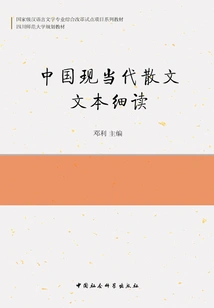
This textbook is the first in China to combine teaching and research with the historical development of modern Chinese prose as a potential clue, and to coordinate with the general teaching and learning of "History of Modern Chinese Literature" to carefully select representative masterpieces and conduct in-depth interpretations of them. The textbook aims to cultivate students' close reading ability, guide students to master the method of close reading of prose, and cultivate their aesthetic ability. It selects important classic prose works from different historical periods and genres for exemplary in-depth interpretation. It can not only be used in conjunction with the teaching of the "History of Modern Chinese Literature" course, but can also be used as a textbook for independent elective courses, and as a study book for those with preliminary professional direction intentions. This textbook focuses on cultivating text analysis abilities. Most introductory works aim to guide students to "read", and their function is to allow students to understand the ideological connotation and artistic features of literary works. However, students cannot obtain a method of analyzing literary works from the teaching materials, and therefore cannot draw inferences from one instance to other cases. This textbook uses text analysis method as the basic structure, focuses on training students' close reading ability, and lays the foundation for independent learning. This textbook pays attention to the distinction between styles, and adopts a volume-based training method for texts of different genres, making the text reading more professional. In the past, introductory textbooks did not differentiate between styles and compiled and selected various styles in a unified manner, which was not conducive to developing students' conscious awareness of the distinction between styles.
Official Sources
What Readers Think
Rating
Community(0)
Rating
Community(0)