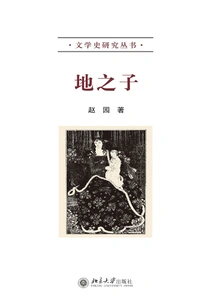
Son of Earth
by Zhao Yuan
About This Novel
"Son of the Earth" was the title of Li Guangtian's poem in the 1930s; before him, Tai Jinnong had already titled his collection of novels with this title in the 1920s. "Son of the Earth" should be an expression created by the authors of the May Fourth New Literature. Intellectuals in modern Chinese history often feel that they have spiritual blood inherited from the "land", and "Song of the Earth" has been a habitual chant of Chinese intellectuals in modern times. Just like the ancient poets who excused their fathers from the fields, when new poets let their peasant characters express their love for the earth, they often forget that that love originally belonged to them. Herman. In his famous novel "Narcissus and Goldmund", Hesse called artists and poets "maternal people". Such people regard the earth as their hometown and sleep soundly in their mother's arms because they are rich in love and feeling. The Place de la Concorde "is not an aesthetic object for taxi drivers, nor is the field an aesthetic object for farmers."① This is not only limited by love and sensitivity, but also because farmers who rely on the land for a living cannot have a "non-utilitarian" aesthetic attitude toward the fields. Therefore, it is ironic that modern intellectuals can easily claim to be sons of the earth because they have broken away from the basic survival connection with the "field" and have broken away from the peasant-style primitive unity with nature. Zhu Xiaoping said in his novel that intellectuals look to the sky and farmers look to the earth. Perhaps only those who are "looking toward the sky" own a piece of "earth" that is different from the land of farmers. Only by gazing at the earth beyond the basic survival relationship can they have the rural perception and rural cultural thinking of intellectuals. In China, a large agricultural country, the vast number of intellectuals are inextricably linked to the countryside and farmers. They have deep and broad cultural feelings for the countryside and the earth. Through the analysis and research of a large number of modern and contemporary Chinese literary works, this book explores intellectuals' cultural feelings and spiritual connections with the land and farmers, and reveals the cultural relationships between writers and the countryside and farmers, as well as their literary expressions. Right\
Official Sources
What Readers Think
Rating
Community(0)
Rating
Community(0)