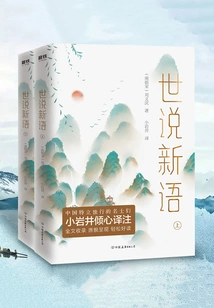
Shishuoxinyu (complete Works)
by I
About This Novel
"Shishuoxinyu" was compiled by Liu Yiqing, King of Linchuan in the Southern Song Dynasty, who organized his disciples. It is the earliest notebook-style novel in my country that records the anecdotes of people in the Wei and Jin Dynasties. The book contains 36 chapters and more than 1,000 articles, reflecting the Wei and Jin Dynasties, especially the style of celebrities at that time. Since its birth, the "Wei and Jin Dynasties style" with its unrestrained, frank and detached style has profoundly influenced Chinese literati and cultural history, making it a must-read classic for Chinese people. This edition of "Shishuoxinyu" has been carefully translated by the popular writer Koiwai. In addition to the translation, he has written more than 1,700 annotations and more than 500 brief reviews to help us explore the charm of classic ancient books.
Official Sources
What Readers Think
Rating
Community(0)
Official(1)Scraped 1mo ago
This book is a model of ancient Chinese notebook novels.
This book is an important material for the study of Wei and Jin society and has extremely high historical value. However, because it mainly records anecdotes of famous people, research needs to be done before use to prevent historical errors. This book is very suitable for casual reading, but because the characters' positions are different from today's, there is no need to be harsh on the words and deeds of the ancients, nor to blindly imitate and criticize. In addition, the translation of this book is well done, and the errors in analysis have been explained with my personal thoughts in the book. Finally, as a classic of Chinese studies, this book is highly recommended by me!
Rating
Community(0)
Official(1)Scraped 1mo ago
This book is a model of ancient Chinese notebook novels.
This book is an important material for the study of Wei and Jin society and has extremely high historical value. However, because it mainly records anecdotes of famous people, research needs to be done before use to prevent historical errors. This book is very suitable for casual reading, but because the characters' positions are different from today's, there is no need to be harsh on the words and deeds of the ancients, nor to blindly imitate and criticize. In addition, the translation of this book is well done, and the errors in analysis have been explained with my personal thoughts in the book. Finally, as a classic of Chinese studies, this book is highly recommended by me!
