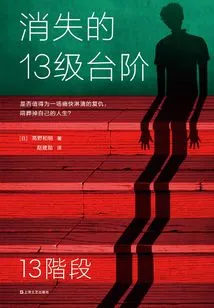
The Missing 13 Steps
by J
About This Novel
Is it worth burying his life for a heart-wrenching revenge? Won the Edogawa Ranpo Award, Japan's highest honor for mystery novels! The famous Japanese mystery novelist Miyuki Miyabe received high praise and wrote a commentary for this book. The author Kazuaki Takano has won the Japan Mystery Writers Association Award, and his works have been shortlisted for major lists. This book won the second place in "BEST 10 Mystery Novels" by Weekly Wenchun. Shortlisted for "This mystery novel is amazing" list. Famous reasoning masters Akagawa Jiro, Miyabe Miyuki, Ohsaka Tsuyoshi, Kita Kenzo, Kitamura Kaoru and others unanimously highly recommend it! It was adapted into a movie, starring Takashi Sorimachi and Tsutomu Yamazaki! Behind the confusing case is an in-depth discussion of the death penalty system. An old couple was brutally murdered. All the evidence points to Ryo Shuhara, but due to a car accident, he happened to lose the memory of a few hours before and after the incident... The death penalty officer Nanxiang joins hands with Junichi, who has just been released from prison on parole, to investigate, hoping to clear the grievances of this death row prisoner who has lost his memory. But among the clues they found, only Ryo Shuhara remembered that he had "walked on the steps." There is not much time left before Shuhara Ryo is executed, but this case has always been full of doubts, and the only clue "stairs" seems to have disappeared out of thin air...
Official Sources
What Readers Think
Rating
Community(0)
Official(41)Scraped 1mo ago
Revenge and Redemption--Comment on "The Lost 13 Steps"
The novel tells the story of a prison guard and a parolee jointly investigating an old case, interspersed with thoughts and discussions about the Japanese penal system, social issues, and even human nature. The following is an interpretation of this novel from two aspects: the narrative features and ideological conception of the work. The narrative features of this novel include novel content elements. The novel devotes a large amount of space to writing specific content related to the death penalty, and allows the two protagonists to act as detectives as ordinary people. These contents are absolutely novel to ordinary readers. The second feature of the narrative is that the foreshadowing is rich in details. When the author elaborates on the case, character experiences, investigation process, etc., He sees the opportunity and naturally inserts some details. It may seem like a careless writing, but he quietly lays down the foreshadowings one by one. As a "socialist" mystery novel, this work is more praised for its conception. Japanese mystery novels can be divided into "original school" and "social school". To put it simply, "original school" focuses on reasoning and solving puzzles based on logic, while "social school" focuses on realistic reflection of social issues. As a typical "socialist" mystery novel, this book does not focus on logic and trickery, but on reflecting social reality issues, conquering readers with its practical significance and ideological depth. The author mainly reflects on the issues regarding Japan's death penalty system. First, the time from death sentence to execution is generally too long. Second, the process of issuing death penalty orders is too cumbersome. Third, it is often difficult to grasp the standards and criteria for commutation and "pardon" for death row prisoners, and there are still loopholes in the corresponding custody and observation system. Through the perspectives of different characters in the book, the author shows how different groups view the death penalty. He borrows the perspective of Junichi Mikami, one of the protagonists, to express the author's own attitude towards the death penalty: although the death penalty is not absolutely correct, it is still necessary because "if lynching is allowed, one revenge will lead to another revenge, and endless revenge will become more and more intense. In order to avoid this from happening, someone must do it on their behalf." The author also uses the image of "Fudo Myooh" described in the book to imply that the death penalty plays the same role of intimidation and deterrence in the penalty system as Fudo Myooh does in Buddhism. It is very necessary to impose the death penalty in accordance with the law on hopeless and extremely evil people. However, the author's thinking did not just stop at the appearance of the death penalty, but went deep into the system behind the death penalty. He reflected on Japan's penal system, criticized the cumbersome and lengthy approval procedures, difficult-to-control sentencing conditions, irresponsible bureaucracy, and ineffective supervision and observation. He called on the Japanese government and all walks of life to face the problem head-on, innovate the system, eradicate the shortcomings, and truly embody fairness and justice. Therefore, discussing the existence or abolition of the death penalty is only superficial, while calling for system reform is the essence. The author goes further and brings his thinking to the level of human nature, emphasizing people's sense of awe and responsibility, and points out that the core of the problem lies in the reduction or even absence of modern people's sense of awe and responsibility. Once people do not know respect, they will ignore the rules and act arbitrarily without a bottom line. In such a social environment, if there is no deterrent method such as the death penalty to punish crimes, the situation will inevitably continue to deteriorate, let alone expect the criminals to truly repent. If officials in power do not have a sense of responsibility, they will be passive and negligent in their administration, leading to wrongful and unjust cases, which will make the "13 steps" of the penalty system seem ineffective and meaningless.
Human nature and law Fairness and justice
The logic is rigorous, interlocking, and the plot with a small number of words but a progressive plot makes people reluctant to put it down. The process of the characters searching for the truth is also a discussion of the complexity of human nature and a dialectic of the fairness of the law. People have to admire the author's narrative and imagination abilities and his rigorous handling of professional knowledge. This is the most amazing novel I have read in the past two years!
A decent social mystery novel
This is my first time reading a novel by this author: Kazuaki Takano. I have read a lot of Japanese, British and American mystery novels in the past, and recently I found some time to read some works by new authors, and I found one more casually. Everyone always has their own story, difficulties, and causes and effects. The second protagonist in the play is a kind-hearted person, but due to fate, he is targeted by evil people and takes a different path. At this time, meeting the first protagonist and becoming his noble person changed the situation. As the title of the book says, the steps seem to have disappeared due to changes in the natural environment, but the characters in the book are unable to extinguish the hatred in their hearts, and thus make a big mistake. The system that represents fairness and justice is not perfect either. Let me ask: Which one is right and which one is wrong??
Very profound, human nature is too complex
The plot is really good, the reasoning is wonderful, and the story is layered with branches. The death penalty brings spiritual challenges to the executioner and legal punishment to the person being executed
Ryo Shuhara felt the arrival of Si God for the first time, but he did not expect that he would be so scared this time. Also, who is not afraid of Si? Everyone wants to live well and does not want to leave this world like this.
The legal and ethical debate surrounding Japan's death penalty system
The criminal law is extremely cruel and complicated for some people. Facing different death row inmates, the psychological pressure on executioners is even greater. Therefore, in the face of controversial cases, we hope that the truth can be brought to light. The stories involved are linked one by one. Whether you can sacrifice your own life for the truth and psychological shadow, this story really breaks through the inherent thinking.
It seems that those who are killed have reasons for being hated, and most suspects often suffer misfortunes and embark on a path of no return. The families of the victims also have very different judgments on the suspects based on their subjective feelings. How can the law solve the deeper trauma of the victims on the basis of safeguarding basic justice. Good works always make readers think. The injuries suffered by the victims and their relatives are like nails driven into a tree. Even if the wounds are pulled out, they will not heal. There are also the pain of the executioners, the crying defendants in the court, the suspects in the death row who can live longer because they kill more people, the thirteen stairs that represent destruction, but for Ryo Shuhara, they symbolize the hope of life. The contradictions in the book make the characters more vivid and three-dimensional, making people feel their unknown inner struggles more intuitively, and the two-line narrative in the climax is also eye-catching.
It's a bit slow to warm up, and the early stage is too long.
It's a bit slow to pick up, and the early stages are too long. Most of the content at the beginning is about the death penalty law. I almost gave up the article. The latter part is quite exciting. Every time I think I guessed it, the result is different.
This is a good book, not only a crime mystery, but also a good book worth thinking about its content. When I was watching, the first thing I realized was not that I wanted to see who was the ultimate murderer, but that I wanted to think about what life would be like for a person with a criminal record returning to society, what consequences it would bring to family and friends, and what kind of thoughts they would have after committing a crime. There is no answer! People are different. There are some things. If you don't put yourself in someone else's shoes or think from their perspective, no! You can't understand it without personal experience. Is killing necessarily wrong? The education I received made me think: killing must be wrong, but it is not necessarily wrong. Isn't this contradictory? Actually there is no contradiction. In short, there are some things that cannot be answered without personal experience. Some are just useless comforts from people around. They cannot understand the pain involved.
The author has a considerable level of criminal law theory and also has quite detailed legal thoughts. The final conclusion is also shocking. Talking about right and wrong on such a matter is always naive and narrow-minded. Only by putting forward meaningful thoughts like the author for everyone to appreciate can we gain something.
Rating
Community(0)
Official(41)Scraped 1mo ago
Revenge and Redemption--Comment on "The Lost 13 Steps"
The novel tells the story of a prison guard and a parolee jointly investigating an old case, interspersed with thoughts and discussions about the Japanese penal system, social issues, and even human nature. The following is an interpretation of this novel from two aspects: the narrative features and ideological conception of the work. The narrative features of this novel include novel content elements. The novel devotes a large amount of space to writing specific content related to the death penalty, and allows the two protagonists to act as detectives as ordinary people. These contents are absolutely novel to ordinary readers. The second feature of the narrative is that the foreshadowing is rich in details. When the author elaborates on the case, character experiences, investigation process, etc., He sees the opportunity and naturally inserts some details. It may seem like a careless writing, but he quietly lays down the foreshadowings one by one. As a "socialist" mystery novel, this work is more praised for its conception. Japanese mystery novels can be divided into "original school" and "social school". To put it simply, "original school" focuses on reasoning and solving puzzles based on logic, while "social school" focuses on realistic reflection of social issues. As a typical "socialist" mystery novel, this book does not focus on logic and trickery, but on reflecting social reality issues, conquering readers with its practical significance and ideological depth. The author mainly reflects on the issues regarding Japan's death penalty system. First, the time from death sentence to execution is generally too long. Second, the process of issuing death penalty orders is too cumbersome. Third, it is often difficult to grasp the standards and criteria for commutation and "pardon" for death row prisoners, and there are still loopholes in the corresponding custody and observation system. Through the perspectives of different characters in the book, the author shows how different groups view the death penalty. He borrows the perspective of Junichi Mikami, one of the protagonists, to express the author's own attitude towards the death penalty: although the death penalty is not absolutely correct, it is still necessary because "if lynching is allowed, one revenge will lead to another revenge, and endless revenge will become more and more intense. In order to avoid this from happening, someone must do it on their behalf." The author also uses the image of "Fudo Myooh" described in the book to imply that the death penalty plays the same role of intimidation and deterrence in the penalty system as Fudo Myooh does in Buddhism. It is very necessary to impose the death penalty in accordance with the law on hopeless and extremely evil people. However, the author's thinking did not just stop at the appearance of the death penalty, but went deep into the system behind the death penalty. He reflected on Japan's penal system, criticized the cumbersome and lengthy approval procedures, difficult-to-control sentencing conditions, irresponsible bureaucracy, and ineffective supervision and observation. He called on the Japanese government and all walks of life to face the problem head-on, innovate the system, eradicate the shortcomings, and truly embody fairness and justice. Therefore, discussing the existence or abolition of the death penalty is only superficial, while calling for system reform is the essence. The author goes further and brings his thinking to the level of human nature, emphasizing people's sense of awe and responsibility, and points out that the core of the problem lies in the reduction or even absence of modern people's sense of awe and responsibility. Once people do not know respect, they will ignore the rules and act arbitrarily without a bottom line. In such a social environment, if there is no deterrent method such as the death penalty to punish crimes, the situation will inevitably continue to deteriorate, let alone expect the criminals to truly repent. If officials in power do not have a sense of responsibility, they will be passive and negligent in their administration, leading to wrongful and unjust cases, which will make the "13 steps" of the penalty system seem ineffective and meaningless.
Human nature and law Fairness and justice
The logic is rigorous, interlocking, and the plot with a small number of words but a progressive plot makes people reluctant to put it down. The process of the characters searching for the truth is also a discussion of the complexity of human nature and a dialectic of the fairness of the law. People have to admire the author's narrative and imagination abilities and his rigorous handling of professional knowledge. This is the most amazing novel I have read in the past two years!
A decent social mystery novel
This is my first time reading a novel by this author: Kazuaki Takano. I have read a lot of Japanese, British and American mystery novels in the past, and recently I found some time to read some works by new authors, and I found one more casually. Everyone always has their own story, difficulties, and causes and effects. The second protagonist in the play is a kind-hearted person, but due to fate, he is targeted by evil people and takes a different path. At this time, meeting the first protagonist and becoming his noble person changed the situation. As the title of the book says, the steps seem to have disappeared due to changes in the natural environment, but the characters in the book are unable to extinguish the hatred in their hearts, and thus make a big mistake. The system that represents fairness and justice is not perfect either. Let me ask: Which one is right and which one is wrong??
Very profound, human nature is too complex
The plot is really good, the reasoning is wonderful, and the story is layered with branches. The death penalty brings spiritual challenges to the executioner and legal punishment to the person being executed
Ryo Shuhara felt the arrival of Si God for the first time, but he did not expect that he would be so scared this time. Also, who is not afraid of Si? Everyone wants to live well and does not want to leave this world like this.
The legal and ethical debate surrounding Japan's death penalty system
The criminal law is extremely cruel and complicated for some people. Facing different death row inmates, the psychological pressure on executioners is even greater. Therefore, in the face of controversial cases, we hope that the truth can be brought to light. The stories involved are linked one by one. Whether you can sacrifice your own life for the truth and psychological shadow, this story really breaks through the inherent thinking.
It seems that those who are killed have reasons for being hated, and most suspects often suffer misfortunes and embark on a path of no return. The families of the victims also have very different judgments on the suspects based on their subjective feelings. How can the law solve the deeper trauma of the victims on the basis of safeguarding basic justice. Good works always make readers think. The injuries suffered by the victims and their relatives are like nails driven into a tree. Even if the wounds are pulled out, they will not heal. There are also the pain of the executioners, the crying defendants in the court, the suspects in the death row who can live longer because they kill more people, the thirteen stairs that represent destruction, but for Ryo Shuhara, they symbolize the hope of life. The contradictions in the book make the characters more vivid and three-dimensional, making people feel their unknown inner struggles more intuitively, and the two-line narrative in the climax is also eye-catching.
It's a bit slow to warm up, and the early stage is too long.
It's a bit slow to pick up, and the early stages are too long. Most of the content at the beginning is about the death penalty law. I almost gave up the article. The latter part is quite exciting. Every time I think I guessed it, the result is different.
This is a good book, not only a crime mystery, but also a good book worth thinking about its content. When I was watching, the first thing I realized was not that I wanted to see who was the ultimate murderer, but that I wanted to think about what life would be like for a person with a criminal record returning to society, what consequences it would bring to family and friends, and what kind of thoughts they would have after committing a crime. There is no answer! People are different. There are some things. If you don't put yourself in someone else's shoes or think from their perspective, no! You can't understand it without personal experience. Is killing necessarily wrong? The education I received made me think: killing must be wrong, but it is not necessarily wrong. Isn't this contradictory? Actually there is no contradiction. In short, there are some things that cannot be answered without personal experience. Some are just useless comforts from people around. They cannot understand the pain involved.
The author has a considerable level of criminal law theory and also has quite detailed legal thoughts. The final conclusion is also shocking. Talking about right and wrong on such a matter is always naive and narrow-minded. Only by putting forward meaningful thoughts like the author for everyone to appreciate can we gain something.