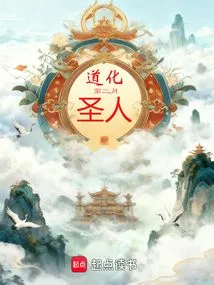
Taoist Saint
by Second Month
About This Novel
The beginning of Taiwu is the beginning of vitality; The sky and the earth are dark and yellow, and the universe is primitive. Atoms open the sky, and gods realize enlightenment; The battle of great avenues, the ancestor of all races. The gods will fight again to create an immortal civilization. Ancient myths are a fragmented history of Chinese civilization. ... Everything that exists has its origin, development, change, and death. The origin of all things, the beginning of mankind, the mystery of the origin of consciousness, Based on its historical trajectory and synthesizing the intricate causal relationships, Go back to the origin, deduce and evolve... It is both an imaginary myth and a way of imagining the universe and human beings. A feast of words. ... After Zhang Yang completed one mission after another and became stronger, Step by step to get closer to the truth... GrowthHaremStruggle for HegemonyEnlightenmentCosmic View
Official Sources
What Readers Think
Rating
Community(0)
Official(24)Scraped 1mo ago
This month is the last month of full attendance, and the current bookings are around 130. The average daily order is about 20, and the reading is between 80-140. I beg my adoptive fathers and beauties to subscribe and support me and give me food to eat! Please! ! !
After reading this story, it took me a long time to recover.
[Note: This is from the book review area of "Starting Reading", reprinting the book reviews from readers there] When I finished reading the story of Chen Ang and Ye Zi Ling, it happened that Typhoon Boroyi was approaching and the whole city stopped. I locked myself in the room and stared at the screen of my mobile phone for a long time. My heart seemed to be blocked by something. I was bored and a little sour. The tears had actually fallen quietly for a long time. This is probably the most heart-wrenching story I have read recently. What resonates with me the most is Chen Ang's deep-seated affection. He always repeats the same path that Ye Ziling took, not wearing a raincoat on heavy rainy days, and even asking "how is my girlfriend?" When meeting people. These seemingly "abnormal" actions are not deliberately sensational at all, but reveal a heart-breaking pain. At first, I thought he was a bit horribly paranoid, but as time goes by, I understand more and more that what is paranoia? It is the unspoken guilt, the regret that has not been made up for in time, and the love that I dare not let go of. From an "Avenger" who wanted to avenge Ye Ling to finally receiving treatment calmly, every step of his transformation was very real, as if I was really watching a person walking in the mud with heavy memories on his back, and his body was covered with injuries. Ye Ziling is also particularly distressing. She was obviously so talented, but she was destroyed bit by bit by the indifference of her native family and the malice of some individuals. Through those audio diaries, I seemed to be able to see her alone, sensitive and lonely, living so cautiously even though she was at a bright age. Her tragedy was not accidental, it was the result of unnoticed injuries. Every time I think about this, I can't help but sigh. There is also Zhang Yang. He was a bystander at the beginning, and he went to learn about Chen Ang and Ye Zi Ling with a little curiosity, but slowly his sympathy turned into active intervention. In the end, he made the choice to let Chen Ang be "mentally ill". I was surprised at first, thinking that this was different from the romance of "live and die together", but then I felt that this was really helping them - Ye Ziling definitely didn't want Chen Ang to ruin his life for himself. Zhang Yang's words "I can only help her" expressed helplessness, but also hid the most real kindness. Seeing how he was confused at the beginning and then able to make such a decision, I seemed to figure something out with him. The two lines of the story are also particularly wonderful. On one side, Zhang Yang looks for clues in reality and uncovers the mystery bit by bit; on the other side, through memories and recordings, the past of Chen Ang and Ye Ling is revealed. The two lines were intertwined, the suspense never stopped, and the emotions gradually increased. In the end, when Chen Ang calmly accepted treatment, my emotions suddenly became unbearable. It is not only a love story, but also talks about the pain of the original family and campus life, which are heavy topics. After reading it, I can't help but think, if Ye Ziling could be loved more, if Chen Ang could express his feelings earlier, would everything be different? But there are not so many "ifs", this is the most real regret. Of course, there are some things that don't go well. For example, Chen Ang can "swagger" home after killing someone, which feels different from the judicial process in reality, and is a bit ideal; and the characters of aunt and uncle seem to be just to convey information to the plot without much personality of their own, so they were forgotten after reading it. Occasionally, when I see words like "mature woman" and "big pussy", they will suddenly come into play, which is not in line with the overall sad and literary tone of the story. But these small shortcomings do not affect its goodness at all. The most powerful thing about this story is that it made me understand that "love" is not a romantic thing you talk about, nor is it a heroism that requires living and dying together. The deepest love may be like what Chen Ang did in the end, even if he carries all the pain and memories, he is willing to live well for the other person. Now I still occasionally think of Chen Ang walking in the rain, the voice in Ye Ziling's recording, and Zhang Yang's helpless words, and my heart still softens. This is probably the power of a good story. It not only makes you cry, but also makes you remember the feeling and thoughts about love and redemption long after.
Let's discuss, is Chen Ang's mental illness real?
Like the question, do you think Chen Ang is really mentally ill?
Let's celebrate the Spring Festival and make the list at the same time
The week from the 15th to the 21st is the Spring Festival. In February, I wish all adoptive fathers and beauties a happy new year. In February, I don't want the book Sage to be buried, I want to show up on the fantasy category recommendation list, and I beg foster fathers and beauties to give their recommendation votes to this book every day. With your blessing, I will definitely be able to show my face. Thank you in February!
I'm too poor to pay for a monthly package! How embarrassing! ! !
The adoptive fathers can't live happily for a few days. School is about to start. When I touch my school bag, I find that I haven't even written my name on the cover of my winter vacation homework, right? Are you going to start staying up all night to catch up on your homework? (^V^)
The month of perfect attendance is over, and starting from this month, it's pure love that generates electricity. If the average daily subscription reaches 100, you can also get 1K support reward. At present, the average daily subscription of Saint is only over 80. I sincerely ask you to subscribe every day, please!
Zhuang Yan's wish to teach is full of healing power
[Note: This is from the book review area of "Starting Reading", reprinting the book reviews from readers there] [Contents involving spoilers have been encrypted, so you can read the post with confidence] After I finished watching it, all I could think of was the melancholy running girl Zhuang Yan, the mountain kids chasing the motorcycles shouting "I must come again", and the hidden [... Spoiler-proof...], All of which were deeply imprinted in my mind. This is a story about redemption, but it is much more than redemption. When I first read it, I thought it was just a story about guilt and letting go. Zhuang Yan, who comes from a poor family, stole the tuition fees that were intended to be donated to a mountain primary school four years ago, which indirectly led to the sudden death of Principal Zhang. She has been burdened with heavy psychological shackles ever since. This setting itself is heart-wrenching enough, but the author's subtlety lies in that he does not let the story stop at personal confession. When Zhuang Yan embarked on her return home under Zhang Yang's arrangement, when she stood among the children and picked up her textbook for the first time, when she knelt down in front of Principal Zhang's wife and children and cried bitterly and confessed, the story reached its first emotional climax. And then the truth was revealed that it was Principal Zhang [...to prevent spoilers...], which opened up the story instantly. What moved me the most was that another layer of this "truth" was revealed at the end - it turned out that she was all Principal Zhang's wife [... To prevent spoilers...]. This double reversal not only does not weaken the power of the story, but also enriches the emotional levels. The author cleverly places a personal story full of guilt in a broad social reality background, making the emotional expression have the impact of personal destiny and the depth of social concern. The narrative rhythm is relaxed and relaxed, the emotional underpinnings are progressive, and the character arcs are clearly visible. Zhang Yang, a college student, built a "wishful house" in his clumsy and sincere way, becoming a bridge connecting the city and the mountains. Dibaotian represents the awakening and responsibility of the new generation of rural youth. Principal Zhang's wife, an ordinary rural woman, used her simplest wisdom to complete the greatest redemption - she not only liberated Zhuang Yan's soul, but also retained a good teacher for the children in the mountainous area. In addition, "The Wishful House" is more like a "MacGuffin" that connects the stories, and its supernatural color is well controlled. It does not become a "master key (gold finger)" to solve all problems, but emphasizes people's initiative. Choice and action are the keys to changing your destiny. What touches me most about this story is the power of "looking forward" it conveys. Zhuang Yan did not indulge in the relief after relief, but chose to stay and become a teacher at Xinping Primary School. This choice is not atonement, but inheritance, a continuation of Principal Zhang's wish. As she said: "If we locals are not willing to stay, how can we ask others to stay here?" This sentence reveals how many rural plights there are in reality, and what a valuable responsibility it shows. From kiwi fruit planting to crab farming, from children chasing off motorcycles to young people returning from school, the author paints a warm picture of rural revitalization for us. This is not a utopian fantasy, but a hope that generations of people have poured out with real efforts. There is also the scene of the children in Guangwuzhen chasing the motorcycle and shouting, and Zhuang Yan's touch when receiving the leaf figure. These details are so vivid and real. They remind me of my childhood teachers and the older generation who have contributed to our education. This story awakens not only attention to the current situation of education in mountainous areas, but also gratitude for every kindness in life. I especially want to mention the ending. [... Spoiler-proof...] This detail is simply a stroke of genius, and it sublimates the theme of the entire story: sometimes, the deepest compassion is not the truth, but the one that can make everyone live better [... Spoiler-proof...]. In the end, this is not only a good-looking story, but also a mirror that reflects reality. It makes us think: What is true kindness? What is effective salvation? How to balance personal dreams and social responsibility? The answers to these questions may be hidden in Zhuang Yan's figure standing on the podium, hidden in Di Baotian's firm gaze, and hidden in the retention of the children riding their bicycles chasing one hill after another. If you are looking for a work that will make you cry, laugh, and move you even more powerfully, then this story is definitely worth reading. It is like a warm lamp that illuminates the shadows in reality and the hope on the way forward.
I've read more than 100 chapters and have a few words to say.
[Note: This is from the book review area of "Starting Reading", reprinting the book reviews from readers there] The fairy grass level is exquisitely conceived, grand in setting, and profound in thought. It can no longer be summarized by cool articles on the Internet. Chaos Line is a fantasy chapter: creation + upgrade + battle of wits + struggle for hegemony. The main line is to create the universe, create cells, and create humans from scratch. The protagonist team fights with gods and demons. Lead mankind to stand at the top of all races and eventually develop into today's human civilization. The real line is the urban chapter: growing up + getting to know girls + gradually falling in love + intertwining love + crossing classes. The main thread is to fulfill your wish. It is not love for the sake of love, but in the realization of wishes, each other discovers the value of each other's character, and develops feelings bit by bit. The love is sincere, inextricable, and full of expectations.
Please be sure to persevere through the early stages, the rest will be a masterpiece
[Note: This is from the book review area of "Starting Reading", reprinting the book reviews from readers there] Please be sure to persevere through the early stages. The rest is simply a masterpiece that will shatter everyone's worldview. It is no exaggeration to say that the concept is unique. In the early stage, in order to make up for regrets and realize wishes, the writing is relatively full of emotions. Readers who are used to reading cool articles will be a little uncomfortable and feel a bit literary and youthful. After insisting on seeing the team create the first cell, it started to enter the state, especially when Zhang Yang entered the realm of his own self, able to enter the villain's body and other people's consciousness, and peek into their conspiracy plans. From then on, the climax continued and it was so exciting. The core settings of Chaos Line can be summarized as follows: 1. The nature of the chaotic world Chaos state: The world is initially empty and chaotic, without the concept of heaven, earth, time and space, and all things have not been born or have been annihilated. The existence of perceptual clusters: All life forms exist in the form of "perceptual clusters" with no physical form, and their consciousness shares the chaotic space. The sources of perception groups are diverse, including memories from different eras and civilizations (such as the dragon world, modern technology, mysterious civilization, etc.). 2. Conscious creation and laws of heaven Creation by entering concentration: By concentrating consciousness through "entering concentration", all things (such as stars and the earth) can be created, but creation only lasts for "three moments" (appearance, temporary existence, and annihilation), and must continue to enter concentration to maintain its existence. Phenomenon determines the essence: When consciousness identifies a certain phenomenon (such as "the earth rotates around the sun"), the laws of heaven automatically complete its operating logic (such as gravity), subverting the law of "the essence determines the phenomenon" in the real world. 3. The contradiction between body and existence The duality of the body: Born incarnation: given by the person who enters concentration, but disappears due to the influence of the creator's exit from concentration, or ages with time. Substantial body: Obtaining a physically real body through special methods (such as eating "the soil of rules"), but it will lose magical powers, age and die. The unavailability of an eternal body: Xuanzu pointed out that even the creator of atoms (Yuanshi) could not create an "eternal body". 4. Mission system and shuttle between two worlds Mission-driven: The protagonist needs to complete specific tasks (such as "possessing a human body" and "finding answers") before he can return to reality. If the task is not completed, he will be trapped in chaos. Difference in time flow rate: The time flow rate in the chaotic world is different from that in reality, and may be suspended or accelerated (for example, a hundred years of chaos ≈ a moment of reality). 5. Cosmic crisis and bioethics Cellular human taboos: Creating cells may trigger civilized wars and lead to the entropy increase and collapse of the universe, so Xuanzu strictly prohibited touching this red line. Confrontation between divine bodies and carbon-based ones: Xuanzu and other "divine bodies" are afraid of carbon-based human beings' ability to "kill with sight", revealing that their prohibition implies the intention of self-protection. Core conflict The lines of chaos revolve around "form of existence" and "authority to create" Expand the conflict: The desire of the sentient group for the real body vs. The inevitable demise of the body; The freedom of conscious creation vs. The completion and restriction of the laws of heaven; The ethical dilemma of individual survival vs. The survival of the universe (such as the ban on cell creation).
Rating
Community(0)
Official(24)Scraped 1mo ago
This month is the last month of full attendance, and the current bookings are around 130. The average daily order is about 20, and the reading is between 80-140. I beg my adoptive fathers and beauties to subscribe and support me and give me food to eat! Please! ! !
After reading this story, it took me a long time to recover.
[Note: This is from the book review area of "Starting Reading", reprinting the book reviews from readers there] When I finished reading the story of Chen Ang and Ye Zi Ling, it happened that Typhoon Boroyi was approaching and the whole city stopped. I locked myself in the room and stared at the screen of my mobile phone for a long time. My heart seemed to be blocked by something. I was bored and a little sour. The tears had actually fallen quietly for a long time. This is probably the most heart-wrenching story I have read recently. What resonates with me the most is Chen Ang's deep-seated affection. He always repeats the same path that Ye Ziling took, not wearing a raincoat on heavy rainy days, and even asking "how is my girlfriend?" When meeting people. These seemingly "abnormal" actions are not deliberately sensational at all, but reveal a heart-breaking pain. At first, I thought he was a bit horribly paranoid, but as time goes by, I understand more and more that what is paranoia? It is the unspoken guilt, the regret that has not been made up for in time, and the love that I dare not let go of. From an "Avenger" who wanted to avenge Ye Ling to finally receiving treatment calmly, every step of his transformation was very real, as if I was really watching a person walking in the mud with heavy memories on his back, and his body was covered with injuries. Ye Ziling is also particularly distressing. She was obviously so talented, but she was destroyed bit by bit by the indifference of her native family and the malice of some individuals. Through those audio diaries, I seemed to be able to see her alone, sensitive and lonely, living so cautiously even though she was at a bright age. Her tragedy was not accidental, it was the result of unnoticed injuries. Every time I think about this, I can't help but sigh. There is also Zhang Yang. He was a bystander at the beginning, and he went to learn about Chen Ang and Ye Zi Ling with a little curiosity, but slowly his sympathy turned into active intervention. In the end, he made the choice to let Chen Ang be "mentally ill". I was surprised at first, thinking that this was different from the romance of "live and die together", but then I felt that this was really helping them - Ye Ziling definitely didn't want Chen Ang to ruin his life for himself. Zhang Yang's words "I can only help her" expressed helplessness, but also hid the most real kindness. Seeing how he was confused at the beginning and then able to make such a decision, I seemed to figure something out with him. The two lines of the story are also particularly wonderful. On one side, Zhang Yang looks for clues in reality and uncovers the mystery bit by bit; on the other side, through memories and recordings, the past of Chen Ang and Ye Ling is revealed. The two lines were intertwined, the suspense never stopped, and the emotions gradually increased. In the end, when Chen Ang calmly accepted treatment, my emotions suddenly became unbearable. It is not only a love story, but also talks about the pain of the original family and campus life, which are heavy topics. After reading it, I can't help but think, if Ye Ziling could be loved more, if Chen Ang could express his feelings earlier, would everything be different? But there are not so many "ifs", this is the most real regret. Of course, there are some things that don't go well. For example, Chen Ang can "swagger" home after killing someone, which feels different from the judicial process in reality, and is a bit ideal; and the characters of aunt and uncle seem to be just to convey information to the plot without much personality of their own, so they were forgotten after reading it. Occasionally, when I see words like "mature woman" and "big pussy", they will suddenly come into play, which is not in line with the overall sad and literary tone of the story. But these small shortcomings do not affect its goodness at all. The most powerful thing about this story is that it made me understand that "love" is not a romantic thing you talk about, nor is it a heroism that requires living and dying together. The deepest love may be like what Chen Ang did in the end, even if he carries all the pain and memories, he is willing to live well for the other person. Now I still occasionally think of Chen Ang walking in the rain, the voice in Ye Ziling's recording, and Zhang Yang's helpless words, and my heart still softens. This is probably the power of a good story. It not only makes you cry, but also makes you remember the feeling and thoughts about love and redemption long after.
Let's discuss, is Chen Ang's mental illness real?
Like the question, do you think Chen Ang is really mentally ill?
Let's celebrate the Spring Festival and make the list at the same time
The week from the 15th to the 21st is the Spring Festival. In February, I wish all adoptive fathers and beauties a happy new year. In February, I don't want the book Sage to be buried, I want to show up on the fantasy category recommendation list, and I beg foster fathers and beauties to give their recommendation votes to this book every day. With your blessing, I will definitely be able to show my face. Thank you in February!
I'm too poor to pay for a monthly package! How embarrassing! ! !
The adoptive fathers can't live happily for a few days. School is about to start. When I touch my school bag, I find that I haven't even written my name on the cover of my winter vacation homework, right? Are you going to start staying up all night to catch up on your homework? (^V^)
The month of perfect attendance is over, and starting from this month, it's pure love that generates electricity. If the average daily subscription reaches 100, you can also get 1K support reward. At present, the average daily subscription of Saint is only over 80. I sincerely ask you to subscribe every day, please!
Zhuang Yan's wish to teach is full of healing power
[Note: This is from the book review area of "Starting Reading", reprinting the book reviews from readers there] [Contents involving spoilers have been encrypted, so you can read the post with confidence] After I finished watching it, all I could think of was the melancholy running girl Zhuang Yan, the mountain kids chasing the motorcycles shouting "I must come again", and the hidden [... Spoiler-proof...], All of which were deeply imprinted in my mind. This is a story about redemption, but it is much more than redemption. When I first read it, I thought it was just a story about guilt and letting go. Zhuang Yan, who comes from a poor family, stole the tuition fees that were intended to be donated to a mountain primary school four years ago, which indirectly led to the sudden death of Principal Zhang. She has been burdened with heavy psychological shackles ever since. This setting itself is heart-wrenching enough, but the author's subtlety lies in that he does not let the story stop at personal confession. When Zhuang Yan embarked on her return home under Zhang Yang's arrangement, when she stood among the children and picked up her textbook for the first time, when she knelt down in front of Principal Zhang's wife and children and cried bitterly and confessed, the story reached its first emotional climax. And then the truth was revealed that it was Principal Zhang [...to prevent spoilers...], which opened up the story instantly. What moved me the most was that another layer of this "truth" was revealed at the end - it turned out that she was all Principal Zhang's wife [... To prevent spoilers...]. This double reversal not only does not weaken the power of the story, but also enriches the emotional levels. The author cleverly places a personal story full of guilt in a broad social reality background, making the emotional expression have the impact of personal destiny and the depth of social concern. The narrative rhythm is relaxed and relaxed, the emotional underpinnings are progressive, and the character arcs are clearly visible. Zhang Yang, a college student, built a "wishful house" in his clumsy and sincere way, becoming a bridge connecting the city and the mountains. Dibaotian represents the awakening and responsibility of the new generation of rural youth. Principal Zhang's wife, an ordinary rural woman, used her simplest wisdom to complete the greatest redemption - she not only liberated Zhuang Yan's soul, but also retained a good teacher for the children in the mountainous area. In addition, "The Wishful House" is more like a "MacGuffin" that connects the stories, and its supernatural color is well controlled. It does not become a "master key (gold finger)" to solve all problems, but emphasizes people's initiative. Choice and action are the keys to changing your destiny. What touches me most about this story is the power of "looking forward" it conveys. Zhuang Yan did not indulge in the relief after relief, but chose to stay and become a teacher at Xinping Primary School. This choice is not atonement, but inheritance, a continuation of Principal Zhang's wish. As she said: "If we locals are not willing to stay, how can we ask others to stay here?" This sentence reveals how many rural plights there are in reality, and what a valuable responsibility it shows. From kiwi fruit planting to crab farming, from children chasing off motorcycles to young people returning from school, the author paints a warm picture of rural revitalization for us. This is not a utopian fantasy, but a hope that generations of people have poured out with real efforts. There is also the scene of the children in Guangwuzhen chasing the motorcycle and shouting, and Zhuang Yan's touch when receiving the leaf figure. These details are so vivid and real. They remind me of my childhood teachers and the older generation who have contributed to our education. This story awakens not only attention to the current situation of education in mountainous areas, but also gratitude for every kindness in life. I especially want to mention the ending. [... Spoiler-proof...] This detail is simply a stroke of genius, and it sublimates the theme of the entire story: sometimes, the deepest compassion is not the truth, but the one that can make everyone live better [... Spoiler-proof...]. In the end, this is not only a good-looking story, but also a mirror that reflects reality. It makes us think: What is true kindness? What is effective salvation? How to balance personal dreams and social responsibility? The answers to these questions may be hidden in Zhuang Yan's figure standing on the podium, hidden in Di Baotian's firm gaze, and hidden in the retention of the children riding their bicycles chasing one hill after another. If you are looking for a work that will make you cry, laugh, and move you even more powerfully, then this story is definitely worth reading. It is like a warm lamp that illuminates the shadows in reality and the hope on the way forward.
I've read more than 100 chapters and have a few words to say.
[Note: This is from the book review area of "Starting Reading", reprinting the book reviews from readers there] The fairy grass level is exquisitely conceived, grand in setting, and profound in thought. It can no longer be summarized by cool articles on the Internet. Chaos Line is a fantasy chapter: creation + upgrade + battle of wits + struggle for hegemony. The main line is to create the universe, create cells, and create humans from scratch. The protagonist team fights with gods and demons. Lead mankind to stand at the top of all races and eventually develop into today's human civilization. The real line is the urban chapter: growing up + getting to know girls + gradually falling in love + intertwining love + crossing classes. The main thread is to fulfill your wish. It is not love for the sake of love, but in the realization of wishes, each other discovers the value of each other's character, and develops feelings bit by bit. The love is sincere, inextricable, and full of expectations.
Please be sure to persevere through the early stages, the rest will be a masterpiece
[Note: This is from the book review area of "Starting Reading", reprinting the book reviews from readers there] Please be sure to persevere through the early stages. The rest is simply a masterpiece that will shatter everyone's worldview. It is no exaggeration to say that the concept is unique. In the early stage, in order to make up for regrets and realize wishes, the writing is relatively full of emotions. Readers who are used to reading cool articles will be a little uncomfortable and feel a bit literary and youthful. After insisting on seeing the team create the first cell, it started to enter the state, especially when Zhang Yang entered the realm of his own self, able to enter the villain's body and other people's consciousness, and peek into their conspiracy plans. From then on, the climax continued and it was so exciting. The core settings of Chaos Line can be summarized as follows: 1. The nature of the chaotic world Chaos state: The world is initially empty and chaotic, without the concept of heaven, earth, time and space, and all things have not been born or have been annihilated. The existence of perceptual clusters: All life forms exist in the form of "perceptual clusters" with no physical form, and their consciousness shares the chaotic space. The sources of perception groups are diverse, including memories from different eras and civilizations (such as the dragon world, modern technology, mysterious civilization, etc.). 2. Conscious creation and laws of heaven Creation by entering concentration: By concentrating consciousness through "entering concentration", all things (such as stars and the earth) can be created, but creation only lasts for "three moments" (appearance, temporary existence, and annihilation), and must continue to enter concentration to maintain its existence. Phenomenon determines the essence: When consciousness identifies a certain phenomenon (such as "the earth rotates around the sun"), the laws of heaven automatically complete its operating logic (such as gravity), subverting the law of "the essence determines the phenomenon" in the real world. 3. The contradiction between body and existence The duality of the body: Born incarnation: given by the person who enters concentration, but disappears due to the influence of the creator's exit from concentration, or ages with time. Substantial body: Obtaining a physically real body through special methods (such as eating "the soil of rules"), but it will lose magical powers, age and die. The unavailability of an eternal body: Xuanzu pointed out that even the creator of atoms (Yuanshi) could not create an "eternal body". 4. Mission system and shuttle between two worlds Mission-driven: The protagonist needs to complete specific tasks (such as "possessing a human body" and "finding answers") before he can return to reality. If the task is not completed, he will be trapped in chaos. Difference in time flow rate: The time flow rate in the chaotic world is different from that in reality, and may be suspended or accelerated (for example, a hundred years of chaos ≈ a moment of reality). 5. Cosmic crisis and bioethics Cellular human taboos: Creating cells may trigger civilized wars and lead to the entropy increase and collapse of the universe, so Xuanzu strictly prohibited touching this red line. Confrontation between divine bodies and carbon-based ones: Xuanzu and other "divine bodies" are afraid of carbon-based human beings' ability to "kill with sight", revealing that their prohibition implies the intention of self-protection. Core conflict The lines of chaos revolve around "form of existence" and "authority to create" Expand the conflict: The desire of the sentient group for the real body vs. The inevitable demise of the body; The freedom of conscious creation vs. The completion and restriction of the laws of heaven; The ethical dilemma of individual survival vs. The survival of the universe (such as the ban on cell creation).
Featured in 12 Booklists
Official(12)
It makes me sympathize so much. Chen Ang is so affectionate as if he was over the top. He always repeats the same path that Ye Ling walked. He doesn't wear a raincoat on heavy rainy days, and even asks "how is my girlfriend?" When meeting people. These seemingly "abnormal" actions are not deliberately sensational at all, but reveal a heart-breaking pain. At first, I thought he was a bit horribly paranoid, but as time goes by, I understand more and more that what is paranoia? It is the unspoken guilt, the regret that has not been made up for in time, and the love that I dare not let go of. From an "Avenger" who wanted to avenge Ye Ling to finally receiving treatment calmly, every step of his transformation was very real, as if I was really watching a person walking in the mud with heavy memories on his back, and his body was covered with injuries. Ye Ziling is also particularly distressing. She was obviously so talented, but she was destroyed bit by bit by the indifference of her native family and the malice of some individuals. Through those audio diaries, I seemed to be able to see her alone, sensitive and lonely, living so cautiously even though she was at a bright age. Her tragedy was not accidental, it was the result of unnoticed injuries. Every time I think about this, I can't help but sigh. There is also Zhang Yang. He was a bystander at the beginning, and he went to learn about Chen Ang and Ye Zi Ling with a little curiosity, but slowly his sympathy turned into active intervention. In the end, he made the choice to let Chen Ang be "mentally ill". I was surprised at first, thinking that this was different from the romance of "live and die together", but then I felt that this was really helping them - Ye Ziling definitely didn't want Chen Ang to ruin his life for himself. Zhang Yang's words "I can only help her" expressed helplessness, but also hid the most real kindness. Seeing how he was confused at the beginning and then able to make such a decision, I seemed to figure something out with him. The two lines of the story are also particularly wonderful. On one side, Zhang Yang looks for clues in reality and uncovers the mystery bit by bit; on the other side, through memories and recordings, the past of Chen Ang and Ye Ling is revealed. The two lines were intertwined, the suspense never stopped, and the emotions gradually increased. In the end, when Chen Ang calmly accepted treatment, my emotions suddenly became unbearable. It is not only a love story, but also talks about the pain of the original family and campus life, which are heavy topics. After reading it, I can't help but think, if Ye Ziling could be loved more, if Chen Ang could express his feelings earlier, would everything be different? But there are not so many "ifs", this is the most real regret. The deepest love may be like what Chen Ang did in the end, even if he carries all the pain and memories, he is willing to live well for the other person. Now I still occasionally think of Chen Ang walking in the rain, the voice in Ye Ziling's recording, and Zhang Yang's helpless words, and my heart still softens. This is probably the power of a good story. It not only makes you cry, but also makes you remember the feeling and thoughts about love and redemption long after.
If you are tired of reading routine articles and no longer want to read straightforward and refreshing articles, but if you want to read innovative breakthroughs and some deep thoughts, you can read this book.
If you are tired of reading routine articles and no longer want to read straightforward and refreshing articles, but if you want to read innovative breakthroughs and some deep thoughts, you can read this book. There are also Shuangwen's slaps and reversals.
If you are tired of reading routine articles and no longer want to read straightforward and refreshing articles, but if you want to read innovative breakthroughs and some deep thoughts, you can read this book. There are also Shuangwen's slaps and reversals.
You Might Also Like

Am I God
Bear Wolfdog
Reborn Female General
Qianshan Tea Guest
The Toilet in My House Leads to Another World
Uncle Long Legs
Lord of Bones
Li Jiaxuan

Descendants of Wudang in Another World
Xiang Yan

Unparalleled in the World
No Resentment
Who Brought This Guy into the Monk Circle?
The Whole House Is Yellow
The Head Master Bo Xin Has Accepted a Female Apprentice
A Three-line Book

The Number One Pest in the Starry Sky
Latin Sea Thirteenth Lang
My Version of Tiandao is Too Low, so It's Full of Bugs
Keeper