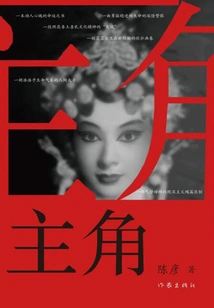
Protagonist (original Tv Series Starring Zhang Jiayi, Liu Haocun and Qin Hailu)
by Chen Yan
About This Novel
The winning works of the 10th Mao Dun Literature Award in 2019. "The Protagonist" is a touching book of destiny. With a solid and delicate writing style, the author narrates the ups and downs, ups and downs, ups and downs of the famous Qin Opera singer Qin E's life in the past half century, and its complex relationship with the ups and downs of Qin Opera and big history. During this period, the fate of all kinds of people in the era of transformation is endless, vividly displayed on the page, which is both thought-provoking and saddening. The rich and complex storyline, vivid characters, and clever use of dialects reflect the author's familiarity with life and the accuracy and sophistication of narrative. In the jumble of poetry and drama, virtuality and reality, things and emotions, noise and loneliness, joy and pain, sharpness and humor, secularity and sublimity, the "Great Theory" that illuminates the cultural spirit and life realm of our land and people is cast. The author inherits the currents of Chinese classical literature and thought, and writes about the eternal tranquility amidst the hustle and bustle of the human world. And by carefully writing about one person's experience, the fate of more people appears in his writing. Recalling Qin'e's more than fifty years of life experience and spiritual history has also become an important reference for the modern way of classical thought to cope with the world: even though she was troubled internally and externally, exhausted physically and mentally, and occasionally thought about leaving the world, her responsibility for the world still made her never choose the interest of Buddhism and Zen or the willful carefreeness of Taoism, but found the ultimate spiritual support in Confucian endeavor. The world described by the author is full of the desolation and sorrow of the human world, but in it rises the everlasting hope and the power of advancement. The novel has become a vast human voice that covers the atmosphere of life.
Official Sources
What Readers Think
Rating
Community(0)
Official(89)Scraped 2mo ago
Mental considerations
With solid and delicate writing style, the author vividly narrates the ups and downs, ups and downs, ups and downs of the famous Qin Opera singer Qin E's life in the past half century, and its complex relationship with the ups and downs of Qin Opera and big history. During this period, the fate of various people in the era of transformation is endless and vivid, which is both thought-provoking and saddening. The rich and complex plot, vivid characters, and clever use of dialects reflect the author's familiarity with life and the accuracy and sophistication of narrative. Between poetry and drama, virtuality and reality, things and emotions, noise and loneliness, joy and pain, sharpness and humor, secularity and sublimity, the "Great Theory" that illuminates the cultural spirit and life realm of our land and people is cast. The author inherits the legacy of Chinese classical literature and thoughts, and writes the great tranquility of "Long Live the Qianqiu" amidst the hustle and bustle of the human world. And by carefully displaying one person's experience, the fate of more people appears in his writing. Recalling Qin'e's more than 50 years of life experience and spiritual history has also become an important reference for the modern interpretation of classical thoughts in the world: even though she was troubled internally and externally, exhausted physically and mentally, and occasionally thought about leaving the world, her responsibility to the world still made her never choose the interest of Buddhism and Zen or the willful carefreeness of Taoism. Instead, she found the ultimate spiritual support in Confucian endeavor without regrets. The world described by the author also contains sounds of desolation and sorrow in the human world, but the everlasting hope and the power of advancement that rise in it eventually become the vast human voice that dominates the atmosphere of life.
The 10th Mao Dun Literature Award
A junior high school student here said he liked it very much. The ups and downs of the exciting plot made people feel happy after watching it. The plot has a good rhythm and will buy the physical book.
Wherever there is no protagonist in life, you know the ups and downs in your heart.
There are several shortcomings.
Yi Qin'e's inner world is not fully expressed and is too beautified. As the saying goes, no one is perfect. The protagonist's personality is too perfect, and the protagonist's selfish desires are not mentioned at all. Different character settings always go to extremes. Chu Jiahe is too ugly, and so is Chen Xiaoxiao, which makes people feel unreasonable. It's just that Qin Bawa's writing is indeed very good. The finishing touch is that the contrast between the ideological expressions of intellectuals and artists is too strong. I wanted to have more of his drama, but it was written a little less.
Fiction with truth
Recall that Qin'e is like a commoner who knows nothing but drama. The novel was written so realistically that I thought Qin Opera really remembered the existence of Qin E This is a real novel that is as alive as the ordinary world, but with more description and inheritance of art, which is enough to show the author's understanding of Qin Opera. Novels like this that are rooted in China's most native culture and reflect the changes in China's times are truly good novels and good books that can be left to the next generation to savor.
I've only read 60% of the book
I had only read 60% of the book. I saw that no one had left comments on the passages, so I went to the book circle to browse. I didn't dare to make any comments because I hadn't finished the book yet. I would say half of it and leave half of it. At first I thought it was a story about the mountains, but later I realized it was a biography of an opera artist. His growth process really fits the saying. Only by enduring hardship can one become a master. It just so happens that the protagonist of this book gives us a lesson today. Don't be impetuous. Look at the mountains and see how high they are. The No. 2 Character Chu Jiahe I wrote about seems to be similar to many of us today. When others are successful, he does not work hard or work hard or study, and does not lay the foundation for himself to be the protagonist. Sometimes what we learn does not necessarily have to be used immediately. Maybe after a period of time or a few years, we finally have the opportunity to use it. It happens that we are still familiar with the method. This is an opportunity. Young people should learn more. Don't blame others just for waiting for opportunities, but always learn to create opportunities. Come on (ง •̀_•́)ง
What exactly does it express?
It fully displays the details related to Qin Opera. After reading it, it is more like introducing Qin Opera with the help of a character story. It's obviously an expository article, but you want to use the platform of a novel to get people to see what Qin Opera is. What a waste of time!
Everything in the world is sad
The ups and downs of life, but all the people depicted are poor people... The author gives great sympathy and preference to the irresponsibility and ugly dark side of life, saying that they are all poor people. The protagonist in the book has such a difficult life, and readers feel sorry for her, and the author's pen makes her persist, let her preach in drama, and give more meaning... If the "protagonist" has such a difficult life in reality, I can't imagine what it will be like ~ In the end, will he just live for the sake of living...
Yi Qing'e woke up early in the morning and went to the sheepfold to look at her sheep. Dad said the sheep were gone. Yi Qing'e asked why it was missing. Dad said he had his tail cut off. Yi Qing'e didn't understand, so she asked about the sheep with its tail cut off. Dad said: "It's not the tail of the sheep, it's the tail of capitalism. This time it was completely cut off, and the commune-style inspection was carried out. We only have one pig left in our family, which has to be handed in at the end of the year." Yi Qing'e looked at the empty sheepfold, how deep the grass had grown, and she felt an indescribable sadness.
Qin Opera is a small opera that lives in a corner, and it is not easy to publish a large volume. Like it, like it.
Rating
Community(0)
Official(89)Scraped 2mo ago
Mental considerations
With solid and delicate writing style, the author vividly narrates the ups and downs, ups and downs, ups and downs of the famous Qin Opera singer Qin E's life in the past half century, and its complex relationship with the ups and downs of Qin Opera and big history. During this period, the fate of various people in the era of transformation is endless and vivid, which is both thought-provoking and saddening. The rich and complex plot, vivid characters, and clever use of dialects reflect the author's familiarity with life and the accuracy and sophistication of narrative. Between poetry and drama, virtuality and reality, things and emotions, noise and loneliness, joy and pain, sharpness and humor, secularity and sublimity, the "Great Theory" that illuminates the cultural spirit and life realm of our land and people is cast. The author inherits the legacy of Chinese classical literature and thoughts, and writes the great tranquility of "Long Live the Qianqiu" amidst the hustle and bustle of the human world. And by carefully displaying one person's experience, the fate of more people appears in his writing. Recalling Qin'e's more than 50 years of life experience and spiritual history has also become an important reference for the modern interpretation of classical thoughts in the world: even though she was troubled internally and externally, exhausted physically and mentally, and occasionally thought about leaving the world, her responsibility to the world still made her never choose the interest of Buddhism and Zen or the willful carefreeness of Taoism. Instead, she found the ultimate spiritual support in Confucian endeavor without regrets. The world described by the author also contains sounds of desolation and sorrow in the human world, but the everlasting hope and the power of advancement that rise in it eventually become the vast human voice that dominates the atmosphere of life.
The 10th Mao Dun Literature Award
A junior high school student here said he liked it very much. The ups and downs of the exciting plot made people feel happy after watching it. The plot has a good rhythm and will buy the physical book.
Wherever there is no protagonist in life, you know the ups and downs in your heart.
There are several shortcomings.
Yi Qin'e's inner world is not fully expressed and is too beautified. As the saying goes, no one is perfect. The protagonist's personality is too perfect, and the protagonist's selfish desires are not mentioned at all. Different character settings always go to extremes. Chu Jiahe is too ugly, and so is Chen Xiaoxiao, which makes people feel unreasonable. It's just that Qin Bawa's writing is indeed very good. The finishing touch is that the contrast between the ideological expressions of intellectuals and artists is too strong. I wanted to have more of his drama, but it was written a little less.
Fiction with truth
Recall that Qin'e is like a commoner who knows nothing but drama. The novel was written so realistically that I thought Qin Opera really remembered the existence of Qin E This is a real novel that is as alive as the ordinary world, but with more description and inheritance of art, which is enough to show the author's understanding of Qin Opera. Novels like this that are rooted in China's most native culture and reflect the changes in China's times are truly good novels and good books that can be left to the next generation to savor.
I've only read 60% of the book
I had only read 60% of the book. I saw that no one had left comments on the passages, so I went to the book circle to browse. I didn't dare to make any comments because I hadn't finished the book yet. I would say half of it and leave half of it. At first I thought it was a story about the mountains, but later I realized it was a biography of an opera artist. His growth process really fits the saying. Only by enduring hardship can one become a master. It just so happens that the protagonist of this book gives us a lesson today. Don't be impetuous. Look at the mountains and see how high they are. The No. 2 Character Chu Jiahe I wrote about seems to be similar to many of us today. When others are successful, he does not work hard or work hard or study, and does not lay the foundation for himself to be the protagonist. Sometimes what we learn does not necessarily have to be used immediately. Maybe after a period of time or a few years, we finally have the opportunity to use it. It happens that we are still familiar with the method. This is an opportunity. Young people should learn more. Don't blame others just for waiting for opportunities, but always learn to create opportunities. Come on (ง •̀_•́)ง
What exactly does it express?
It fully displays the details related to Qin Opera. After reading it, it is more like introducing Qin Opera with the help of a character story. It's obviously an expository article, but you want to use the platform of a novel to get people to see what Qin Opera is. What a waste of time!
Everything in the world is sad
The ups and downs of life, but all the people depicted are poor people... The author gives great sympathy and preference to the irresponsibility and ugly dark side of life, saying that they are all poor people. The protagonist in the book has such a difficult life, and readers feel sorry for her, and the author's pen makes her persist, let her preach in drama, and give more meaning... If the "protagonist" has such a difficult life in reality, I can't imagine what it will be like ~ In the end, will he just live for the sake of living...
Yi Qing'e woke up early in the morning and went to the sheepfold to look at her sheep. Dad said the sheep were gone. Yi Qing'e asked why it was missing. Dad said he had his tail cut off. Yi Qing'e didn't understand, so she asked about the sheep with its tail cut off. Dad said: "It's not the tail of the sheep, it's the tail of capitalism. This time it was completely cut off, and the commune-style inspection was carried out. We only have one pig left in our family, which has to be handed in at the end of the year." Yi Qing'e looked at the empty sheepfold, how deep the grass had grown, and she felt an indescribable sadness.
Qin Opera is a small opera that lives in a corner, and it is not easy to publish a large volume. Like it, like it.