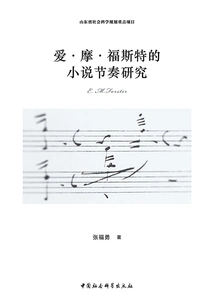
A Study of Rhythm in Elmore Forster's Novels
by Zhang Fuyong
About This Novel
E. M. Forster was a famous novelist and novel critic in the Edwardian era in Britain in the 20th century. Not only his novels, such as "A Passage to India", have become classics handed down from generation to generation, but his collection of critical essays "Aspects of the Novel" is also regarded as "the cornerstone of British and American novel criticism." Forster's theory of novel rhythm and its ingenious application in novel creation are recognized as one of his greatest achievements. This book systematically discusses the use of rhythm in Forster's five major novels and the resulting artistic and aesthetic effects. First, based on Forster's theory of simple rhythm and complex rhythm, the subtle use of these two rhythms in his novels and the artistic effects produced are discussed. In addition, as a supplement and improvement to Forster's "dual theory" of novel rhythm, and from the perspective of Genette's theory of narrative movement rhythm and narrative repetition rhythm, this book explores the application of these two narrative rhythms in Forster's novels and their strengthening and improving effects in promoting the evolution of the novel's storyline, integrating thematic ideas, and deepening ideological connotation.
Official Sources
What Readers Think
Rating
Community(0)
Rating
Community(0)
