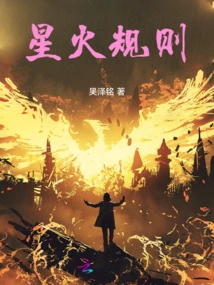
Spark Rules
by Wu Zeming
About This Novel
"Spark Rules" - a technological youth epic written for China. In 1985, Wu Hongfeng, a teenager from Leizhou Bay, dismantled his first radio and heard the hidden frequencies in the storm. In 1999, he broke into Zhejiang University with the "T-correction" algorithm, wrote lightning into the code, and turned the waves into signals. Shaking hands with the local oscillator of Taihang Mountain, Loulan Pendulum, and Heixiazi Island, he locked the frequency and ran all the way, and finally pressed the "same heartbeat" for the whole country on the Qinghai-Tibet Plateau. From the sand sea to the starry sky, from diagonals to inter-star carriers. This is a passionate road to quantitatively becoming a god and shining in the world with his skills. It is also a stubborn declaration that "China must be the one who defines the rules." Wherever the frequency reaches, everything is the country; wherever the electric wave shines, everything is the galaxy. Open the book and listen to the "tick-tock" sound. The young man has tuned the world to the rhythm of China.
Official Sources
What Readers Think
Rating
Community(0)
Official(3)Scraped 1mo ago
Chapter 6-10: The initial formation of the blade A 50-square-meter office, a 3 million dollar bet, and a seven-day stock market crash-the bloody battle for capital is as fast as high-frequency trading, and every second counts. Xu Zhan's Coke and Old K's copper coins hint at the bond between good and evil, while Shen Ting's Wall Street welcome banquet lays the lead for a cross-book showdown.
"Spark Rules" is a tech entrepreneurship epic that interweaves hardcore and passion. The author uses quantitative finance and AI open source as the warp and weft to weave a magnificent picture of Chinese technical people breaking and rewriting the rules. Wu Hongfeng's transformation from a boy in a fishing village to an AGI pioneer is not a one-man show of personal heroism, but a new foundation forcibly built by a group of "lunatics" in the cracks of capital, politics and technology, using code as bricks and ideals as beams. The most touching thing is the weight of the word "open source" - it is not cheap idealism, but a sober game strategy, a way of life carved out of the blockade. The technical details in the book are as dense as code comments, but the emotional lines are as sparse and clear as the sea breeze. The images of mother Acai's compass, old K's copper coins, and Lin Lan's shells repeatedly ask: Are rules man-made, or are man-made rules dead? The answer lies in the sunrise at Leizhou Bay and the blue light of Wanka Galaxy. It's a pity that Shen Ting's villain arc is a little lacking in depth, and the foreshadowing of "the enemy is also reborn" has not been fully realized. But overall, this is a work that makes entrepreneurs lose sleep after reading it and investors clutch their coins after reading it - it proves that Chinese online articles can not only create dreams, but also create rules.
Chapter 21-25: The battle to establish rules USB flash drive betrayal in congressional hearings, ethics debates at the United Nations, handwritten letters from mothers - "Rules are made for people" has changed from a slogan to flesh. Shen Ting's liquidation is not the end, but the epitaph of the old rule writer.
Rating
Community(0)
Official(3)Scraped 1mo ago
Chapter 6-10: The initial formation of the blade A 50-square-meter office, a 3 million dollar bet, and a seven-day stock market crash-the bloody battle for capital is as fast as high-frequency trading, and every second counts. Xu Zhan's Coke and Old K's copper coins hint at the bond between good and evil, while Shen Ting's Wall Street welcome banquet lays the lead for a cross-book showdown.
"Spark Rules" is a tech entrepreneurship epic that interweaves hardcore and passion. The author uses quantitative finance and AI open source as the warp and weft to weave a magnificent picture of Chinese technical people breaking and rewriting the rules. Wu Hongfeng's transformation from a boy in a fishing village to an AGI pioneer is not a one-man show of personal heroism, but a new foundation forcibly built by a group of "lunatics" in the cracks of capital, politics and technology, using code as bricks and ideals as beams. The most touching thing is the weight of the word "open source" - it is not cheap idealism, but a sober game strategy, a way of life carved out of the blockade. The technical details in the book are as dense as code comments, but the emotional lines are as sparse and clear as the sea breeze. The images of mother Acai's compass, old K's copper coins, and Lin Lan's shells repeatedly ask: Are rules man-made, or are man-made rules dead? The answer lies in the sunrise at Leizhou Bay and the blue light of Wanka Galaxy. It's a pity that Shen Ting's villain arc is a little lacking in depth, and the foreshadowing of "the enemy is also reborn" has not been fully realized. But overall, this is a work that makes entrepreneurs lose sleep after reading it and investors clutch their coins after reading it - it proves that Chinese online articles can not only create dreams, but also create rules.
Chapter 21-25: The battle to establish rules USB flash drive betrayal in congressional hearings, ethics debates at the United Nations, handwritten letters from mothers - "Rules are made for people" has changed from a slogan to flesh. Shen Ting's liquidation is not the end, but the epitaph of the old rule writer.
You Might Also Like
Black Emperor 1001 Degrees of Sweet Love: Good Morning, Wife
Momsen Xiaoya
Cute Wife is Shy: Boss, Slow Down Your Flirting!
Write
Who is Not a Little Fairy?
Shui Ningyou
Kisses, Mr. Ji
Leaf Arbor
Reborn in the 1980s, Young Master Le is Jealous Again
Greedy Little Lazy Cat

Reborn Female General
Qianshan Tea Guest
The Almighty Thousand Gold Burns to the Sky
Never Forget The Sound Of Virtue
She is a True Daughter, She is an All-round Boss
Qing Qian
Marriage from a Famous Family: Sweet Pampering for a Commoner Wife
Zi Xiaoxi
The Boss Still Doesn't Want a Divorce Today
Murong Gu Ge