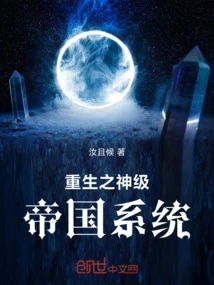
About This Novel
Lin Tian, who came from Earth, traveled to Blue Star and was reborn as Lin Tian on Blue Star. But he found out that he was fired by the top management of Tomorrow Building where he worked. God gave him a god-level empire system, and from then on he had unlimited money and resources to build his own business empire and immortality empire. There will be a second time travel! Two world lines!
Official Sources
What Readers Think
Rating
Community(0)
Official(8)Scraped 1mo ago
good book
This is a great book!
A rare masterpiece that contains artificial language created by the author himself
It has a unique forward-looking and rich worldview jump, and innovatively adds artificial language elements, making this book different from the traditional novel style of time travel or systematic themes. The disadvantage is that there is no collision in design language. I hope to see the author integrate his own artificial language and exert the powerful power of language.
very good
套弄啦咯来咯摸摸来咯弄来咯哦哦OK了咯嗯哦哦理科女咯图来咯
can't read
Alas, to be honest, I don't know what I'm writing and I can't understand it.
cruel words
Updates are quick. Come on, author.
Thanks to the author! ! ! ! ! ! !
Thank you to the author for your hard work. I hope the author writes more and better! As long as the author writes well, my vote will not be less! Always support! . Introduce a language Haiyu Grammar Scheme 1. Content words 1. Adjectives are used to modify people and things. They are divided into adjectives that modify people, with -en as the adjective suffix; those that modify objects, with -wu as the suffix. 2. Noun, divided into three types: solid, gas and liquid. Fixed nouns refer to various objects in life, such as computers, etc., With the suffix uy. The gas noun refers to water vapor and other empty things in life, and the suffix is, iy. The noun for liquid is liquid, and the suffix is ey. 3. Verb, tendency verb, gup, to go; laip, to come. Usage: Used with pill {no future tense. }. For ordinary verbs, add -did to the past tense; add -xia to the present tense; and -jia to the future tense. Verb of judgment, ms, is. Prototype composition: add -al. {Note: Form, name, and verb root are in Chinese Pinyin. } 4. Pronoun. Personal pronouns: first person: singular, w, plural, ws. Second person: singular, y, plural, ys. Third person: single, tn, tv, tu. Complex, ts. 2. Function words 1-Particles. Auxiliary words are used after form and action. Form {complement} + form + complement. Belonging particle, diden{of}. 2. Adverb. Tense adverbs: pill, future adverb; xian, present adverb; guoq, past adverb. {Note: This kind of adverb is only used before the tendency verb to indicate the tense of the tendency verb. }. Adverb of degree, sai=too. Hunde, very. Tenmin, ten, used before verbs. Adverbs of frequency, never, nenwen, sometimes, ami, usually, oufen, always, ahu. 3. Preposition. Preposition of location, in. . On, on. . Down. Un, in. . In, ihun. Exist. . Around, wei. Exist. . Left/right, zuod, youd. Exist. . Before/after, qiand/houd. Prepositions of time, wei/at the same time, before/after, qiad/houd.
No more updates?
There are also photos of opposite sex attracting each other
Chapter 22 Untitled
After Lin Tian became the richest man,
Rating
Community(0)
Official(8)Scraped 1mo ago
good book
This is a great book!
A rare masterpiece that contains artificial language created by the author himself
It has a unique forward-looking and rich worldview jump, and innovatively adds artificial language elements, making this book different from the traditional novel style of time travel or systematic themes. The disadvantage is that there is no collision in design language. I hope to see the author integrate his own artificial language and exert the powerful power of language.
very good
套弄啦咯来咯摸摸来咯弄来咯哦哦OK了咯嗯哦哦理科女咯图来咯
can't read
Alas, to be honest, I don't know what I'm writing and I can't understand it.
cruel words
Updates are quick. Come on, author.
Thanks to the author! ! ! ! ! ! !
Thank you to the author for your hard work. I hope the author writes more and better! As long as the author writes well, my vote will not be less! Always support! . Introduce a language Haiyu Grammar Scheme 1. Content words 1. Adjectives are used to modify people and things. They are divided into adjectives that modify people, with -en as the adjective suffix; those that modify objects, with -wu as the suffix. 2. Noun, divided into three types: solid, gas and liquid. Fixed nouns refer to various objects in life, such as computers, etc., With the suffix uy. The gas noun refers to water vapor and other empty things in life, and the suffix is, iy. The noun for liquid is liquid, and the suffix is ey. 3. Verb, tendency verb, gup, to go; laip, to come. Usage: Used with pill {no future tense. }. For ordinary verbs, add -did to the past tense; add -xia to the present tense; and -jia to the future tense. Verb of judgment, ms, is. Prototype composition: add -al. {Note: Form, name, and verb root are in Chinese Pinyin. } 4. Pronoun. Personal pronouns: first person: singular, w, plural, ws. Second person: singular, y, plural, ys. Third person: single, tn, tv, tu. Complex, ts. 2. Function words 1-Particles. Auxiliary words are used after form and action. Form {complement} + form + complement. Belonging particle, diden{of}. 2. Adverb. Tense adverbs: pill, future adverb; xian, present adverb; guoq, past adverb. {Note: This kind of adverb is only used before the tendency verb to indicate the tense of the tendency verb. }. Adverb of degree, sai=too. Hunde, very. Tenmin, ten, used before verbs. Adverbs of frequency, never, nenwen, sometimes, ami, usually, oufen, always, ahu. 3. Preposition. Preposition of location, in. . On, on. . Down. Un, in. . In, ihun. Exist. . Around, wei. Exist. . Left/right, zuod, youd. Exist. . Before/after, qiand/houd. Prepositions of time, wei/at the same time, before/after, qiad/houd.
No more updates?
There are also photos of opposite sex attracting each other
Chapter 22 Untitled
After Lin Tian became the richest man,
You Might Also Like

The Stunning Ceo Falls in Love with Me
Wind Blown Autumn
Almighty Superhero
Wooden Fish Wooden Fish

Rural Fairy Doctor
Li Sensen 01

Wild Luck God
Luo Qin
Rebirth of Killing Aspects
The Sword Cuts Through The Nine Heavens

Urban God-level Boy
Ginger Syrup

Great Doctor Ling Ran
Shitori Village
Counterattack and Become a Boss after Not Going to Work
Dust And Me

Reborn Female General
Qianshan Tea Guest

The Super Soldier King is on Campus
Hong Qi