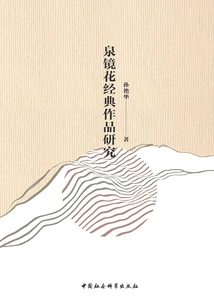
Research on Izumi Kyoka's Classic Works
by Sun Yanhua
About This Novel
Kyoka Izumi (1873-1939), a romantic master in the history of Japanese literature, is a peak in the history of modern Japanese romantic novels. This book selects 11 classic works written by Izumi Kyoka at different stages in the Meiji, Taisho, and Showa periods, and examines the characteristics of Izumi Kyoka's literature in detail from the perspectives of linguistics, folklore, psychology, stylistics, narratology, and comparative literature. It traces back upwards to pre-modern literature and art such as legends, waka, and Chinese poetry, as well as noh and comic books and other pre-modern literature, and extends downward to contemporary film and television literature; horizontally, it compares with contemporary writers and works, and vertically with Chinese literature, thus reflecting the panoramic view of Izumi Kyoka literature in a three-dimensional and all-round way. Quan Jinghua is a "heterodox" among modern writers, and Quan Jinghua literature is a reflection on modern literature from an "anti-modern" standpoint. If we observe the 11 works in order according to the time when they were published, we can outline the trajectory of Izumi Kyoka literature from "modern times" to "anti-modern times". Specifically, the "modernity" embodied by Kyoka through "conceptual novels" weakens in the "autobiographical novel" stage - the focus shifts from the outside to the inside. After the transition of "The Bird", it finally enters "anti-modernity". The appearance of "The Holy Monk of Kono" marks this change. Since then, all the works created by Kyoka have an "anti-modern" color.
Official Sources
What Readers Think
Rating
Community(0)
Rating
Community(0)