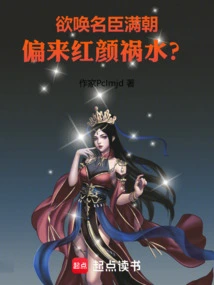
If You Want to Summon Famous Ministers to Fill the Dynasty, Beauties Will Bring Disaster?
by Writerpcimjd
About This Novel
Qi Jing traveled through time and became Emperor Jingtai. On the night of seizing the door, he was paralyzed on the bed and was about to be deposed. At the critical moment of life and death, he activated his golden finger and had the ability to summon famous ministers and concubines. Seriously ill? ! Li Shizhen: "It's a matter of prescription." The ministers broke into the palace to restore the Supreme Emperor? ! Shen Lian put away the knife: "Nonsense, it was obviously you who hacked the Supreme Emperor to death, but tonight you are all rebels." Is the Chief of Ceremonies plotting to strangle Qi Jing? ! Feng Bao: "Isn't it a bad idea to imitate Dongshi? This idea will be ruined in 100 years." However, the imperial power is still on the sidelines, the chief minister of the cabinet has ulterior motives, and there are many conservative parties, princelings, and other parties. Qi Jing is determined to rectify the government and opposition parties, gather the imperial power, and restore the Ming Dynasty to peace and tranquility. However, there are frequent draws only for famous concubines... Yan Song: "Your Majesty, I have discussed the etiquette and removed the Yingzong from the ancestral temple. Your imperial power has been restored." Zhang Juzheng: "Your Majesty, I have purged the government and the opposition. Come out of the harem quickly. We have agreed that the emperor and his ministers will build a beautiful Ming Dynasty together!" Qi Jing looked at He Shen who was staring at him: "You want me to take the lead in donating money to expand the harem? Do you even want to be greedy for my money?" "Your Majesty, your money will be repaid in full. We will share the money of the officials three to seven." ... The story became even more exciting when Qi Jing discovered that the imperial prestige points used for lottery draws could be obtained from favored concubines, and that the imperial prestige points could not only extract famous concubines and ministers, but also destiny. Note: All summoned famous ministers are reborn. After rebirth, they will be close to the protagonist's age and bring with them a lifetime of memories. The reborn concubines are all in their 28s and will not bring with them a lifetime of memories.
Official Sources
What Readers Think
Rating
Community(0)
Official(5)Scraped 1mo ago
There is no such dynasty that uses all the financial resources in the world to raise pigs. Who has not?
Regarding the settings of famous ministers and concubines in this book.
First, all the famous ministers summoned by the protagonist are reborn after death, bringing with them their own lifetime experience. The age after rebirth is similar to the protagonist's age. Second, all the famous concubines summoned by the protagonist are young and have no experience in the previous life. Third, the characters of Shen and Feng are not developed in the first six chapters, mainly because there is no room for expansion in the opening rhythm. The characters of these famous ministers will be written out bit by bit.
Regarding Yu Qian, I will make a separate post.
The reason is that some readers think that the protagonist should not give Yu Qian a good end. I can't understand the reader's purpose of wanting the protagonist to target Yu Qian. From the perspective of the protagonist, Yu Qian is an important minister who does not stand on his own side, and he is also an important minister who does not stand on the side of the Supreme Emperor Zhu Qi. But Yu Qian is not a huge threat. They don't mix with you, nor do they mix with your power substitutes. They just consider their "main business". He has also made great achievements. Even if this person's employees make the boss unhappy, just peel off the inner circle, and must give him a bad fruit? The reason is not good enough. You are not loyal to me, I don't need you. Of course, the main reason for those who have a bad impression of Qian is that they are angry at Yu Qian's inaction in the incident of seizing the door. It may also be that he was angry that Yu Qian actually sat back and watched Zhu Qizhen, an overseas student from Wala, ascend the throne again. Or maybe the main character in the plot of the night in the book is the emperor, and you, Yu Qian, don't listen to me, and if you don't help me, I will kill you? This is a misunderstanding that people often fall into. When we appreciate a person, we may initially appreciate him because of his knowledge, behavior, and conversation. Later, we may also beautify the person because of our appreciation of him. Vice versa, when we dislike a person, we may initially dislike some of the person's behaviors, but later we will find all reasons to strengthen our dislike of the person; Let go of your emotions and consider the whole thing objectively from Yu Qian's perspective in history. When Yu Qian does not take any part in the transition of imperial power, he is just a famous official who has the ability to benefit the people. When he showed the energy to determine the transition of imperial power, he was later defined as a powerful minister, a powerful minister who could use military force to determine the throne. Coincidentally, there was a famous minister in history who had a good reputation and great power, and was also good to the court and the people. His name is Wang Mang. Let's talk about Yu Qian's position as an official first. It doesn't matter who is the emperor. Yu Qian is not loyal to a certain emperor. This is the point where he transcends the Confucian idea of monarch and minister. Therefore, he will not bet on the edge or do anything involving the transition of imperial power. This is absolutely correct. Many people believe that Yu Qian failed Zhu Qiyu by not taking action and suppressing the rebellion. Then think about it, if Yu Qian ends up suppressing the rebellion after seizing the door, what will be the result? Yu Qian was the Minister of the Ministry of War at that time and held military power. Once he participated, he would not consider failure. First, in what name did Yu Qian use to quell the rebellion and restore the emperor? Second, how to deal with Zhu Qizhen after the rebellion? At this time, Zhu Qiyu had also been seriously ill for a long time. If he died, who would inherit the throne? Should we still let Zhu Qizhen's son Zhu Jianshen inherit the throne? Or should we choose a vassal king from somewhere else? Yu Qian raised his army. Once he won, Zhu Qiyu would not keep the Supreme Emperor anymore. After Zhu Qiyu fell seriously ill and died, there was only one powerful minister left in the court, a young son of the Supreme Emperor. Will any of the vassal kings from various places be tempted to take over the capital? Will anyone figure out Jun Zi's idea of comparing Yu Qian to Wang Mang? If the young Zhu Jianshen is allowed to ascend the throne, how will he treat Yu Qian? If Zhu Jianshen is not promoted to the throne, then choosing vassal kings from various places will lead to more disputes among vassal kings in various places? What will happen to the disputes between various factions in the court? "The common people are the most important thing. If the court resigns, the ruler is the most important thing." Taking this sentence as the stance of Yu Qian's court, Even if there is even the slightest possibility of causing another Jingnan War or turmoil in the country and court, Yu Qian will not end up there. If we change the emperor, the people of the Ming Dynasty can still live peacefully without affecting other places. This emperor also has a son, so there is no need to worry about vassal kings fighting for the throne or wooing courtiers to fight. Of course, the most important thing here is that people can live a stable life. When brought into Yu Qian's perspective, the change of rectifying the situation is not an opportunity, but the beginning of a turmoil. Yu Qian is not Wang Mang; Even though there are parts that transcend Confucianism, Yu Qian is still bound by Confucianism and does not intend to be the emperor himself, nor does he intend to cultivate an emperor as a puppet. So what kind of benefits can you gain by launching a military campaign? Or to achieve your own political ambitions? The benefit that the common people will not be left behind is not in line with the values that Yu Qian admires. As for whether Yu Qian expected that he would die? I think Yu Qian should not have expected it. Even if Yu Qian had expected it, Yu Qian would not choose to put an end to the chaos. The death of oneself or Emperor Jingtai will not affect the operation of the country or the lives of the people. This is in line with Yu Qian's values. Yu Qian was not loyal to a certain emperor, he was loyal to the ambition of putting the people first. Talking about this book, if you die with modesty, it will only make the protagonist look like Zhu Qizhen. On the night of seizing the door, Yu Qian won't end until he ends, and the protagonist doesn't just count on Yu Qian. Zhu Qizhen was restored, and Yu Qian was not the beneficiary. The complexity of the imperial court is that it is either friend or enemy. The protagonist will have many ministers in the future, and there are not many in the history books who are more capable than Yu Qian. When the protagonist's potential is far from being fully developed, why should he care about a famous minister who doesn't care about his imperial power. When it can bring benefits to the protagonist and increase the imperial power, why not do it.
Shen Lian Character Card-(Part 1)
If you put the character information in the main text, readers will say that I am stupid. It is not easy to make extra chapters at the moment. I have no place to put it. I will put it in the comments. It is just in time to organize and delete some content from the first volume. "Shen Lian, Shen Lian, courtesy name Chunfu, nicknamed Qingxiashanren, A native of Shaoxing, Zhejiang, he became a Jinshi in the 17th year of Jiajing's reign. He successively served as magistrate of Liyang (now part of Jiangsu), Zaiping (now part of Shandong), and Qingfeng (now part of Henan). He was transferred to the capital and served as Jinyiwei (in charge of document access). He is upright and arrogant, and hates evil as much as he hates it. Sad about the state affairs, drunkenly roared, beat the fou and chanted, recited "Biao Shi" and "Ode to the Red Cliff", and cried aloud. Not afraid of the powerful, Yan Shifan invited guests to drink, teased and laughed at them, and force-fed those who couldn't bear to drink. Shen Lian was unjust and counterattacked Yan Shifan, saying sternly: "I will pay for the guest!" When the flames of the "Gengxu Revolution" suddenly broke out, Shen Lian stepped forward and Resolutely oppose signing a humiliating peace treaty when the enemy is approaching the city. The words are impassioned and eloquent. When Xia Bangmo, the Minister of the Ministry of Personnel, saw this, he was surprised and couldn't help asking: "You are just a small official, why are you so angry? " Shen Lian looked directly at Xia Bangmo with burning eyes, and replied proudly: "I am the Jin Yiwei who experienced Shen Lian. Because all the ministers in the DPRK remained silent, I, as a minor official, had no choice but to speak out. " Witnessing the generals' timidity and cowardice, facing the enemy's arrogance and rampage, Shen Lian was filled with righteous indignation and took the initiative to join the army, vowing to fight against the invading enemies. His heroic spirit and ambition showed his true qualities as a hero. After the incident, Shen Lian wrote a long memorial "Early on correcting the traitorous ministers who misled the country and decided on the strategy of conquering the captives", denounced the Yan family and his son for their crimes of harming the country. The book first points out that "Nowadays, foreign enemies are invading, and even a three-foot boy knows that this is the evil result caused by Yan Song and his son. " Therefore, if you want to defeat the enemy and defend your homeland, "We must first eradicate evil and evil in the world and inspire loyalty." Only by removing Yan Song and his son, "The dangers of enemy invaders are naturally nothing to worry about." Then it focused on exposing the despicable behavior of Yan's father and son in terms of corruption, bribery, monopolization of power, and clique formation. The memorial lists the "ten major crimes" against Yan and his son: 1. Accepting bribes from generals to provoke border disputes. 2. Accepting gifts from various vassal kings caused the vassal vassal (that is, the royal family) to lose their due responsibilities and powers. 3. Controlling the power of the civil service, corruption can be seen everywhere, even small post officials are not spared. As a result, the regular selection system for officials was destroyed, and the social atmosphere and official discipline were also greatly damaged. 4. Asking for routine bribes from governors, prefects and other officials caused messengers to come and go frequently in front of their doors, so that local officials had to intensify their exploitation of the people. The people's wealth was gradually reduced, and social education could not be implemented. 5. Secretly suppress the Kedao officials (officials responsible for supervision) so that they dare not speak out and give advice. 6. Be jealous of talented people, exclude talented people, and maliciously slander kind people. Once someone goes against his will, he will spare no effort to push the other person into a desperate situation, making people's determination to serve the country disappear in an instant. 7. Indulging your son to accept property will cause resentment in the world. 8. Continuously transporting property back home, harassing the people during transportation, causing poverty and depletion of property among the people, and seriously damaging the fundamental vitality of the country. 9. He has served in the cabinet for a long time, but his corruption has become increasingly serious without any good performance. 10. They cannot coordinate to plan a crusade against rebellion to alleviate the monarch's worries. In his memorial, Shen Lian also made a sharp satire on Xia Bangmo, the official minister who was trying to make trouble. Pointing out that he is a "private official" of the Yan family and his son, rather than a "official official" of the imperial court, "Yansong dares to act after facing Yan Song in big matters, and dares to act after Yan Shifan has learned about small matters. The three princes only consult, how can the Yan family and his son interfere in the affairs of the six ministers!" Since the Minister of the Ministry of Personnel, who was in charge of the appointment, dismissal, promotion and promotion of officials, "began to get an official position through bribery, and then also received bribes for an official position", officials at all levels followed suit, leading to the prevalence of corruption. Shen Lian said angrily: Officials said: "The cabinet and the bureaucracy need money, and those of us who insist on integrity have little to gain. " As a result, no matter inside or outside the court, no matter the distance, everyone followed suit one after another, forming a bad atmosphere. Integrity and shame were no longer respected, and thieves sprang up like bees. ... As an official who has already gained a bad reputation, I still say, "I want to promote the worthy and remove the unworthy." Who am I deceiving? Bullying the sky? The memorial finally asked the emperor to issue an edict, "These three people will discuss their crimes in detail, and they should be punished if they should be punished, and they should be reprimanded if they should be reprimanded." The emperor ordered Li Benqiao, a great scholar, to draft an imperial edict. Li Ben was "afraid of the power of Song" and sent someone to ask Yan Shifan how to write the ticket. Yan Shifan and Yan Song's adopted son Zhao Wenhua "drawn up the vote," and Zhao Wenhua "swept it in" and handed it to Li Ben. Li Ben "copied the ticket and sealed it in". The emperor could not tell the difference between loyalty and treachery, so he was charged with "making arrogant remarks when he was in power, slandering ministers, and plotting to gain direct fame". Shen Lianzhang was punished by dozens of people, and he was exiled to Baoan outside the Great Wall (now northeast of Zhuolu, Hebei) as a people. After Shen Lian and his family were exiled to the security guard, they were temporarily in trouble because they had no house to live in. After a local citizen learned that he was the famous Shen Lian who had written a letter asking for the death of Yan and his son, he was very happy to invite him to live in his home; The elders in the village also lent a helping hand, providing him with daily necessities such as firewood and rice, and allowing their children to study with Shen Lian. The people outside the Great Wall have always been sincere and honest, and because they have suffered from the war for a long time, they often join Shen Lian in scolding the Yan family and his son. This has almost become a part of their daily life. Shen Lian stabbed three straw men with his own hands, representing Li Linfu, the treacherous prime minister of the Tang Dynasty, Qin Hui, the treacherous prime minister of the Song Dynasty, and Yan Song, the treacherous prime minister of the current dynasty. He often summoned his disciples to shoot these straw men with arrows to express his anger. Sometimes, Shen Lian would ride his horse to Juyong Pass, face south and curse Yan Song, and then go home full of grief and indignation! Shen Lian's indignation at the current situation was palpable. Even as a displaced person, he would never let go of the misdeeds of the border commanders who had caused unrest on the border due to their negligence. Xu Lun, the governor of Xuanda, killed innocent people and used their heads to claim military merit. After Shen Lian learned about it, he recorded the names of the people who were killed one by one, and then wrote a letter to Xu Lun specifically scolding him.
Shen Lian character card (Part 2)
Xu Lun was promoted to Minister of War, and Yang Shun, a member of Yan Song's party, succeeded him as Governor of Xuanda. Anda led the army to invade and broke through more than 40 fortresses in Yingzhou (now Yingxian County, Shanxi Province). Because Yang Shun was afraid of being punished, he actually ordered the officers and soldiers to shave the heads of the fleeing people and then behead them, so as to pretend to kill the enemy's heads and report his military exploits. His cruelty and shamelessness was even worse than that of the previous commanders. Just as Yang Shun was congratulating him at the banquet, Shen Lian sent him more intense letters and satirical poems. His poem says: Killing a living creature to offer victory has never happened before. The work of unraveling the Dao has caused thousands of bones to wither, White grass, yellow sand, stormy night, How many wronged souls are seeking their heads? He also wrote an article to commemorate the fallen soldiers and killed people, targeting the Yan family and his son and Yang Shun. "The Memorial to the Fallen Zhang Guojiwen" says: The treacherous ministers are in charge, and the discipline is in great disarray. The border alerted and the three armies retreated. ... External currency bribery, internal power and private interests. The plan of the country is swaying on the frost branches. Cut off people and falsely reward them, seize horses for your own money. To repay one's merits and deceive one's master, there is no shame in resigning oneself. ... Although Duke Zhang is dead, his spirit will live forever. Although the generals are still there, they are dying and there is no sound. You are not loyal and you know the powerful. When the powerful are executed, your bones will be broken. It is an honor to die first, and a shame to die later. Death is humiliating, life is prosperous, its distinction is like a candle. Zhang Gong has the spirit to punish this traitor. What is the virtue of a traitor who is not punished for his rebellion? Shen Lian is not at odds with the strict party that brings disaster to the country and the people, but he has deep sympathy for the poor people. Security famines have plagued the country for years, and people are in dire straits. He spent all his money to buy grain and cook porridge to help the hungry people, and he also bought land to bury the hungry bones. The people felt his kindness and built a shrine for him. Shen Lian also advised the rich to provide millet for disaster relief. The "Exhortation to Transform Grain and Porridge" written by Shen Lian showed people the suffering caused by famine and war to the people outside the Great Wall: We live in a border town, and we are experiencing bad years, wars and wars, and the people are uneasy. The floods are drifting, and there is no room for peace in the home. If you eat rough food for the next day, the chaff will be hard to find again. For six cents a dou of rice, don't buy it in a deserted village. There are several lawsuits, who feels sorry for the cold and hungry people; Wherever we meet on the road, we are full of wandering children. The people pay taxes that are not collected, and work hard every day to collect them; If the army loses its share of food, it will be difficult to survive. People will eat each other, and chaos will arise. Another accomplice of Yan Song fabricated lies, claiming that Shen Lian "colluded with desperadoes to practice fencing and archery" in order to find an opportunity to chop off the heads of Yan Song and his son. Yan Shifan ordered the censor Lu Kai to join forces with Yang Shun to plan to get rid of Shen Lian, and promised them: "After the event is completed, those who have made great contributions will be granted the title of marquis, and those who have made little merit will be given generous salaries to high-ranking officials." At that time, Yang Shun and Lu Kai arrested a group of White Lotus believers who were accused of "conspiracy" and "collusion with foreign enemies." They then hatched a conspiracy and reported Shen Lian's name to the list of White Lotus cultists who "conspired to rebel" and reported it to the emperor, saying that the leader of the White Lotus cult had Shen Lian as his teacher and "obey his command." Yan Song and his son were overjoyed when they found out. The emperor approved their petition. In September of the 36th year of Jiajing's reign, Shen Lian was executed in the Xuan Mansion for "conspiracy". His eldest son, Shen Xiang, was sent to the most remote place in the border area for military confinement. His second son, Shen Gun, and his third son, Shen Bao, were beaten to death with a cane. ... For the above content, please refer to Zhang Xianqing: The Biography of Yan Song Yin Shouheng: "The Biography of Shen Lian" in Volume 92 of "History of the Ming Dynasty". Shen Lian: "Essays on Commemorating the Fallen Zhang Youyi", Volume 2 of "Qingxia Collection". Shen Lian: "Essays on Transforming Grains and Serving Porridge", Volume 2 of "Qingxia Collection". If you are interested, you can also read "Shen Xiaoxia Meets and Becomes a Teacher" by Feng Menglong.
Rating
Community(0)
Official(5)Scraped 1mo ago
There is no such dynasty that uses all the financial resources in the world to raise pigs. Who has not?
Regarding the settings of famous ministers and concubines in this book.
First, all the famous ministers summoned by the protagonist are reborn after death, bringing with them their own lifetime experience. The age after rebirth is similar to the protagonist's age. Second, all the famous concubines summoned by the protagonist are young and have no experience in the previous life. Third, the characters of Shen and Feng are not developed in the first six chapters, mainly because there is no room for expansion in the opening rhythm. The characters of these famous ministers will be written out bit by bit.
Regarding Yu Qian, I will make a separate post.
The reason is that some readers think that the protagonist should not give Yu Qian a good end. I can't understand the reader's purpose of wanting the protagonist to target Yu Qian. From the perspective of the protagonist, Yu Qian is an important minister who does not stand on his own side, and he is also an important minister who does not stand on the side of the Supreme Emperor Zhu Qi. But Yu Qian is not a huge threat. They don't mix with you, nor do they mix with your power substitutes. They just consider their "main business". He has also made great achievements. Even if this person's employees make the boss unhappy, just peel off the inner circle, and must give him a bad fruit? The reason is not good enough. You are not loyal to me, I don't need you. Of course, the main reason for those who have a bad impression of Qian is that they are angry at Yu Qian's inaction in the incident of seizing the door. It may also be that he was angry that Yu Qian actually sat back and watched Zhu Qizhen, an overseas student from Wala, ascend the throne again. Or maybe the main character in the plot of the night in the book is the emperor, and you, Yu Qian, don't listen to me, and if you don't help me, I will kill you? This is a misunderstanding that people often fall into. When we appreciate a person, we may initially appreciate him because of his knowledge, behavior, and conversation. Later, we may also beautify the person because of our appreciation of him. Vice versa, when we dislike a person, we may initially dislike some of the person's behaviors, but later we will find all reasons to strengthen our dislike of the person; Let go of your emotions and consider the whole thing objectively from Yu Qian's perspective in history. When Yu Qian does not take any part in the transition of imperial power, he is just a famous official who has the ability to benefit the people. When he showed the energy to determine the transition of imperial power, he was later defined as a powerful minister, a powerful minister who could use military force to determine the throne. Coincidentally, there was a famous minister in history who had a good reputation and great power, and was also good to the court and the people. His name is Wang Mang. Let's talk about Yu Qian's position as an official first. It doesn't matter who is the emperor. Yu Qian is not loyal to a certain emperor. This is the point where he transcends the Confucian idea of monarch and minister. Therefore, he will not bet on the edge or do anything involving the transition of imperial power. This is absolutely correct. Many people believe that Yu Qian failed Zhu Qiyu by not taking action and suppressing the rebellion. Then think about it, if Yu Qian ends up suppressing the rebellion after seizing the door, what will be the result? Yu Qian was the Minister of the Ministry of War at that time and held military power. Once he participated, he would not consider failure. First, in what name did Yu Qian use to quell the rebellion and restore the emperor? Second, how to deal with Zhu Qizhen after the rebellion? At this time, Zhu Qiyu had also been seriously ill for a long time. If he died, who would inherit the throne? Should we still let Zhu Qizhen's son Zhu Jianshen inherit the throne? Or should we choose a vassal king from somewhere else? Yu Qian raised his army. Once he won, Zhu Qiyu would not keep the Supreme Emperor anymore. After Zhu Qiyu fell seriously ill and died, there was only one powerful minister left in the court, a young son of the Supreme Emperor. Will any of the vassal kings from various places be tempted to take over the capital? Will anyone figure out Jun Zi's idea of comparing Yu Qian to Wang Mang? If the young Zhu Jianshen is allowed to ascend the throne, how will he treat Yu Qian? If Zhu Jianshen is not promoted to the throne, then choosing vassal kings from various places will lead to more disputes among vassal kings in various places? What will happen to the disputes between various factions in the court? "The common people are the most important thing. If the court resigns, the ruler is the most important thing." Taking this sentence as the stance of Yu Qian's court, Even if there is even the slightest possibility of causing another Jingnan War or turmoil in the country and court, Yu Qian will not end up there. If we change the emperor, the people of the Ming Dynasty can still live peacefully without affecting other places. This emperor also has a son, so there is no need to worry about vassal kings fighting for the throne or wooing courtiers to fight. Of course, the most important thing here is that people can live a stable life. When brought into Yu Qian's perspective, the change of rectifying the situation is not an opportunity, but the beginning of a turmoil. Yu Qian is not Wang Mang; Even though there are parts that transcend Confucianism, Yu Qian is still bound by Confucianism and does not intend to be the emperor himself, nor does he intend to cultivate an emperor as a puppet. So what kind of benefits can you gain by launching a military campaign? Or to achieve your own political ambitions? The benefit that the common people will not be left behind is not in line with the values that Yu Qian admires. As for whether Yu Qian expected that he would die? I think Yu Qian should not have expected it. Even if Yu Qian had expected it, Yu Qian would not choose to put an end to the chaos. The death of oneself or Emperor Jingtai will not affect the operation of the country or the lives of the people. This is in line with Yu Qian's values. Yu Qian was not loyal to a certain emperor, he was loyal to the ambition of putting the people first. Talking about this book, if you die with modesty, it will only make the protagonist look like Zhu Qizhen. On the night of seizing the door, Yu Qian won't end until he ends, and the protagonist doesn't just count on Yu Qian. Zhu Qizhen was restored, and Yu Qian was not the beneficiary. The complexity of the imperial court is that it is either friend or enemy. The protagonist will have many ministers in the future, and there are not many in the history books who are more capable than Yu Qian. When the protagonist's potential is far from being fully developed, why should he care about a famous minister who doesn't care about his imperial power. When it can bring benefits to the protagonist and increase the imperial power, why not do it.
Shen Lian Character Card-(Part 1)
If you put the character information in the main text, readers will say that I am stupid. It is not easy to make extra chapters at the moment. I have no place to put it. I will put it in the comments. It is just in time to organize and delete some content from the first volume. "Shen Lian, Shen Lian, courtesy name Chunfu, nicknamed Qingxiashanren, A native of Shaoxing, Zhejiang, he became a Jinshi in the 17th year of Jiajing's reign. He successively served as magistrate of Liyang (now part of Jiangsu), Zaiping (now part of Shandong), and Qingfeng (now part of Henan). He was transferred to the capital and served as Jinyiwei (in charge of document access). He is upright and arrogant, and hates evil as much as he hates it. Sad about the state affairs, drunkenly roared, beat the fou and chanted, recited "Biao Shi" and "Ode to the Red Cliff", and cried aloud. Not afraid of the powerful, Yan Shifan invited guests to drink, teased and laughed at them, and force-fed those who couldn't bear to drink. Shen Lian was unjust and counterattacked Yan Shifan, saying sternly: "I will pay for the guest!" When the flames of the "Gengxu Revolution" suddenly broke out, Shen Lian stepped forward and Resolutely oppose signing a humiliating peace treaty when the enemy is approaching the city. The words are impassioned and eloquent. When Xia Bangmo, the Minister of the Ministry of Personnel, saw this, he was surprised and couldn't help asking: "You are just a small official, why are you so angry? " Shen Lian looked directly at Xia Bangmo with burning eyes, and replied proudly: "I am the Jin Yiwei who experienced Shen Lian. Because all the ministers in the DPRK remained silent, I, as a minor official, had no choice but to speak out. " Witnessing the generals' timidity and cowardice, facing the enemy's arrogance and rampage, Shen Lian was filled with righteous indignation and took the initiative to join the army, vowing to fight against the invading enemies. His heroic spirit and ambition showed his true qualities as a hero. After the incident, Shen Lian wrote a long memorial "Early on correcting the traitorous ministers who misled the country and decided on the strategy of conquering the captives", denounced the Yan family and his son for their crimes of harming the country. The book first points out that "Nowadays, foreign enemies are invading, and even a three-foot boy knows that this is the evil result caused by Yan Song and his son. " Therefore, if you want to defeat the enemy and defend your homeland, "We must first eradicate evil and evil in the world and inspire loyalty." Only by removing Yan Song and his son, "The dangers of enemy invaders are naturally nothing to worry about." Then it focused on exposing the despicable behavior of Yan's father and son in terms of corruption, bribery, monopolization of power, and clique formation. The memorial lists the "ten major crimes" against Yan and his son: 1. Accepting bribes from generals to provoke border disputes. 2. Accepting gifts from various vassal kings caused the vassal vassal (that is, the royal family) to lose their due responsibilities and powers. 3. Controlling the power of the civil service, corruption can be seen everywhere, even small post officials are not spared. As a result, the regular selection system for officials was destroyed, and the social atmosphere and official discipline were also greatly damaged. 4. Asking for routine bribes from governors, prefects and other officials caused messengers to come and go frequently in front of their doors, so that local officials had to intensify their exploitation of the people. The people's wealth was gradually reduced, and social education could not be implemented. 5. Secretly suppress the Kedao officials (officials responsible for supervision) so that they dare not speak out and give advice. 6. Be jealous of talented people, exclude talented people, and maliciously slander kind people. Once someone goes against his will, he will spare no effort to push the other person into a desperate situation, making people's determination to serve the country disappear in an instant. 7. Indulging your son to accept property will cause resentment in the world. 8. Continuously transporting property back home, harassing the people during transportation, causing poverty and depletion of property among the people, and seriously damaging the fundamental vitality of the country. 9. He has served in the cabinet for a long time, but his corruption has become increasingly serious without any good performance. 10. They cannot coordinate to plan a crusade against rebellion to alleviate the monarch's worries. In his memorial, Shen Lian also made a sharp satire on Xia Bangmo, the official minister who was trying to make trouble. Pointing out that he is a "private official" of the Yan family and his son, rather than a "official official" of the imperial court, "Yansong dares to act after facing Yan Song in big matters, and dares to act after Yan Shifan has learned about small matters. The three princes only consult, how can the Yan family and his son interfere in the affairs of the six ministers!" Since the Minister of the Ministry of Personnel, who was in charge of the appointment, dismissal, promotion and promotion of officials, "began to get an official position through bribery, and then also received bribes for an official position", officials at all levels followed suit, leading to the prevalence of corruption. Shen Lian said angrily: Officials said: "The cabinet and the bureaucracy need money, and those of us who insist on integrity have little to gain. " As a result, no matter inside or outside the court, no matter the distance, everyone followed suit one after another, forming a bad atmosphere. Integrity and shame were no longer respected, and thieves sprang up like bees. ... As an official who has already gained a bad reputation, I still say, "I want to promote the worthy and remove the unworthy." Who am I deceiving? Bullying the sky? The memorial finally asked the emperor to issue an edict, "These three people will discuss their crimes in detail, and they should be punished if they should be punished, and they should be reprimanded if they should be reprimanded." The emperor ordered Li Benqiao, a great scholar, to draft an imperial edict. Li Ben was "afraid of the power of Song" and sent someone to ask Yan Shifan how to write the ticket. Yan Shifan and Yan Song's adopted son Zhao Wenhua "drawn up the vote," and Zhao Wenhua "swept it in" and handed it to Li Ben. Li Ben "copied the ticket and sealed it in". The emperor could not tell the difference between loyalty and treachery, so he was charged with "making arrogant remarks when he was in power, slandering ministers, and plotting to gain direct fame". Shen Lianzhang was punished by dozens of people, and he was exiled to Baoan outside the Great Wall (now northeast of Zhuolu, Hebei) as a people. After Shen Lian and his family were exiled to the security guard, they were temporarily in trouble because they had no house to live in. After a local citizen learned that he was the famous Shen Lian who had written a letter asking for the death of Yan and his son, he was very happy to invite him to live in his home; The elders in the village also lent a helping hand, providing him with daily necessities such as firewood and rice, and allowing their children to study with Shen Lian. The people outside the Great Wall have always been sincere and honest, and because they have suffered from the war for a long time, they often join Shen Lian in scolding the Yan family and his son. This has almost become a part of their daily life. Shen Lian stabbed three straw men with his own hands, representing Li Linfu, the treacherous prime minister of the Tang Dynasty, Qin Hui, the treacherous prime minister of the Song Dynasty, and Yan Song, the treacherous prime minister of the current dynasty. He often summoned his disciples to shoot these straw men with arrows to express his anger. Sometimes, Shen Lian would ride his horse to Juyong Pass, face south and curse Yan Song, and then go home full of grief and indignation! Shen Lian's indignation at the current situation was palpable. Even as a displaced person, he would never let go of the misdeeds of the border commanders who had caused unrest on the border due to their negligence. Xu Lun, the governor of Xuanda, killed innocent people and used their heads to claim military merit. After Shen Lian learned about it, he recorded the names of the people who were killed one by one, and then wrote a letter to Xu Lun specifically scolding him.
Shen Lian character card (Part 2)
Xu Lun was promoted to Minister of War, and Yang Shun, a member of Yan Song's party, succeeded him as Governor of Xuanda. Anda led the army to invade and broke through more than 40 fortresses in Yingzhou (now Yingxian County, Shanxi Province). Because Yang Shun was afraid of being punished, he actually ordered the officers and soldiers to shave the heads of the fleeing people and then behead them, so as to pretend to kill the enemy's heads and report his military exploits. His cruelty and shamelessness was even worse than that of the previous commanders. Just as Yang Shun was congratulating him at the banquet, Shen Lian sent him more intense letters and satirical poems. His poem says: Killing a living creature to offer victory has never happened before. The work of unraveling the Dao has caused thousands of bones to wither, White grass, yellow sand, stormy night, How many wronged souls are seeking their heads? He also wrote an article to commemorate the fallen soldiers and killed people, targeting the Yan family and his son and Yang Shun. "The Memorial to the Fallen Zhang Guojiwen" says: The treacherous ministers are in charge, and the discipline is in great disarray. The border alerted and the three armies retreated. ... External currency bribery, internal power and private interests. The plan of the country is swaying on the frost branches. Cut off people and falsely reward them, seize horses for your own money. To repay one's merits and deceive one's master, there is no shame in resigning oneself. ... Although Duke Zhang is dead, his spirit will live forever. Although the generals are still there, they are dying and there is no sound. You are not loyal and you know the powerful. When the powerful are executed, your bones will be broken. It is an honor to die first, and a shame to die later. Death is humiliating, life is prosperous, its distinction is like a candle. Zhang Gong has the spirit to punish this traitor. What is the virtue of a traitor who is not punished for his rebellion? Shen Lian is not at odds with the strict party that brings disaster to the country and the people, but he has deep sympathy for the poor people. Security famines have plagued the country for years, and people are in dire straits. He spent all his money to buy grain and cook porridge to help the hungry people, and he also bought land to bury the hungry bones. The people felt his kindness and built a shrine for him. Shen Lian also advised the rich to provide millet for disaster relief. The "Exhortation to Transform Grain and Porridge" written by Shen Lian showed people the suffering caused by famine and war to the people outside the Great Wall: We live in a border town, and we are experiencing bad years, wars and wars, and the people are uneasy. The floods are drifting, and there is no room for peace in the home. If you eat rough food for the next day, the chaff will be hard to find again. For six cents a dou of rice, don't buy it in a deserted village. There are several lawsuits, who feels sorry for the cold and hungry people; Wherever we meet on the road, we are full of wandering children. The people pay taxes that are not collected, and work hard every day to collect them; If the army loses its share of food, it will be difficult to survive. People will eat each other, and chaos will arise. Another accomplice of Yan Song fabricated lies, claiming that Shen Lian "colluded with desperadoes to practice fencing and archery" in order to find an opportunity to chop off the heads of Yan Song and his son. Yan Shifan ordered the censor Lu Kai to join forces with Yang Shun to plan to get rid of Shen Lian, and promised them: "After the event is completed, those who have made great contributions will be granted the title of marquis, and those who have made little merit will be given generous salaries to high-ranking officials." At that time, Yang Shun and Lu Kai arrested a group of White Lotus believers who were accused of "conspiracy" and "collusion with foreign enemies." They then hatched a conspiracy and reported Shen Lian's name to the list of White Lotus cultists who "conspired to rebel" and reported it to the emperor, saying that the leader of the White Lotus cult had Shen Lian as his teacher and "obey his command." Yan Song and his son were overjoyed when they found out. The emperor approved their petition. In September of the 36th year of Jiajing's reign, Shen Lian was executed in the Xuan Mansion for "conspiracy". His eldest son, Shen Xiang, was sent to the most remote place in the border area for military confinement. His second son, Shen Gun, and his third son, Shen Bao, were beaten to death with a cane. ... For the above content, please refer to Zhang Xianqing: The Biography of Yan Song Yin Shouheng: "The Biography of Shen Lian" in Volume 92 of "History of the Ming Dynasty". Shen Lian: "Essays on Commemorating the Fallen Zhang Youyi", Volume 2 of "Qingxia Collection". Shen Lian: "Essays on Transforming Grains and Serving Porridge", Volume 2 of "Qingxia Collection". If you are interested, you can also read "Shen Xiaoxia Meets and Becomes a Teacher" by Feng Menglong.
You Might Also Like
Zhao Was King During the Warring States Period
Ximengfu
Reborn Female General
Qianshan Tea Guest
Everyone Asks Me to Be the Emperor
Four Generations Of Rape
I Really Just Want to Be a Dragon Master
Sorghum River Car God
The Three Kingdoms of Gaowu: Immortality Begins with the Change of Fate Sequence
I Don't Know How To Coo
I, Liu Bian, Sanxing Han Dynasty
Dim Star L
Xianxia Version of Water Margin
Let The Bird Fly
Emperor Xian of the Han Dynasty: Prime Minister, I Really Don't Know Magic
Daluoluo
My Violent Prince Just Wants to Be Deposed
I Know The Joy Of Fish
The Heroes of Wei Wu in Mythical Three Kingdoms
Lao Gao