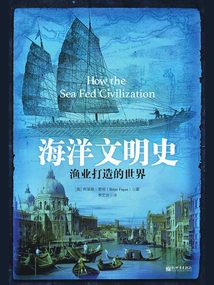
History of Marine Civilization: a World Created by Fisheries
About This Novel
Before prehistoric humans began to grow food, they obtained food through three main methods: hunting, gathering and fishing. Today, hunting and gathering no longer have important economic value, replaced by agriculture and animal husbandry through the domestication of animals and plants. But as the last major way for humans to obtain food from the wild, fisheries have developed into a worldwide industry, and modern humans are more dependent on fisheries than ever before. "History of Marine Civilization" discusses fishery not as a sport, but as a means of human livelihood. The author of this book, the famous archaeologist Brian Fagan, believes that the importance of fishery to human civilization is comparable to that of agriculture. It continues to provide humans with enough food to enable the development of cities and countries, but the form of achieving this goal is different from agriculture. Agriculture requires stability, while fishing requires long distance travel, trade and migration, and the constant search for new and richer fishing grounds. The continuous development of ship-centered fishing technology has promoted people's ocean adventures; after being dried and salted, fish is light, nutritious and easy to preserve, making it an ideal food for merchants, travelers and expeditionary forces. These are characteristics that are different from agriculture. In A History of Maritime Civilizations, Fagan explores archaeological sites around the world and explains how fishing gave birth to the prototypes of cities and empires, and ultimately contributed to the development of modern society.
Official Sources
What Readers Think
Rating
Community(0)
Rating
Community(0)