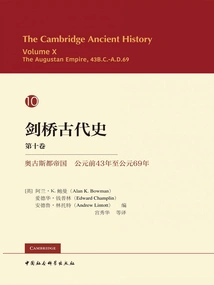
Cambridge Ancient History Volume 10: the Empire of Augustus (43 Bc to Ad 69)
by (uk) Alan K. Bowman (uk) Edward Champlin (uk) Andrew Lintott
About This Novel
This book mainly discusses the changes in the political system of the Roman state and the establishment of the Roman Empire. It describes the time from the second year of the assassination of Julius Caesar to the second year of the suicide of Nero, the last emperor of the Julian-Claudian dynasty. Chapters 1 to 6 mainly describe the political history of this period. Chapters 7 to 12 discuss and analyze the government system. Chapters 13 to 14 mainly provide a basic overview of various regions in the Roman world during this period. Chapters 15 to 21 cover the most important aspects of Roman social and cultural development during this period (the city of Rome; social structure; art, literature and law). The most outstanding achievement of this period was that Augustus-the first emperor in Roman history and the genius leader behind the political transformation-evolved the republican system of the Roman state into a monarchy ruled by dynastic rule. The reign of Augustus was the peak period of Rome's territorial expansion into the Mediterranean, the Near East and northwest Europe. The comprehensive development of this period created prerequisites for the major achievements of the "High Empire" under the "Pax Romana" (pax romana).
Official Sources
What Readers Think
Rating
Community(0)
Rating
Community(0)