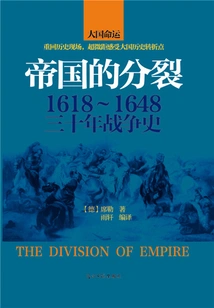
The Dividing of the Empire: a History of the Thirty Years' War, 1618-1648
About This Novel
This book describes the first large-scale international war in European history from 1618 to 1648, which evolved from the civil war of the Holy Roman Empire. The protracted and brutal war brought huge disasters to the entire Europe and completely changed the political landscape of Europe. Through this book, we can not only understand this war, but also appreciate Schiller's unique literary charm.
Official Sources
What Readers Think
Rating
Community(0)
Official(5)Scraped 1mo ago
The Thirty Years' War was the culmination of centuries of religious and international political conflicts in Europe. As King Gustav II of Sweden said in a letter to his Prime Minister: "The various small wars are here combined into a comprehensive European war."
A piece of history worth reading
The Thirty Years' War was a large-scale melee among European countries that evolved from the civil war in the Holy Roman Empire. It was also the first European war in history. If you want to understand this aspect of history, this book is a good choice.
. . . . Beautiful
This war was the product of conflicts among European countries competing for interests and establishing hegemony, as well as the intensification of religious disputes. The war ended with the defeat of the Habsburgs and the signing of the Peace of Westphalia.
Rating
Community(0)
Official(5)Scraped 1mo ago
The Thirty Years' War was the culmination of centuries of religious and international political conflicts in Europe. As King Gustav II of Sweden said in a letter to his Prime Minister: "The various small wars are here combined into a comprehensive European war."
A piece of history worth reading
The Thirty Years' War was a large-scale melee among European countries that evolved from the civil war in the Holy Roman Empire. It was also the first European war in history. If you want to understand this aspect of history, this book is a good choice.
. . . . Beautiful
This war was the product of conflicts among European countries competing for interests and establishing hegemony, as well as the intensification of religious disputes. The war ended with the defeat of the Habsburgs and the signing of the Peace of Westphalia.