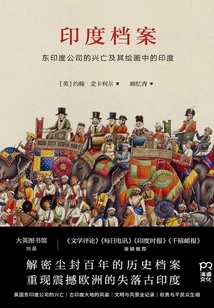
India Archives
About This Novel
"Indian Archives" focuses on India from the 17th to the 19th century. Through the precious historical archives of the British Library, it deciphers the development, rise and decline of the British East India Company in India, as well as the customs of India from a European perspective. This book features graphic archives from the British Library and other art institutions, especially 125 rare paintings by painters traveling in India and letters from important figures in the East India Company, recreating history from the perspective of those who experienced it. Among the paintings, there are documentary landscape paintings by officers stationed in India, portraits of the Mughal royal family and high-ranking East Indian officials painted by royal painters who accompanied the army, and Indian customs and customs described by gold-mining painters. In the letters, there are views of the people in power at the time on the war situation, trade and Indian civilization. In the process of combing through paintings and archives, the author John McAleer restored the vicissitudes of the British East India Company in India over hundreds of years one by one. The book excavates the background and details of real history in detail, telling how the East India Company developed from a small joint-stock company into the most powerful enterprise in human history. On the other side of history, what is less known is that India's human geography has also quietly changed the aesthetic vision of Europeans. Archives show that while the East India Company used force to knock on the door of India, the ancient civilization of the East also deeply shocked the West. During the East India Company period, Europeans were obsessed with everything about India. Indian landscape exhibitions often caused a sensation. Indian gems, paintings, and traditional utensils were brought back to England by merchant ships and sold at high prices. Indian-style houses appeared in the British countryside. Executives of the East India Company were proficient in Sanskrit. And Persian, British painters, scholars, and tea merchants risked their lives to cross the ocean to pan for gold, and the British royal family began to imitate the Indian Hajj ceremony... The canvas records the activities of the British East India Company in the Indian subcontinent and the cultural landscape of ancient India. Archives and letters trace the changing role of the East India Company in India. This book uncovers a dusty history, connects the images, creators and depicted people, and presents in detail the complex connections between the East India Company, the East India Company and India, Indians and Indian culture.
Official Sources
What Readers Think
Rating
Community(0)
Rating
Community(0)