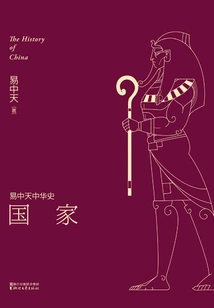
Yi Zhongtian History of China: Country
by Yi Zhongtian
About This Novel
Why is the symbol of civilization the country? Why do countries around the world have such diverse systems? From tribe to country is a fork in the road of history. The nations of the world began to part ways and move forward in the right direction. The Roman Republic, the Greek city-state democracy, and the Western Zhou Dynasty were ordered by heaven. This book will take you back to the historical scene to explore the origins and secrets of the country. Scholar Yi Zhongtian subverts the writing method of traditional historical works. With beautiful poetic language and a unique and innovative global perspective, he will spend five years writing five masterpieces, "Yi Zhongtian History of China" with a total of thirty-six volumes: the first "Roots of China", the second "The First Empire", the third "Sui, Tang, Song and Yuan", the fourth "Ming and Qing", and the fifth "Modern Times". The first fifteen volumes have been published.
Official Sources
What Readers Think
Rating
Community(0)
Official(14)Scraped 2mo ago
What does the birth of a nation mean to us?
When a country is born, civilization is born. History is also divided into two: before it was called prehistory, and after that it was called civilization history. Different cultural films will form "cultural circles" due to migration, alliances, mergers and even wars. At this time, the country is not far away; and once the country is born, mankind has entered the era of civilization. If a nation does not have a country, or fails to establish its own country, its history will remain in the prehistoric era. The country is the watershed between civilization and prehistory. Countries around the world are also very different in their origins, ways of existence, and development paths. They are diverse and strange. Reasonable choices will not be made without reason, and no one will joke with their own destiny. So, what is the difference between nations and tribes? City There are two types of ancient civilizations in the world. One is a country with a city and surrounding countryside, which is called a city-state, or city-state for short. The other is that the central city (capital) plus other cities and its rural areas form a country, which is called a territorial country. Whether it is a city-state or a territorial state, cities are needed. Why were cities born? For safety Cities are the big roofs of ancient humans Cities allow farmers to have no worries. After all, only when they live in peace can they work happily. Let's look at the United States first. This country is not governed by virtue, but by law. The most authoritative institutions and people are the courts and judges. Their president has no dignity at all. Congress can impeach, the media can criticize, and the people can make fun of him. Looking at Greece again, a country composed of city-states, city-states and city-states are completely equal. Even if one city-state separates from another city-state, they will immediately become equals. The political affairs of the city-state are left to the people to decide. They have the right to make irresponsible remarks and vote. Of course, only locals are eligible to enjoy this right. How do Greeks and Americans with independent personalities and wills rely on to form social groups? Contract Everyone is equal before the contract, and the contract is the law. If the law cannot solve the problem, the only option is to vote. Independence, freedom, equality, science, democracy, and the rule of law are consistent and will be passed down from generation to generation. Finally, let's look at China. China is different from the American republic and the Greek democracy, but chooses a monarchy. The world must be in order, and the dragons cannot be leaderless China has a vast territory and a large population. It is prone to flooding and invasion by foreign enemies. It needs strong leadership, charisma and cohesion. If the monarch is unqualified, how can we ask him to step down? There is none, only wishful thinking and melancholy. We have even designed various plans, hoping to achieve "equal emphasis on monarchy and civil rights" But these were all in vain, and decentralization turned into dictatorship. From the Western Zhou Dynasty to the Qin and Han Dynasties to the Tang and Song Dynasties and then to the Yuan, Ming and Qing Dynasties, every time Yu Kuang was replaced, dynasties were changed, and the dead were brought back to life, there was corruption and fester. In fact, the appearance, style, system and scale of any country are determined by the country's culture, history and people. No wonder Engels said that if the government of a country is bad and still exists despite its badness, it can be explained by the corresponding badness of its citizens. The Greek city-states, the lonely sail in the distance; the Roman Republic, the sunset; the centralization of monarchy, deteriorating; the democratic process, twists and turns; the road to freedom, full of dangers; The pace of civilization is always one step deep and the other shallow; no one can see the meaning of the country clearly overnight, but what is certain is that everyone needs a country, whether it is Chinese or foreign, democratic or republican. The meaning and role of religion to people are similar to that of cities and countries. Religion can also be regarded as a country without national boundaries. So where does religion come from? Witchcraft is one of the earliest human cultures, and it also extends to religion and philosophy. The Greeks turned religion into art, the Indians turned religion into philosophy, but the Chinese took a different approach and turned it into ritual and music. In this process, totems also need to be completely upgraded. The Egyptians turned them into gods, the Romans turned them into laws, and the Chinese turned totems into ancestors. So what are ancestors? Oldest father A tribe can become a country, and totems are indispensable. After entering the national era, the ancestral temple or ancestral temple has become a symbol of the country. With the ancestral temple as the center, the king leads the people and lives there, which is called a "country". Such a country is naturally the motherland. The characteristic of China is that the family and the country are integrated. Under the dragon flag, the whole world is one family. If a person wants to settle down, he must rely on his father, fellow villagers, and even his ancestors. Ancestor worship and the hereditary system are complementary to each other. It is even the cultural preparation, ideological preparation, and public opinion preparation for the hereditary system. Only with the worship of ancestors can we have the system of family and state, and only then can we have the 3,700-year history of civilization from Xia, Shang and Zhou to Yuan, Ming and Qing Dynasties. The so-called "China" is the "center of advanced culture at that time", and Xia, Shang and Zhou are the "three representatives". They continued to explore, took turns to take charge, and finally laid the foundation of Chinese civilization. The foundation is solid and the impact is lasting. Finally, the logic and structure of the overall book are not as good as the first one. Yi Zhongtian wrote about the historical changes in Greece, the United States, Rome, Egypt, etc., But it is more like a plain and disorderly record of history. The turning points of each country seem to be just touched upon. However, this book is a popular science text, and there is no more space to explain the reasons. Sometimes it is a good choice to simply tell everyone these situations. As for the points that are not written in the book, aren't they just waiting for us to think about them?
Yi Zhongtian Chinese Shit read the first volume and wanted to finish the next one
Telling history in a comparative manner allows people to think about the national logic behind China in a higher-dimensional way.
This book is so beautiful
A very in-depth book, worth reading
Good reading, good reading, good reading, good reading.
Collect first and then read
Pay tribute to Teacher Yi!
Good books don't require too much language
Good books don't require too much language
Continue to read the next one
I really watched it in one sitting, haha, keep going
Rating
Community(0)
Official(14)Scraped 2mo ago
What does the birth of a nation mean to us?
When a country is born, civilization is born. History is also divided into two: before it was called prehistory, and after that it was called civilization history. Different cultural films will form "cultural circles" due to migration, alliances, mergers and even wars. At this time, the country is not far away; and once the country is born, mankind has entered the era of civilization. If a nation does not have a country, or fails to establish its own country, its history will remain in the prehistoric era. The country is the watershed between civilization and prehistory. Countries around the world are also very different in their origins, ways of existence, and development paths. They are diverse and strange. Reasonable choices will not be made without reason, and no one will joke with their own destiny. So, what is the difference between nations and tribes? City There are two types of ancient civilizations in the world. One is a country with a city and surrounding countryside, which is called a city-state, or city-state for short. The other is that the central city (capital) plus other cities and its rural areas form a country, which is called a territorial country. Whether it is a city-state or a territorial state, cities are needed. Why were cities born? For safety Cities are the big roofs of ancient humans Cities allow farmers to have no worries. After all, only when they live in peace can they work happily. Let's look at the United States first. This country is not governed by virtue, but by law. The most authoritative institutions and people are the courts and judges. Their president has no dignity at all. Congress can impeach, the media can criticize, and the people can make fun of him. Looking at Greece again, a country composed of city-states, city-states and city-states are completely equal. Even if one city-state separates from another city-state, they will immediately become equals. The political affairs of the city-state are left to the people to decide. They have the right to make irresponsible remarks and vote. Of course, only locals are eligible to enjoy this right. How do Greeks and Americans with independent personalities and wills rely on to form social groups? Contract Everyone is equal before the contract, and the contract is the law. If the law cannot solve the problem, the only option is to vote. Independence, freedom, equality, science, democracy, and the rule of law are consistent and will be passed down from generation to generation. Finally, let's look at China. China is different from the American republic and the Greek democracy, but chooses a monarchy. The world must be in order, and the dragons cannot be leaderless China has a vast territory and a large population. It is prone to flooding and invasion by foreign enemies. It needs strong leadership, charisma and cohesion. If the monarch is unqualified, how can we ask him to step down? There is none, only wishful thinking and melancholy. We have even designed various plans, hoping to achieve "equal emphasis on monarchy and civil rights" But these were all in vain, and decentralization turned into dictatorship. From the Western Zhou Dynasty to the Qin and Han Dynasties to the Tang and Song Dynasties and then to the Yuan, Ming and Qing Dynasties, every time Yu Kuang was replaced, dynasties were changed, and the dead were brought back to life, there was corruption and fester. In fact, the appearance, style, system and scale of any country are determined by the country's culture, history and people. No wonder Engels said that if the government of a country is bad and still exists despite its badness, it can be explained by the corresponding badness of its citizens. The Greek city-states, the lonely sail in the distance; the Roman Republic, the sunset; the centralization of monarchy, deteriorating; the democratic process, twists and turns; the road to freedom, full of dangers; The pace of civilization is always one step deep and the other shallow; no one can see the meaning of the country clearly overnight, but what is certain is that everyone needs a country, whether it is Chinese or foreign, democratic or republican. The meaning and role of religion to people are similar to that of cities and countries. Religion can also be regarded as a country without national boundaries. So where does religion come from? Witchcraft is one of the earliest human cultures, and it also extends to religion and philosophy. The Greeks turned religion into art, the Indians turned religion into philosophy, but the Chinese took a different approach and turned it into ritual and music. In this process, totems also need to be completely upgraded. The Egyptians turned them into gods, the Romans turned them into laws, and the Chinese turned totems into ancestors. So what are ancestors? Oldest father A tribe can become a country, and totems are indispensable. After entering the national era, the ancestral temple or ancestral temple has become a symbol of the country. With the ancestral temple as the center, the king leads the people and lives there, which is called a "country". Such a country is naturally the motherland. The characteristic of China is that the family and the country are integrated. Under the dragon flag, the whole world is one family. If a person wants to settle down, he must rely on his father, fellow villagers, and even his ancestors. Ancestor worship and the hereditary system are complementary to each other. It is even the cultural preparation, ideological preparation, and public opinion preparation for the hereditary system. Only with the worship of ancestors can we have the system of family and state, and only then can we have the 3,700-year history of civilization from Xia, Shang and Zhou to Yuan, Ming and Qing Dynasties. The so-called "China" is the "center of advanced culture at that time", and Xia, Shang and Zhou are the "three representatives". They continued to explore, took turns to take charge, and finally laid the foundation of Chinese civilization. The foundation is solid and the impact is lasting. Finally, the logic and structure of the overall book are not as good as the first one. Yi Zhongtian wrote about the historical changes in Greece, the United States, Rome, Egypt, etc., But it is more like a plain and disorderly record of history. The turning points of each country seem to be just touched upon. However, this book is a popular science text, and there is no more space to explain the reasons. Sometimes it is a good choice to simply tell everyone these situations. As for the points that are not written in the book, aren't they just waiting for us to think about them?
Yi Zhongtian Chinese Shit read the first volume and wanted to finish the next one
Telling history in a comparative manner allows people to think about the national logic behind China in a higher-dimensional way.
This book is so beautiful
A very in-depth book, worth reading
Good reading, good reading, good reading, good reading.
Collect first and then read
Pay tribute to Teacher Yi!
Good books don't require too much language
Good books don't require too much language
Continue to read the next one
I really watched it in one sitting, haha, keep going