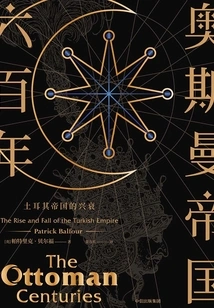
Six Hundred Years of the Ottoman Empire: the Rise and Fall of the Turkish Empire
About This Novel
The six hundred years of the Ottoman Empire are a story of three hundred years of strength and three hundred years of decline. It is a huge empire spanning Europe, Asia and Africa and the crossroads of the world. The rise and fall of national destiny affects the direction of world history. The ancestors of the Turks came from the steppes of Central Asia. Around 1300 AD, they migrated to the westernmost tip of Asia and established their own country here. Only after the hard work of the three founding sultans, the Turks established themselves as an "empire" and left an invincible reputation in Europe. In 1453, Muhammad the Conqueror captured Constantinople, and in 1529, Suleiman the Magnificent marched under the walls of Vienna. The Ottoman Empire at its peak brought unprecedented impact to the political map of Eurasia. As modernity dawned on the world, the Ottoman Empire lagged behind. One after another, European countries stood on the cusp of historical change. The Habsburg Dynasty, Spain, Tsarist Russia, the Napoleonic Empire, the British Empire, and the Eastern power Ottoman had inevitable collisions. In 1683, the Ottoman army besieged Vienna again and suffered a disastrous defeat; in 1821, a war of independence broke out in Greece under the rule of the Ottoman Empire; at the same time, Egypt also established its own country. Since then, more than twenty countries have broken off from the Ottoman Empire's territories in the Balkans, the Middle East, and Africa. Many of these countries quickly became colonies of European powers such as Britain, France, and Russia. Eventually, the Ottoman Empire itself collapsed after its defeat in World War I. The six-hundred-year history of world empire has become a forgotten and lamented past, while modern Türkiye has opened a new chapter as a republic. In the ups and downs of Türkiye's national destiny, Chinese readers can find the shadow of their motherland and the roots of many international current situations. That imperial era is an indelible and unavoidable historical memory in Europe, Asia, and even the entire modern world.
Official Sources
What Readers Think
Rating
Community(0)
Official(2)Scraped 1mo ago
On the eve of infantry becoming the protagonist on the battlefield, cavalry undoubtedly has an unparalleled advantage. Osman relied on this advantage to quickly tear off the richest meat from Byzantium's decaying body. In the cavalry's gallop, manpower and resources belong to him. In the name of God, all for the sake of war, Osman possessed the most advanced technical and tactical power at the time in all aspects. But this is not the case with rule. Osman only possessed the body of Byzantium but did not obtain the essence of its thoughts. It can even be said that it only obtained the dross. The personal dependence system of slaves left over from the early days accompanied Osman until his death. When the Ottoman army reached the natural limit of what it could carry, when the expansion slowed, it was all over. Slaves are only responsible for themselves or their masters, just like a different kind of tax collector. After the sultan and caliphate contracted out their rights, they also lost the recognition of the universal empire. In the end he was only the sultan of a portion of the Turks. Ottoman's closedness and enlightenment, conservatism and reform, rise and decline are foreseeable. To some extent, the two sick man relatives in the East and the West have some common characteristics. However, due to geographical differences, the other side is more closed, and the difficulty of breaking through the shackles varies. Ottoman was just Ottoman. He only occupied the geographical conditions of Constantinople. He was never Rome. This book is rather anecdotal, and given the author's age, identity, and stance, it can't help but beautify the West a lot, while it has an even less rigorous view of the Ottomans. You can read it, but you also need to think about it.
The histories between countries are so similar.
I finally finished reading this book. I really learned from history. Some things are very similar. The timeline of this book is a bit confusing. I felt a little dizzy while reading it.
Rating
Community(0)
Official(2)Scraped 1mo ago
On the eve of infantry becoming the protagonist on the battlefield, cavalry undoubtedly has an unparalleled advantage. Osman relied on this advantage to quickly tear off the richest meat from Byzantium's decaying body. In the cavalry's gallop, manpower and resources belong to him. In the name of God, all for the sake of war, Osman possessed the most advanced technical and tactical power at the time in all aspects. But this is not the case with rule. Osman only possessed the body of Byzantium but did not obtain the essence of its thoughts. It can even be said that it only obtained the dross. The personal dependence system of slaves left over from the early days accompanied Osman until his death. When the Ottoman army reached the natural limit of what it could carry, when the expansion slowed, it was all over. Slaves are only responsible for themselves or their masters, just like a different kind of tax collector. After the sultan and caliphate contracted out their rights, they also lost the recognition of the universal empire. In the end he was only the sultan of a portion of the Turks. Ottoman's closedness and enlightenment, conservatism and reform, rise and decline are foreseeable. To some extent, the two sick man relatives in the East and the West have some common characteristics. However, due to geographical differences, the other side is more closed, and the difficulty of breaking through the shackles varies. Ottoman was just Ottoman. He only occupied the geographical conditions of Constantinople. He was never Rome. This book is rather anecdotal, and given the author's age, identity, and stance, it can't help but beautify the West a lot, while it has an even less rigorous view of the Ottomans. You can read it, but you also need to think about it.
The histories between countries are so similar.
I finally finished reading this book. I really learned from history. Some things are very similar. The timeline of this book is a bit confusing. I felt a little dizzy while reading it.