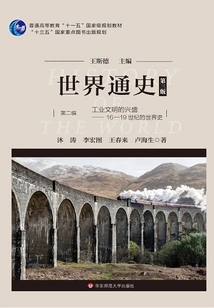
General History of the World (third Edition) (part 2) the Rise of Industrial Civilization: World History from the 16th to the 19th Centuries
About This Novel
The textbook "General History of the World (Third Edition) Part 2: The Rise of Industrial Civilization: World History from the 16th to 19th Centuries" is a national textbook plan for general higher education during the "Eleventh Five-Year Plan" and was revised on the basis of "General History of the World (Second Edition)". The "General History of the World" series of textbooks takes the evolution of human civilization as a clue, and follows the three major stages of pre-industrial civilization and regional history, the rise of industrial civilization, and the development and selection of modern civilization. It outlines the overall movement of the evolution and evolution of human society by combining macro and micro, vertical and horizontal, and reveals the commonality, diversity, and richness of the development of world civilization.
Official Sources
What Readers Think
Rating
Community(0)
Official(3)Scraped 2mo ago
General world history, as the name suggests, is a comprehensive view of world history, and its object of investigation should be the development process of human society as an overall historical movement.
"World history" in the strict sense has only gradually taken shape in the last five hundred years. Although the speed and extent of changes in these five hundred years are unmatched by any previous period, after all, it is only a short journey in the long history of mankind.
Human history, the history of human civilization and world history are three overlapping but different concepts similar to a concentric circle structure.
Rating
Community(0)
Official(3)Scraped 2mo ago
General world history, as the name suggests, is a comprehensive view of world history, and its object of investigation should be the development process of human society as an overall historical movement.
"World history" in the strict sense has only gradually taken shape in the last five hundred years. Although the speed and extent of changes in these five hundred years are unmatched by any previous period, after all, it is only a short journey in the long history of mankind.
Human history, the history of human civilization and world history are three overlapping but different concepts similar to a concentric circle structure.