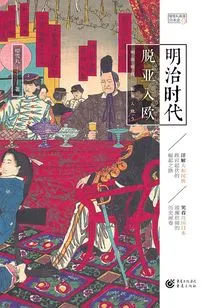
Meiji Era: Leaving Asia and Joining Europe
About This Novel
Emperor Meiji, who regained control of the government, worked hard to govern and reform, determined to put Japan on the road to prosperity. In 1871, the Meiji government sent a large-scale mission headed by Right Minister Iwakura Tomomi to visit Europe and the United States to inspect the capitalist state system. The new government actively introduced various European and American systems and carried out many reforms in the economic system, national industry, national education, etc. These reforms are collectively known as the Meiji Restoration. But like all reforms, the Meiji Restoration faced many obstacles from the beginning. Because of reform measures such as the abolition of feudal lords and the establishment of counties, the military system, and the abolition of sword orders, strong dissatisfaction arose among the former samurai class, and rebellions continued in various places. In 1877, the Satsuma Domain led by Saigo Takamori rebelled. This war, known as the Southwest War, lasted for half a year and was the last civil war in Japanese history. With the defeat of the Satsuma Army in the Southwest War, the feudal militaristic state controlled and dominated by the emperor was established, marking the end of Japan's capitalist revolution. After pacifying the southwest, Japan established a parliament in accordance with the model of Western powers, revised its constitution, and conducted diplomacy with Western countries.
Official Sources
What Readers Think
Rating
Community(0)
Rating
Community(0)