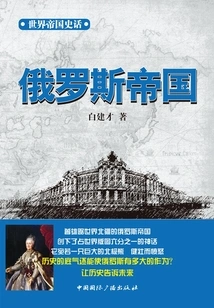
History of World Empires Russian Empire
by Bai Jiancai
About This Novel
The Russian Empire's national power reached an unprecedented peak in the 19th century. It was one of the world powers at that time and called itself the Third Rome. However, when Europe successively carried out the Industrial Revolution in the late 19th century, it did not keep up with the times. As a result, its economic strength was far less than that of other major European countries in the era of Nicholas II in the early 20th century. In August 1914, the politically turbulent Russia entered World War I. The unbearable war situation directly led to the outbreak of the February Revolution in 1917. Nicholas II signed an abdication statement. The Russian Empire was destroyed and the Russian Republic was established. However, it was overthrown by the Bolsheviks through the October Revolution in the same year and replaced by Soviet Russia (Soviet Russia).
Official Sources
What Readers Think
Rating
Community(0)
Official(6)Scraped 2mo ago
Good book, worth reading.
Facing the world-famous cultural heritage, it is never a particularly small number, because it also represents the Russian Empire and its own inherent value, and this book happens to be centered on this, unfolding to us one by one.
War has always been the most destructive thing, and the people who suffer the most from war may be some civilians, because it is very sad to have a good life turned into a mess by this war.
It's very good. It gave me a good understanding of Russian history. At the same time, I feel that Russia and our country's national conditions are very similar. No wonder we can all move towards socialism. This is not an accident!
The Russian Empire was renamed the Empire from 1721 to its collapse in March 1917, and its actual existence was 196 years. After the February Revolution of 1917, Russia experienced the throes of revolution for more than half a year. In October, the Russian proletariat launched another uprising, overthrew the bourgeois provisional government, and established the Soviet power.
This book mainly talks about one thing about the Russian Empire and its development. However, Russia has not had a great impact on us, everyone, and the benefits it has brought to the world.
Rating
Community(0)
Official(6)Scraped 2mo ago
Good book, worth reading.
Facing the world-famous cultural heritage, it is never a particularly small number, because it also represents the Russian Empire and its own inherent value, and this book happens to be centered on this, unfolding to us one by one.
War has always been the most destructive thing, and the people who suffer the most from war may be some civilians, because it is very sad to have a good life turned into a mess by this war.
It's very good. It gave me a good understanding of Russian history. At the same time, I feel that Russia and our country's national conditions are very similar. No wonder we can all move towards socialism. This is not an accident!
The Russian Empire was renamed the Empire from 1721 to its collapse in March 1917, and its actual existence was 196 years. After the February Revolution of 1917, Russia experienced the throes of revolution for more than half a year. In October, the Russian proletariat launched another uprising, overthrew the bourgeois provisional government, and established the Soviet power.
This book mainly talks about one thing about the Russian Empire and its development. However, Russia has not had a great impact on us, everyone, and the benefits it has brought to the world.