Q
by I
About This Novel
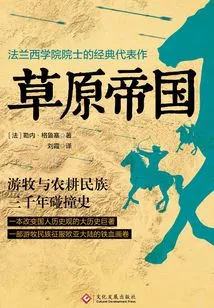
"Steppe Empire" is a classic work written by Rene Grusset. It is a typical general history of Central Asia. This book is widely recognized by the world's historical circles for its detailed and systematic description of the three thousand years of history of the nomadic peoples of Eurasia. The publication of Rene Grusset's "Steppe Empire" marks the formal acceptance of the history of Eurasia by the outside world. Its greatest feature is that it examines the history of the Mongol Empire from a new perspective. "Grassland Empire" covers a long time, starting from the Huns in the barbaric period and ending in the early Qing Dynasty. Rene Grusset carefully compiled a clear line of thought from the development routes of various ethnic groups active on the Eurasian steppes, which once covered Eastern Europe, West Asia, Central Asia, North Asia, Russian steppes and other plateaus and mountains, allowing readers to fully understand the essence of steppe regimes.
Official Sources
What Readers Think
Rating
Community(0)
Official(4)Scraped 20d ago
It turns out that the Huns are not as tall as the Mongols and Turks, but these ethnic groups do have many customs that are inherited from the same origin, such as the custom of burial. The Huns were also wise and came back to hunt game on the Chinese border.
The legends of the Mongolian nation are so romantic. Among them, the gray wolf and the white deer are a kind of totem, one symbolizes men and the other symbolizes women. Only after their union did the Mongolian nation come into being.
Among them, the Sarmatians and Scythians have the same origin, but their styles are very different. The Scythians like to ride horses and hold bows and arrows! The Sarmatians loved wearing armor and carrying spears! At the beginning of the third century AD, Scythian art began to transition to Selmatian art. After the styles were completely different, the artistic transition began.
glory sofa
The conquest and punishment of the nomadic peoples in the Mongolian grasslands from east to west
Rating
Community(0)
Official(4)Scraped 20d ago
It turns out that the Huns are not as tall as the Mongols and Turks, but these ethnic groups do have many customs that are inherited from the same origin, such as the custom of burial. The Huns were also wise and came back to hunt game on the Chinese border.
The legends of the Mongolian nation are so romantic. Among them, the gray wolf and the white deer are a kind of totem, one symbolizes men and the other symbolizes women. Only after their union did the Mongolian nation come into being.
Among them, the Sarmatians and Scythians have the same origin, but their styles are very different. The Scythians like to ride horses and hold bows and arrows! The Sarmatians loved wearing armor and carrying spears! At the beginning of the third century AD, Scythian art began to transition to Selmatian art. After the styles were completely different, the artistic transition began.
glory sofa
The conquest and punishment of the nomadic peoples in the Mongolian grasslands from east to west