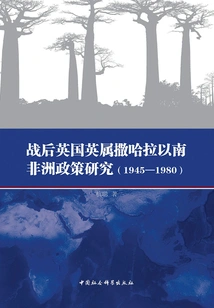
Post-war British Sub-saharan Africa Policy Research (1945-1980)
by Hang Cong
About This Novel
This book uses first-hand archival materials to point out the shortcomings of certain theories and opinions in domestic and foreign academic circles. It pays special attention to using the economic and social changes in sub-Saharan Africa as a starting point to reflect on the history of colonial rule, and attempts to link case studies with the changes in the capitalist world system. After analyzing the post-war decision-making environment of the British government and the continuity and variability of previous government policies, the British government's policies are examined from four dimensions, namely the political dimension, the military dimension, the economic dimension and the prestige dimension. It also attempts to connect British policies with the changes in world capitalism by comparing the policies of other colonial masters and linking them with the transfer of British and American hegemony. The author sees British policy as proactive in the process of forced withdrawal from the colonies. The pressure of persecution came from the combined result of international pressure, colonial pressure and domestic pressure. The effects of various pressures varied in different regions and time periods. Overall, colonial pressure played a major role. As a result of the combined pressure, economic considerations are the basic basis for the British government to decide the direction of policy, while political or defense considerations play a role in accelerating or delaying policy implementation and specifically determining the method of policy implementation.
Official Sources
What Readers Think
Rating
Community(0)
Rating
Community(0)