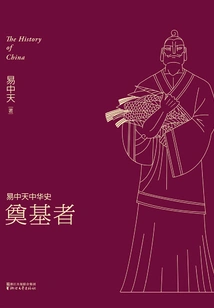
Yi Zhongtian History of China: the Founder
by Yi Zhongtian
About This Novel
The mountains and rivers made of copper in the Yin and Shang Dynasties were vulnerable to a single blow, and the towering towers collapsed at the drop of a hat. The victory of the Zhou people came too quickly. However, can the new political power be maintained? The calm Zhou people stole the sky and changed the sun, becoming "sons of heaven", enfeoffing various princes, and successfully "dominated the world". The Duke of Zhou maintained order with etiquette, governed the country with virtue, and stabilized the world with the four major systems. From then on, the Zhou Dynasty ushered in a prosperous era of etiquette and music for five hundred years. But why was the Zhou people's world in chaos? How to enter the adolescence of the Chinese nation? Scholar Yi Zhongtian subverts the writing method of traditional historical works. With beautiful poetic language and a unique and innovative global perspective, he will spend five years writing five masterpieces, "Yi Zhongtian History of China" with a total of thirty-six volumes: the first "Roots of China", the second "The First Empire", the third "Sui, Tang, Song and Yuan", the fourth "Ming and Qing", and the fifth "Modern Times". The first fifteen volumes have been published.
Official Sources
What Readers Think
Rating
Community(0)
Official(11)Scraped 2mo ago
The foundation of culture and institutions
When the people of the Zhou Dynasty stood on the territory that was once a merchant's territory, they were filled with fear and fear. Why was this country made of copper so vulnerable? Will the tragedy of history happen again? Can the new political power maintain long-term peace and stability? Zhou people understood that destiny was impermanent. It loved summer, missed Shang, and now it is optimistic about Zhou. Everything will change, and the only constant is change. This means we must never be careless. We must take the demise of the Yin Shang Dynasty as a lesson to be modest and prudent, guard against arrogance and impetuosity, and be prepared for danger in times of peace. This is a sense of vulnerability The sense of worry may come from their agricultural people. You must know that the production cycle was long, the work was hard, and the harvest was not guaranteed. How could they not be prepared for danger at all times? Looking at the general trend of the world, at that time, the central plains were dominated by the Xia, the western region by the Qiang, the Dongyi in the east, the Beidi in the north, and the Baipu and barbarians in the south. Some were close to merchants, some were close to Zhou, some were swinging, and some were independent. But one thing is the same: none of them will be lilies in the monastery When King Wu conquered Zhou, he only took away the headquarters of the Yin Shang. Some of the defeated merchants retreated to Liaodong and Korea, and more gathered in various parts of the Central Plains, waiting for a comeback. On the other hand, King Wu established a puppet regime, divided Shang's territory into three parts, and let his brothers Guan Shu, Cai Shu, and Huo Shu monitor him, known as the "Three Supervisors" As soon as King Wu died, all the tribes rebelled, including the three troops that monitored the Yin people. This is known as the Guan Cai Rebellion in history. This new regime is facing tremendous pressure and serious crises, and its worries are justified. First of all, two problems must be solved to convince people The rationality of the revolution and the legitimacy of the regime Whether the revolution is legitimate or the political power is legitimate, the answer points to one thing: destiny. The black bird descended from the sky and gave birth to business. Therefore, the businessmen were given a historical mission and thus had the right to live in China. This power could rule the world. Without the authorization of the Emperor and God, you cannot live in China, or you will be driven out of China if you live in China. Duke Zhou's answer was that although Zhou was an old state, his destiny was restored. The king of Shang was the son of God, and the king of Zhou had to steal the sky and change the sun, claiming that he was the son of heaven. The former is a divine gift, and the latter is a heavenly gift. The difference is that divine gift has a certain religious nature, while heavenly gift is ethical. The Zhou system and culture were not limited to the divine power of the king, but a complete and rigorous system. They are people-oriented and governing the country by virtue. The former is to abolish the inhumane human sacrifice and human sacrifice, and is also the ideological background of Zhou system and culture. To govern a country by virtue is to strive to create a moral role model. Each generation of kings is generous and kind, diligent and loves the people. Morality is not so much a quality or state as a kind of wisdom. Heaven's teaching is the banner, humanism is the program, moral rule is "one center", ritual and music are "two basic points", this is Zhou Gong's thought. Based on this entire ideological system, the Zhou people created four major systems: well field, feudalism, patriarchal clan, ritual and music. Jingtian is an economic system that takes into account people's livelihood; feudalism is a political system that follows public opinion; patriarchal clan is a social system that upholds folk customs; rituals and music are cultural systems that calm the people's hearts. Let's look at feudalism first. Feudalism is not feudal socialism. To be precise, it should be feudal state-building. To enfeoff is to ennoble the land of the princes. It means to enfeoff the princes and give them a territory, and the boundaries must be clearly defined. The meaning of enfeoffment lies in the territory, so it is also called feudal territory. Construction is the founding of a country, and it also includes the three ceremonies of conferring land, conferring people, and conferring titles. On the surface, the political power is legal and has gone through the procedures. But what can be separated can only be states, not countries. After the Qin and Han Dynasties, it was a country worthy of the name in the true sense. In other words, the states in the Western Zhou Dynasty can only be regarded as the prototype of a country. Looking at the well field again, a large piece of land is divided into nine pieces, with public land in the middle and private fields in the rest. This is the well field system. In a sense, the well-field system is actually a kind of feudalism, and conversely, the feudal state-building system can also be regarded as the well-field system. Secondly, looking at the patriarchal system, it actually means establishing the eldest son. Only the son born from the first wife is qualified to be called the eldest son. This is also the core and key of the patriarchal system. The first generation in the clan is called the ancestor, and the second generation is called the clan. The ancestor is the founder, and the clan is the successor. The clan law stipulates who is the clan, and this is the clan law. Finally, let's talk about rituals and music Order is the essence and spirit of etiquette Since etiquette is order, it can be used to deal with interpersonal relationships and maintain social stability. Its meaning is no longer just about worshiping gods and ancestors, but also about identity and social responsibility. Therefore it must be determined as a system, which is the ritual system But then the question arises. People are divided into high and low. How to calm the dissatisfaction in the hearts of everyone? Duke Zhou's method is to use music to reconcile. What is joy? Le is music and happiness. Different tones, pitches, lengths, and intensities are all different, and when combined together, they sound great. It can be seen that difference or inequality is not a problem, the key lies in how to organize The principle of organization is harmony, and harmony is the unity of diversity. This is why etiquette and music must form the same system. Regardless of the well-field or the patriarchal clan, the core is implemented through enfeoffment. The emperor's eldest son becomes the emperor, and the rest become princes. The same goes for the princes, who are pushed down one level at a time. Feudalism divided the world into three levels. The highest level was Tianxia, whose leader was the emperor; the next level was the country, which was the feudal state, and its leader was the prince; the third level was the family, which was the fief, and its leader was the official. What created this scene is that the world is one family, and we are all brothers within the four seas. But the problem also arises. The emperor and the princes can divide the feudal lords, but the officials cannot, so the class of scholars was born. After the Qin and Han Dynasties, due to the demise of the princes and officials, the scholars became the head of the common people and formed the gentry clan. Of course, this is all a story later. At least there is no problem at the moment. The same flaw is that the Zhou royal family has strong branches and weak branches. The feudal vassal states all have their own armed forces, and they only obey the orders of the Emperor Zhou in name. Who can obey whom in the future if the blood relationship is indifferent? From a historical point of view, this is indeed the case. In the Spring and Autumn Period, the emperor was arrogant, such as the Five Hegemons in the Spring and Autumn Period. In the Warring States Period, the great officials destroyed the princes, such as the three families divided into the Jin Dynasty. It is inevitable that the feudal system will be eliminated from history, but this happened after the Qin and Han Dynasties. The emperor of Zhou did not think of it at the time, and the princes did not realize this crisis. During these five or six hundred years of good times, the gentlemen and ladies of Zhou were young and open-minded, and they performed unique and suave styles that could not be copied. Zhou people also had three spirits: humanism, reality and art. The humanistic spirit is actually people-oriented, but it is different from the humanistic spirit in the West. We are a group, a family, and a country, relying on patriarchal laws, rituals and music to maintain stability. The spirit of reality means that it does not recognize the existence of religion, philosophy, and science. No one is really interested in these. What Zhou people want is secular life. The artistic spirit of our nation is the means and result of maintaining stability. To put it bluntly, it is the education of etiquette and music. These three spirits are more like people-oriented and virtue-based governance, which are just pasted on. It is a bit far-fetched, but in other words, these three spirits also reflect the attitude of the people at that time, which was more realistic. In fact, from the natural right of kings to people-oriented, to governing the country with virtue, to maintaining order with etiquette, and achieving harmony with music, the Zhou people created a complete, self-consistent, complementary, and stable system, covering many aspects of economy, politics, society, and culture. The significance of Western Zhou civilization to Chinese civilization is equivalent to that of Greece to Western civilization. It is not an exaggeration to call it the founder, and it is worthy of its name.
Good reading, good reading, good reading, good reading.
The three spirits of Chinese civilization finally found their source
A reflection of contemporary literati on cultural history.
A reflection of contemporary literati on cultural history. Perhaps it cannot be exempted from the limitations of the times, such as the international cultural environment.
Pay tribute to Teacher Yi!
Very well written.
Very well written.
Very well written.
Very well written.
Very well written.
Rating
Community(0)
Official(11)Scraped 2mo ago
The foundation of culture and institutions
When the people of the Zhou Dynasty stood on the territory that was once a merchant's territory, they were filled with fear and fear. Why was this country made of copper so vulnerable? Will the tragedy of history happen again? Can the new political power maintain long-term peace and stability? Zhou people understood that destiny was impermanent. It loved summer, missed Shang, and now it is optimistic about Zhou. Everything will change, and the only constant is change. This means we must never be careless. We must take the demise of the Yin Shang Dynasty as a lesson to be modest and prudent, guard against arrogance and impetuosity, and be prepared for danger in times of peace. This is a sense of vulnerability The sense of worry may come from their agricultural people. You must know that the production cycle was long, the work was hard, and the harvest was not guaranteed. How could they not be prepared for danger at all times? Looking at the general trend of the world, at that time, the central plains were dominated by the Xia, the western region by the Qiang, the Dongyi in the east, the Beidi in the north, and the Baipu and barbarians in the south. Some were close to merchants, some were close to Zhou, some were swinging, and some were independent. But one thing is the same: none of them will be lilies in the monastery When King Wu conquered Zhou, he only took away the headquarters of the Yin Shang. Some of the defeated merchants retreated to Liaodong and Korea, and more gathered in various parts of the Central Plains, waiting for a comeback. On the other hand, King Wu established a puppet regime, divided Shang's territory into three parts, and let his brothers Guan Shu, Cai Shu, and Huo Shu monitor him, known as the "Three Supervisors" As soon as King Wu died, all the tribes rebelled, including the three troops that monitored the Yin people. This is known as the Guan Cai Rebellion in history. This new regime is facing tremendous pressure and serious crises, and its worries are justified. First of all, two problems must be solved to convince people The rationality of the revolution and the legitimacy of the regime Whether the revolution is legitimate or the political power is legitimate, the answer points to one thing: destiny. The black bird descended from the sky and gave birth to business. Therefore, the businessmen were given a historical mission and thus had the right to live in China. This power could rule the world. Without the authorization of the Emperor and God, you cannot live in China, or you will be driven out of China if you live in China. Duke Zhou's answer was that although Zhou was an old state, his destiny was restored. The king of Shang was the son of God, and the king of Zhou had to steal the sky and change the sun, claiming that he was the son of heaven. The former is a divine gift, and the latter is a heavenly gift. The difference is that divine gift has a certain religious nature, while heavenly gift is ethical. The Zhou system and culture were not limited to the divine power of the king, but a complete and rigorous system. They are people-oriented and governing the country by virtue. The former is to abolish the inhumane human sacrifice and human sacrifice, and is also the ideological background of Zhou system and culture. To govern a country by virtue is to strive to create a moral role model. Each generation of kings is generous and kind, diligent and loves the people. Morality is not so much a quality or state as a kind of wisdom. Heaven's teaching is the banner, humanism is the program, moral rule is "one center", ritual and music are "two basic points", this is Zhou Gong's thought. Based on this entire ideological system, the Zhou people created four major systems: well field, feudalism, patriarchal clan, ritual and music. Jingtian is an economic system that takes into account people's livelihood; feudalism is a political system that follows public opinion; patriarchal clan is a social system that upholds folk customs; rituals and music are cultural systems that calm the people's hearts. Let's look at feudalism first. Feudalism is not feudal socialism. To be precise, it should be feudal state-building. To enfeoff is to ennoble the land of the princes. It means to enfeoff the princes and give them a territory, and the boundaries must be clearly defined. The meaning of enfeoffment lies in the territory, so it is also called feudal territory. Construction is the founding of a country, and it also includes the three ceremonies of conferring land, conferring people, and conferring titles. On the surface, the political power is legal and has gone through the procedures. But what can be separated can only be states, not countries. After the Qin and Han Dynasties, it was a country worthy of the name in the true sense. In other words, the states in the Western Zhou Dynasty can only be regarded as the prototype of a country. Looking at the well field again, a large piece of land is divided into nine pieces, with public land in the middle and private fields in the rest. This is the well field system. In a sense, the well-field system is actually a kind of feudalism, and conversely, the feudal state-building system can also be regarded as the well-field system. Secondly, looking at the patriarchal system, it actually means establishing the eldest son. Only the son born from the first wife is qualified to be called the eldest son. This is also the core and key of the patriarchal system. The first generation in the clan is called the ancestor, and the second generation is called the clan. The ancestor is the founder, and the clan is the successor. The clan law stipulates who is the clan, and this is the clan law. Finally, let's talk about rituals and music Order is the essence and spirit of etiquette Since etiquette is order, it can be used to deal with interpersonal relationships and maintain social stability. Its meaning is no longer just about worshiping gods and ancestors, but also about identity and social responsibility. Therefore it must be determined as a system, which is the ritual system But then the question arises. People are divided into high and low. How to calm the dissatisfaction in the hearts of everyone? Duke Zhou's method is to use music to reconcile. What is joy? Le is music and happiness. Different tones, pitches, lengths, and intensities are all different, and when combined together, they sound great. It can be seen that difference or inequality is not a problem, the key lies in how to organize The principle of organization is harmony, and harmony is the unity of diversity. This is why etiquette and music must form the same system. Regardless of the well-field or the patriarchal clan, the core is implemented through enfeoffment. The emperor's eldest son becomes the emperor, and the rest become princes. The same goes for the princes, who are pushed down one level at a time. Feudalism divided the world into three levels. The highest level was Tianxia, whose leader was the emperor; the next level was the country, which was the feudal state, and its leader was the prince; the third level was the family, which was the fief, and its leader was the official. What created this scene is that the world is one family, and we are all brothers within the four seas. But the problem also arises. The emperor and the princes can divide the feudal lords, but the officials cannot, so the class of scholars was born. After the Qin and Han Dynasties, due to the demise of the princes and officials, the scholars became the head of the common people and formed the gentry clan. Of course, this is all a story later. At least there is no problem at the moment. The same flaw is that the Zhou royal family has strong branches and weak branches. The feudal vassal states all have their own armed forces, and they only obey the orders of the Emperor Zhou in name. Who can obey whom in the future if the blood relationship is indifferent? From a historical point of view, this is indeed the case. In the Spring and Autumn Period, the emperor was arrogant, such as the Five Hegemons in the Spring and Autumn Period. In the Warring States Period, the great officials destroyed the princes, such as the three families divided into the Jin Dynasty. It is inevitable that the feudal system will be eliminated from history, but this happened after the Qin and Han Dynasties. The emperor of Zhou did not think of it at the time, and the princes did not realize this crisis. During these five or six hundred years of good times, the gentlemen and ladies of Zhou were young and open-minded, and they performed unique and suave styles that could not be copied. Zhou people also had three spirits: humanism, reality and art. The humanistic spirit is actually people-oriented, but it is different from the humanistic spirit in the West. We are a group, a family, and a country, relying on patriarchal laws, rituals and music to maintain stability. The spirit of reality means that it does not recognize the existence of religion, philosophy, and science. No one is really interested in these. What Zhou people want is secular life. The artistic spirit of our nation is the means and result of maintaining stability. To put it bluntly, it is the education of etiquette and music. These three spirits are more like people-oriented and virtue-based governance, which are just pasted on. It is a bit far-fetched, but in other words, these three spirits also reflect the attitude of the people at that time, which was more realistic. In fact, from the natural right of kings to people-oriented, to governing the country with virtue, to maintaining order with etiquette, and achieving harmony with music, the Zhou people created a complete, self-consistent, complementary, and stable system, covering many aspects of economy, politics, society, and culture. The significance of Western Zhou civilization to Chinese civilization is equivalent to that of Greece to Western civilization. It is not an exaggeration to call it the founder, and it is worthy of its name.
Good reading, good reading, good reading, good reading.
The three spirits of Chinese civilization finally found their source
A reflection of contemporary literati on cultural history.
A reflection of contemporary literati on cultural history. Perhaps it cannot be exempted from the limitations of the times, such as the international cultural environment.
Pay tribute to Teacher Yi!
Very well written.
Very well written.
Very well written.
Very well written.
Very well written.