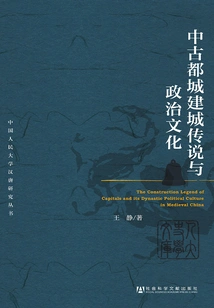
Legends of the Founding of Medieval Capitals and Political Culture (han and Tang Studies Series of Renmin University of China)
by Wang Jing
About This Novel
What does a capital city mean in medieval China? How is it intrinsically related to the emperor and imperial power? In traditional political culture and even the cosmic order, how do these two construct inherent necessity? A destiny-destined regime requires a destined capital, whose establishment must be both rooted in tradition and tailor-made for the dynasty's destiny. In short, the location, planning and specific organizational structure of the capital, in addition to combining the actual political needs of the dynasty, also reflected its sanctity and legitimacy through layout and symbols, which were the embodiment of the political culture of the dynasty. Therefore, the rulers of the empire and the planners and implementers of the capital, by "looking up at the astronomy and looking down at the geography", cleverly used prophecies, myths, and even astronomical elements to simultaneously construct the central position of the imperial capital in the world's political order and cosmic system, and eventually became the "residence of the emperor." All of this was accumulated when the medieval imperial capitals were first built, and became the genes for their capital status.
Official Sources
What Readers Think
Rating
Community(0)
Rating
Community(0)