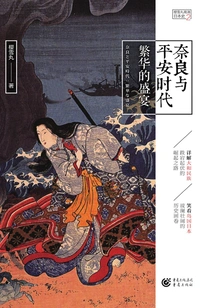
Nara and the Heian Period: a Feast of Prosperity
About This Novel
After the Battle of Shiromurajiang, Japan's vitality was severely damaged and it retreated to its homeland. In Japan, after the death of Emperor Tenchi, the Imshin Rebellion broke out, and Emperor Tenmu succeeded to the throne. After Tenmu came to power, he took full power and continued to push forward the Daika Reform until Emperor Bunmu and Emperor Genmei formulated the "Daibao Ryuto" and "Youro Ryuto" successively, fully establishing the results of the Daika Reform. In 710, Emperor Genmei moved the capital to Nara Castle, starting the Nara era; in 794, Emperor Tsunemu moved the capital to Heian-kyo, starting the Heian era. The emperor was in power during both the Nara and Heian periods. In 877, Fujiwara Momotsune forced Emperor Seiwa to abdicate and was succeeded by the 9-year-old Emperor Yosei, who served as regent as his uncle. In 887, Emperor Uta succeeded to the throne and announced that Fujiwara Motosune should be "cleared" for all matters, no matter how big or small. This began the famous "photography policy". In 1086, Emperor Shirakawa established the "institutional administration" in order to compete with the Fujiwara clan, which is known as the "institutional administration era" in history. In 1179, Taira Kiyomori led troops into Kyoto and imprisoned Emperor Shirakawa, imposing a dictatorship. In 1185, Minamoto Yoritomo raised an army to eliminate the Taira clan and took control of the central government. He was later appointed by the emperor as the "General for Conquering the Barbarians" and established the shogunate in Kamakura. From this time on, the nobility and the emperor were no longer the center of Japanese political power, and the samurai holding steel swords became the new masters of history.
Official Sources
What Readers Think
Rating
Community(0)
Rating
Community(0)