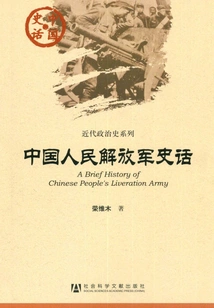
History of the Chinese People's Liberation Army
by Rong Weimu
About This Novel
The Chinese People's Liberation Army was born in the Nanchang Uprising on August 1, 1927. From the autumn of 1927 to the spring of 1928, the Communist Party of China launched the Nanchang Uprising, Autumn Harvest Uprising, Guangzhou Uprising, and other regional uprisings. The troops that survived the uprising in these areas were called the Chinese Workers' and Peasants' Revolutionary Army at that time. After May 1928, they were gradually renamed the Chinese Workers' and Peasants' Red Army, or the "Red Army" for short. The Anti-Japanese War broke out on July 7, 1937, and the main force of the Red Army was reorganized into the Eighth Route Army of the National Revolutionary Army, referred to as the Eighth Route Army. The Red Army guerrillas operating in 14 regions in eight southern provinces were gathered together and reorganized into the newly formed Fourth Army of the National Revolutionary Army on October 2, referred to as the New Fourth Army. In 1945, Zhu De, commander-in-chief of the Eighth Route Army, approved seven anti-Japanese counter-offensive orders, and in the fourth order, he proposed the term "People's Liberation Army" for the first time. In 1946, the Liberation War broke out. The various units in the liberated areas were gradually renamed the People's Liberation Army from the Eighth Route Army, New Fourth Army, Northeast Democratic Alliance Army, etc., And were organized into five major field armies. After several years of liberation war, the rule of the Nationalist Government was overthrown, and then it entered Tibet and unified mainland China. After the founding of the People's Republic of China, the People's Liberation Army assumed the mission of defending national defense and participating in socialist revolution and construction. At the same time, it carried out revolutionization, modernization, and regularization construction, so that it could develop into a comprehensive military force composed of land, sea, air force and missile forces.
Official Sources
What Readers Think
Rating
Community(0)
Official(1)Scraped 2mo ago
A good book to understand military history
It is concise, analytical, and clear in context, which is very helpful for a comprehensive understanding of the development history of the People's Liberation Army.
Rating
Community(0)
Official(1)Scraped 2mo ago
A good book to understand military history
It is concise, analytical, and clear in context, which is very helpful for a comprehensive understanding of the development history of the People's Liberation Army.