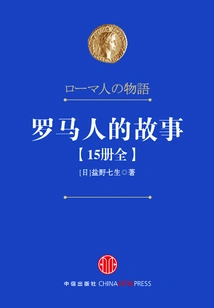
The Story of the Romans (15 Volumes Complete)
by H
About This Novel
It is a must-read for business elites and politicians in Japan and South Korea, and a must-read for education! Wang Shi and Wang Wei wrote the preface, and Wu Xiaobo, Qin Shuo, and Wu Bofan jointly recommended it. An immortal empire is coming to an end, the imperial period is coming to an end, and out of the fog of the crisis of the third century, where should Rome go? Until Constantine won and became the only emperor of Rome. The Roman Empire entered a critical moment, when authority must be created to continue the empire, and power shifted from humans to God. Faced with Christianity, should the Romans eliminate it or accept it? Is this the last attempt by the Roman Empire to continue its national destiny?
Official Sources
What Readers Think
Rating
Community(0)
Official(151)Scraped 2mo ago
A nice book
The imperial period is coming to an end
If you want to understand Western civilization, you need to understand Greece and Rome, and I think Rome is more important. It inherited the achievements of Greece and improved upon them. From the small monarchy at the beginning to the republic after the unification of Italy, and then to the monarchy after the unification of the Mediterranean, Rome experimented with three political systems, which were of great reference for future Europe. Rome's philosophy, science and political thought were very developed, which is why the Renaissance and the Enlightenment both passed through Rome. Christianity also originated during the Roman Empire, and its impact on Europe needs no introduction. The shadow of Rome can be found in the three important events that shaped modern Europe: the Renaissance, the Reformation, and the Enlightenment. Therefore, you cannot understand Western civilization without reading Rome.
I have already read the ninth volume. Although it is not a chronological narrative, it basically covers the entire historical facts from ancient Rome to the Byzantine period.
It's just too expensive! Ma Huateng is such a beast!
Very good and practical
I just read the recommended sequence one and I can't help but complain.
It is said that Rome built avenues and China built the Great Wall. Doesn't the author of the preface know what Qin Chi Dao is? It's okay if the Japanese don't know. What about the historical achievements of Qin Shihuang's carriage on the same track?
There are some errors in this book. For example, the author wrote that Romulus was in power for 37 years, and then wrote that he died in the 39th year of his power. It's inconsistent.
"You will find that the strength of the Roman Empire was ultimately due to its tolerance and openness, and its inclusiveness."
In the American TV series Spartacus, Caesar joins Crassus to suppress Spartacus because he is too pretentious. Crassus' naughty children did not like him and humiliated him. During the final battle, they beat up Gannicus. As a result, he was knocked to the ground. When he retreated behind the soldiers, he actually laughed at Gannicus obscenely.
Rating
Community(0)
Official(151)Scraped 2mo ago
A nice book
The imperial period is coming to an end
If you want to understand Western civilization, you need to understand Greece and Rome, and I think Rome is more important. It inherited the achievements of Greece and improved upon them. From the small monarchy at the beginning to the republic after the unification of Italy, and then to the monarchy after the unification of the Mediterranean, Rome experimented with three political systems, which were of great reference for future Europe. Rome's philosophy, science and political thought were very developed, which is why the Renaissance and the Enlightenment both passed through Rome. Christianity also originated during the Roman Empire, and its impact on Europe needs no introduction. The shadow of Rome can be found in the three important events that shaped modern Europe: the Renaissance, the Reformation, and the Enlightenment. Therefore, you cannot understand Western civilization without reading Rome.
I have already read the ninth volume. Although it is not a chronological narrative, it basically covers the entire historical facts from ancient Rome to the Byzantine period.
It's just too expensive! Ma Huateng is such a beast!
Very good and practical
I just read the recommended sequence one and I can't help but complain.
It is said that Rome built avenues and China built the Great Wall. Doesn't the author of the preface know what Qin Chi Dao is? It's okay if the Japanese don't know. What about the historical achievements of Qin Shihuang's carriage on the same track?
There are some errors in this book. For example, the author wrote that Romulus was in power for 37 years, and then wrote that he died in the 39th year of his power. It's inconsistent.
"You will find that the strength of the Roman Empire was ultimately due to its tolerance and openness, and its inclusiveness."
In the American TV series Spartacus, Caesar joins Crassus to suppress Spartacus because he is too pretentious. Crassus' naughty children did not like him and humiliated him. During the final battle, they beat up Gannicus. As a result, he was knocked to the ground. When he retreated behind the soldiers, he actually laughed at Gannicus obscenely.