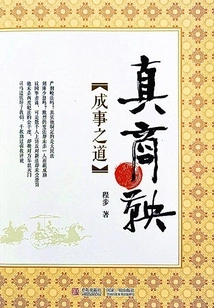
True Shang Yang: the Way to Success
by Cheng Bu
About This Novel
"True Shang Yang" is a new work in Cheng Bu's "Truth-seeking" series. It is another masterpiece of the author's Warring States figures after "True Qin Shihuang". From a chronological perspective, "True Shang Yang" is the prequel of "True Qin Shihuang". The reason why Qin became strong and the reason why Qin Shihuang was able to unify the six countries was all due to the success of Shang Yang's reform. Of all things in the world, reform is the most difficult.
Official Sources
What Readers Think
Rating
Community(0)
Official(1)Scraped 2mo ago
This book inherits the author's consistent thinking: innovative perspectives.
The advantage of this book lies in the questioning interpretation of historical data. Many of the views are unheard of, but there is no tendency to sensationalize. It still sounds reasonable, especially in terms of personal views on Shang Yang and Shang Yang's reforms. It is worth referencing. The shortcomings of this book are also relatively obvious. One is the misuse of historical data. Things like Confucius killing Shaozhengmao, Confucius killing dwarfs, and Zhao's orphans have long been proven to be false, or at least exaggerated narratives. On the one hand, the author quotes historical books such as historical records with a critical eye, but on the other hand, the historical materials he quotes are full of problems, which makes people feel dumbfounded; secondly, the focus of the narrative process is not prominent enough. Although the comparative interpretation method can be used, it should be simplified. After all, your book is about Shang Yang. There are too many other things in the whole book. For example, the references to Wang Anshi's Reform, the Reform Movement of 1898 and other historical references are too long, and are quite suspicious of taking over the subject. Thirdly, I personally think that the author does not have enough understanding of the particularity of Shang Yang's Reform. The success of Shang Yang's Reform is actually a special product of a special time and space environment. It is actually very different from the reforms under the unified dynasty of later generations and cannot be generalized. Shang Yang's reform was more of a push-forward reform that conformed to the historical situation, while most of the reforms in later generations were urgent emergency reforms. For this reason alone, it would be difficult for later reforms to be as successful as Shang Yang's reform.
Rating
Community(0)
Official(1)Scraped 2mo ago
This book inherits the author's consistent thinking: innovative perspectives.
The advantage of this book lies in the questioning interpretation of historical data. Many of the views are unheard of, but there is no tendency to sensationalize. It still sounds reasonable, especially in terms of personal views on Shang Yang and Shang Yang's reforms. It is worth referencing. The shortcomings of this book are also relatively obvious. One is the misuse of historical data. Things like Confucius killing Shaozhengmao, Confucius killing dwarfs, and Zhao's orphans have long been proven to be false, or at least exaggerated narratives. On the one hand, the author quotes historical books such as historical records with a critical eye, but on the other hand, the historical materials he quotes are full of problems, which makes people feel dumbfounded; secondly, the focus of the narrative process is not prominent enough. Although the comparative interpretation method can be used, it should be simplified. After all, your book is about Shang Yang. There are too many other things in the whole book. For example, the references to Wang Anshi's Reform, the Reform Movement of 1898 and other historical references are too long, and are quite suspicious of taking over the subject. Thirdly, I personally think that the author does not have enough understanding of the particularity of Shang Yang's Reform. The success of Shang Yang's Reform is actually a special product of a special time and space environment. It is actually very different from the reforms under the unified dynasty of later generations and cannot be generalized. Shang Yang's reform was more of a push-forward reform that conformed to the historical situation, while most of the reforms in later generations were urgent emergency reforms. For this reason alone, it would be difficult for later reforms to be as successful as Shang Yang's reform.