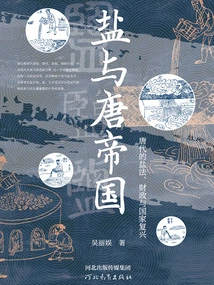
Salt and the Tang Empire: Salt Law, Finance and National Renaissance in the Tang Dynasty
by Wu Liyu
About This Novel
The study of salt history has always been regarded as one of the important topics in the field of Chinese economic history. The development of the salt industry in the Tang Dynasty was inherited from the Han, Wei, Southern and Northern Dynasties, and started from the Song and Yuan Dynasties. Due to the An-Shi Rebellion, the Salt Law was established and the monopoly system was fully implemented, which had a profound impact on Chinese history. The development of the salt industry and salt politics is in sync with the overall changes in the country and society. The operation of salt involves the construction and direction of the political system, principles and policies, and is a major issue affecting the destiny of the country. It can be said that the social changes in medieval countries were the prerequisite for the implementation of salt laws and led to the continuous reform of salt laws. This book is divided into two parts, the upper and lower parts, containing 15 monographs and 2 additional essays. The whole book takes the Salt Policy and Salt Law as the guide and context, showing their relationship with the national financial and economic policies, social and cultural aspects of the Tang Dynasty. In terms of writing and argumentation, we strive to change the perspective, observe issues from the overall stance and core measures of the country's political economy, and strive to discover the laws that have been understood and applied by predecessors in medieval society from the analysis of salt politics and commodity prices.
Official Sources
What Readers Think
Rating
Community(0)
Rating
Community(0)